Fuzz voicings for jazz chords: which circuits stay articulate
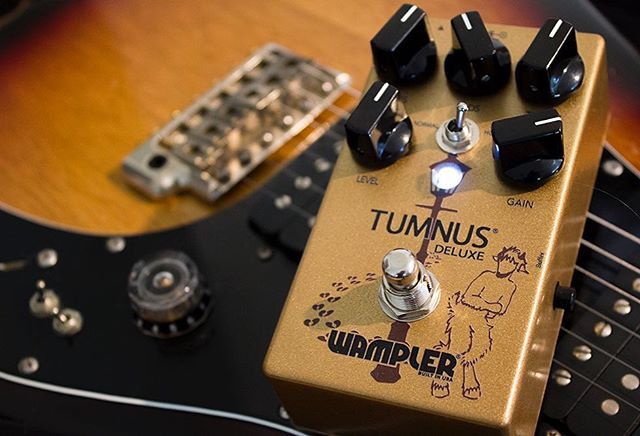
A student brought a Big Muff to a lesson a few months back, plugged it into his 175 copy, and hit a Cmaj9 voicing. What came out wasn't a chord. It was a low hum with some upper harmonics fighting for oxygen. He looked at me like the pedal was broken. It wasn't. That's just what fuzz does to a five- or six-note voicing with a lot of close intervals, and it's worth understanding why before you decide fuzz has no place in your rig.
I've spent most of my playing life chasing articulation — the kind of clean tone where you can hear every note in a rootless ii-V voicing and every bit of finger noise between them. Fuzz seems like the opposite instinct entirely. But there's a reason players from the Wes Montgomery lineage through to more experimental modern voices have found ways to use it without losing the harmony. It comes down to which circuit, how many notes you're asking it to process, and where your guitar's volume knob sits.
Why extended chords collapse under fuzz
Fuzz circuits, especially the classic transistor topologies, are built around clipping a single waveform hard. Feed them one note and you get a rich, singable harmonic series. Feed them four or five notes stacked in minor seconds and major sevenths, and the circuit has to sum all those frequencies before it clips — the intermodulation distortion that results throws up sum-and-difference tones that were never in your original chord. A power chord survives this because a fifth and an octave are consonant and their intermodulation products land on frequencies your ear already expects. A 13th chord with a flat nine in it does not have that luxury. The extra tones the fuzz manufactures clash with the ones you actually played, and the whole thing turns to noise.
This is the same principle covered in our piece on fuzz and amp input impedance, just applied to your hands instead of your signal chain. The fuzz is reacting to complexity everywhere it finds it — in the number of notes, in the pickup's output, in the impedance downstream. Simplify any of those and the chord starts to survive.
Which circuits behave with chords
Not all fuzz is equally intolerant of harmony. In my experience, silicon Fuzz Face-style circuits are the least forgiving with chords — they're voiced for single-note lead lines and get harsh fast when you throw more than two notes at them. Germanium circuits, run a little under their bias sweet spot, tend to compress more gently and let a triad through with some shape intact, though they'll still turn a nine-chord to soup.
The circuits that behave best for chordal work are usually the ones with more headroom before clipping and a smoother knee — think the Big Muff-style fuzzes, which stack two clipping stages but do it with enough gain staggering that a simple triad retains some outline, particularly in the midrange. The Electro-Harmonix Big Muff Pi (check price) and the Green Russian Big Muff (check price) both behave more predictably on double-stops and simple triads than a Fuzz Face-style circuit does, mostly because of that smoother transition into clipping rather than a hard wall. If you want something more controllable for this kind of work, the Boss FZ-5 (check price) lets you dial gain back to a point where a triad stays legible, which a fixed-gain vintage-style circuit won't give you.
The real trick is your left hand, not the pedal
Here's the part most guitarists skip: the pedal isn't the only variable you control. Voicing choice matters as much as circuit choice, maybe more. A rootless ii-V shape with a flat nine and a natural thirteenth is gorgeous clean and unintelligible under any fuzz. Strip it back to a shell voicing, root and seventh, maybe add the third, and it survives almost any circuit you throw at it. Double-stops fare even better — a major third or a fourth interval played high on the neck comes through fuzz with real clarity, because there's so little for the circuit to sum against itself.
This isn't really different from what we cover in our piece on chord-melody voicing choices, just under a harsher lens. Gear reveals what your hands are doing, and fuzz is an unusually honest mirror. If your voicing depends on five carefully-spaced notes to sound like anything, fuzz will tell you immediately, loudly, and without diplomacy.
Your volume knob and pickup selection do more than you think
This is the detail I see missed constantly, and it connects to a topic we've written about before: why fuzz sounds wrong until you turn your guitar's volume down. Most vintage-style fuzz circuits interact directly with your guitar's volume pot because of how the input impedance is designed. Roll your guitar's volume back to somewhere around six or seven, and the fuzz cleans up considerably, letting more of a chord's actual harmonic content through rather than mashing it into fuzz-noise. On a hollowbody with humbuckers, I'll often sit at around 60 to 70 percent volume for chordal fuzz work and save full volume for single lines. It changes the whole character of what the circuit is doing to your signal.
Pickup choice matters too. A neck humbucker, warmer and rounder, tends to smear less under fuzz than a bridge pickup's brighter output, which the fuzz circuit will happily exaggerate into harshness. If you're working chordal fuzz textures into a jazz or fusion context, start on the neck pickup with the tone rolled back slightly. It's counterintuitive if you're used to thinking of fuzz as a bridge-pickup, treble-forward effect, but for chords the darker starting point gives the circuit less high-frequency chaos to work with.
Where this actually works in a set
I won't pretend fuzzed-out chord voicings belong in a straight-ahead standards gig — they don't, and I'd be suspicious of anyone claiming otherwise. But in more open, fusion-adjacent or ambient jazz contexts, a controlled fuzz on a simple triad or a double-stop line can add a genuinely interesting texture, something between a distorted horn section and a synth pad. I've used the Dunlop Fuzz Face Mini Silicon (check price) for exactly this on a handful of session dates, gain rolled well back, volume knob doing half the work, playing nothing more complex than a fourth interval at a time.
The honest opinion, and I'll stand by it: most guitarists reach for fuzz with too much gain and too many notes, then blame the pedal when it turns to mush. The circuit isn't lying to you. It's just processing exactly what you gave it. Simplify the input — fewer notes, softer pickup, lower guitar volume — and you'll find far more of these circuits are usable for harmony than their reputation suggests. If you want a wider comparison of circuits before committing to one, our fuzz pedal buying guide covers the broader field beyond what's relevant here specifically for chordal playing.
Try it on a ii-V shell voicing before you write fuzz off as a lead-only tool. The results might surprise you, the way a well-voiced ninth chord does when you finally get the top note right.
Common questions
- Can any fuzz pedal handle full jazz chords without distortion artefacts?
- Not really, no. Even the smoothest circuits will generate intermodulation distortion on a five- or six-note extended voicing. The best you can do is choose a forgiving circuit, simplify the voicing to two or three notes, and manage your guitar's volume and pickup selection to reduce how much the fuzz has to process.
- Is germanium or silicon fuzz better for chordal jazz textures?
- Germanium tends to compress more gently and preserves a bit more shape on double-stops and triads, in my experience. Silicon fuzzes are generally voiced for single-note lead work and get harsh quickly once you add more than two notes.
- Should I use fuzz on the neck or bridge pickup for chord work?
- Neck pickup, almost always, especially on a hollowbody. It's warmer and rounder, which gives the fuzz circuit less high-frequency information to distort into harshness. Save the bridge pickup for single-note lines where you want more cut.
I'm Marc. My background is jazz — conservatory training, years of session work, and a long-standing love affair with hollowbody archtops and a clean, articulate tone. I think about gear the way I think about voicings: every component shifts the colour of the whole. I'm drawn to instruments that reward a light touch and reveal what your hands are actually doing. You won't find hyperbole in my reviews; you'll find careful listening, and an honest account of how a guitar or amp behaves when you ask something musical of it.
Conservatory-trained jazz guitarist and session musician
More from Marc
 Miking a cab vs. amp-sim: getting a clean DI tone that sits rightWhy clean archtop and jazz tones often translate better through amp-sims than high-gain does, and how to set levels so your DI tone sits in a mix properly.
- Comping technique: why your left hand shapes your tone more than gearYour comping hand controls voicing clarity, dynamics and tone more than any pedal or amp setting. Here's how I actually practise it.
- Fuzz circuit families explained: Muff, Fuzz Face and Tone BenderA jazz player's guide to the three core fuzz circuit families, what separates their voicings, and why the labels on the pedal matter less than the topology inside.
 Why pickup height changes your touch dynamics more than tonePickup height is usually set for volume or tone balance, but it also shapes string pull and touch response — here's what to listen for.
- Fuzz as a volume-swell effect: using your guitar knob, not the pedalMost fuzz control happens on your guitar, not the pedal face. Here's how rolling the volume knob shapes gain, gate and voicing in real time.
- Fuzz gating on low output pickups: why single coils behave differentlyWhy single coils choke a fuzz pedal differently to humbuckers, and how output, impedance and pick attack shape that gated, sputtering edge.