Why pickup height changes your touch dynamics more than tone
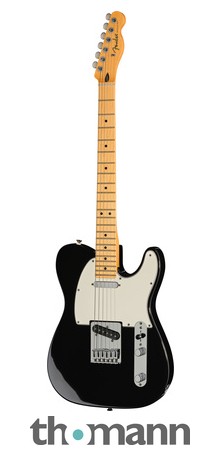
A student brought me his Telecaster a few months back, convinced the bridge pickup had died. It hadn't. The pole pieces were sitting so close to the strings that every note over mezzo-forte was slamming into magnetic compression before it left the guitar. He'd been compensating for a year by digging in harder, which only made it worse. We dropped the pickup about a millimetre and a half on the bass side and his picking hand, which he'd spent that whole year fighting, suddenly had room to work.
Pickup height gets filed under tone — brighter when closer, darker and fuller when backed off — and that's true as far as it goes. But the more interesting effect, and the one almost nobody talks about, is what it does to touch dynamics. How hard you can dig in before the note chokes. How much headroom you have between your softest ghost note and your loudest accent. That's a magnetic question as much as a tonal one.
What's actually happening under the string
A magnetic pickup doesn't just sense string motion, it also pulls on the string. Set a pickup too close and that pull becomes strong enough to interfere with the string's natural vibration, especially on the wound bass strings where the magnetic field has more metal to grab. The symptom is a strange warbling or choking on sustained notes, sometimes called "Stratitis" when it happens on single coils with alnico 5 magnets close to the low E and A. It's not a wiring fault and it's not a dead pickup. It's physics, and it's adjustable with a screwdriver.
The touch-dynamics problem is subtler than outright choking. Before you get to audible warble, you get compression. Dig in and instead of the note blooming louder, it flattens out, loses harmonic complexity, and the attack transient gets swallowed. For a blues player chasing that compressed, almost-overdriven clean tone, that might be exactly what's wanted. For anyone playing with dynamic range as part of the vocabulary, jazz comping, fingerstyle, anything where a whispered note needs to sit next to a struck one, it's the enemy.
Why archtop players notice this first
I play mostly hollowbody, and on an archtop with a floating neck pickup the height conversation is unavoidable because the pickup isn't even attached to the body. It's mounted on the pickguard or suspended from the neck, and you're setting the distance to the strings entirely by ear and feel. Get it too close and a chord-melody passage loses the separation between voices, everything mashes into a single thick colour because the magnetic pull is damping the strings unevenly across the chord. Back it off too far and you lose output, but more importantly you lose the sense that the pickup is actually listening to what your right hand is doing.
That second part matters more to me than raw output. A pickup set at the right distance should make a light touch and a firm touch sound like two different dynamic levels of the same voice, not two different instruments. If you've ever played a guitar where ghost notes just vanish and accents all sound roughly the same volume, pickup height is worth checking before you blame your hands or the amp.
A practical way to set it
Forget the spec sheet numbers for a minute, they're a reasonable starting point but every guitar behaves differently depending on magnet type and string gauge. Start with the pickup low, lower than you think you want. Play a single sustained note at a forte dynamic on the wound strings and listen for warble as it rings out. Raise the pickup in small increments, maybe half a turn of the adjustment screw at a time, until you just start to hear that compression or flutter creeping in on your hardest attack. Then back off slightly from that point. That's roughly the ceiling for your playing style.
Then test the other end. Play as softly as you can while still getting a clean note and check whether the pickup is still delivering enough signal that the note has body, not just a thin whisper. If quiet notes disappear into the noise floor of your amp, you've gone too low and you'll end up compensating with your hands again, the same trap my student was in, just from the opposite direction.
Bridge and neck pickups usually want different heights even on the same guitar, because the string's excursion is smaller near the bridge and larger over the neck pickup position. A neck pickup set as close as a bridge pickup will almost certainly choke on bends and hard strumming. I'd argue most factory setups split the difference too conservatively and leave real dynamic range on the table, particularly on guitars aimed at beginners where a slightly hotter, closer setting makes the guitar sound "fuller" in a shop demo at the expense of headroom at home.
Where this intersects with the rest of your setup
Pickup height doesn't work in isolation. String gauge, action, and even your amp's input stage all interact with it. A guitar with low action and light strings has less string excursion to begin with, so the pickup can usually sit a touch closer without choking. Heavier strings and higher action, common on archtops set up for a fuller acoustic voice, need more clearance. If you've recently had a full setup done and the action or gauge changed, it's worth rechecking pickup height rather than assuming the old setting still applies. We've covered how often a professional setup is actually worth booking elsewhere on the site, and pickup height is one of the small adjustments a good tech will revisit as part of that job rather than leaving at factory spec.
If you're shopping for a guitar with this in mind, it's worth knowing that some instruments give you more room to experiment than others. A guitar like the Gretsch G2622 Streamliner (check price) with its filter'trons has a different magnetic behaviour to a hot ceramic humbucker, generally gentler string pull, which makes it a little more forgiving while you learn to hear these differences. Even a well-regarded all-rounder like the PRS SE Custom 24 (check price) will reward an afternoon spent on pickup height rather than accepting the setting it ships with.
Listening for it rather than measuring it
I'll admit I used to be a feeler-gauge person about this, chasing a specific millimetre figure off a spec sheet. These days I do it entirely by ear, because the number that matters is how your particular hands, strings, and amp interact, not a figure that assumes none of those variables. Sit with a clean amp setting, play through your actual repertoire rather than a static test riff, and listen for the moments where your dynamics flatten out unexpectedly. That's the tell. Adjust, replay the same passage, and compare. It takes twenty minutes and it's one of the few setup tasks you can do yourself with nothing but a small screwdriver and some patience.
It won't fix a guitar with a genuinely weak or microphonic pickup, and it's not a substitute for a proper setup if your intonation or relief is off. But if your touch feels like it's fighting the instrument rather than being heard by it, check the height before you check anything else.
Common questions
- Does pickup height affect intonation or tuning stability?
- Not directly, but if a pickup is set too close and the magnetic pull is strong enough, it can slightly dampen or pull a string's pitch while it's vibrating, which can read as a tuning or intonation problem when it's really a height issue. It's worth ruling out before you adjust the saddles.
- Should bridge and neck pickups be set to the same height?
- Generally no. The neck pickup sits where the string has more excursion, so it usually needs slightly more clearance than the bridge pickup to avoid choking on bends and hard strumming.
- Is there a standard pickup height measurement I should use?
- Manufacturer specs are a reasonable starting point but they assume a particular string gauge and playing style. Setting by ear, using your own dynamic range as the test, gets you a more useful result than chasing a fixed millimetre figure.
- Can pickup height fix a guitar that sounds thin when played softly?
- Sometimes. If quiet notes are getting lost, raising the pickup slightly can help, but if the pickup is already close to the strings and still sounds thin, the issue is more likely the pickup itself or your amp's gain staging.
I'm Marc. My background is jazz — conservatory training, years of session work, and a long-standing love affair with hollowbody archtops and a clean, articulate tone. I think about gear the way I think about voicings: every component shifts the colour of the whole. I'm drawn to instruments that reward a light touch and reveal what your hands are actually doing. You won't find hyperbole in my reviews; you'll find careful listening, and an honest account of how a guitar or amp behaves when you ask something musical of it.
Conservatory-trained jazz guitarist and session musician
More from Marc
 Miking a cab vs. amp-sim: getting a clean DI tone that sits rightWhy clean archtop and jazz tones often translate better through amp-sims than high-gain does, and how to set levels so your DI tone sits in a mix properly.
- Comping technique: why your left hand shapes your tone more than gearYour comping hand controls voicing clarity, dynamics and tone more than any pedal or amp setting. Here's how I actually practise it.
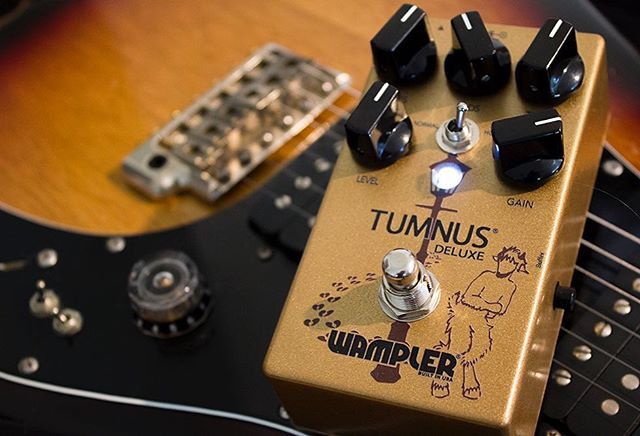 Fuzz circuit families explained: Muff, Fuzz Face and Tone BenderA jazz player's guide to the three core fuzz circuit families, what separates their voicings, and why the labels on the pedal matter less than the topology inside.
- Fuzz as a volume-swell effect: using your guitar knob, not the pedalMost fuzz control happens on your guitar, not the pedal face. Here's how rolling the volume knob shapes gain, gate and voicing in real time.
- Fuzz gating on low output pickups: why single coils behave differentlyWhy single coils choke a fuzz pedal differently to humbuckers, and how output, impedance and pick attack shape that gated, sputtering edge.
- Fuzz voicings for jazz chords: which circuits stay articulateMost fuzz turns jazz voicings to mud. Here's which circuits, settings and chord shapes keep extended chords intelligible under gain.