Fuzz circuit families explained: Muff, Fuzz Face and Tone Bender
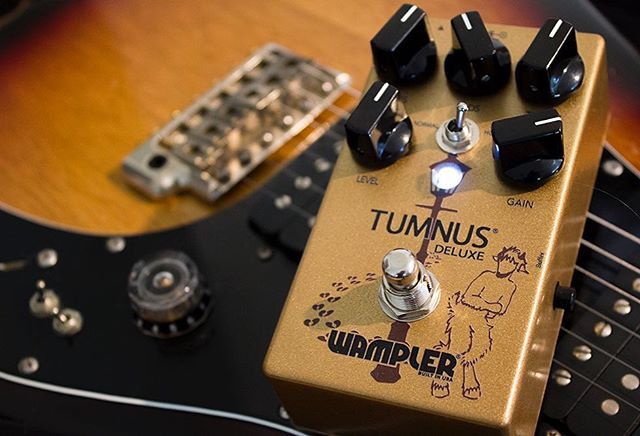
A student brought three fuzz pedals to a lesson last month, all bought off the same forum thread, all described by their sellers as "vintage-voiced." They sounded nothing alike. One was thin and spitty, one was thick and compressed with almost no top end, and one sat somewhere in between with a vocal, slightly nasal midrange. That's not a quality-control problem. It's three different circuit families wearing the same marketing word.
I came to fuzz the long way round, through hollowbody jazz boxes and a career built on clean articulation, so when I finally sat down to understand what was happening inside these pedals, I wanted the engineering reason, not just the folklore. There are, broadly, three families worth knowing: the Fuzz Face topology, the Tone Bender lineage, and the Big Muff circuit. Everything else on the market is a variation, a hybrid, or a boutique reinterpretation of one of these three. If you understand the family, you can predict how a pedal will behave before you've even plugged it in, which is a far more useful skill than memorising model names.
The Fuzz Face: two transistors and a feedback loop
The Fuzz Face is the simplest of the three, built around two transistors in a feedback configuration that was, frankly, somewhat accidental in its original design. That simplicity is exactly why it's so interactive. It has almost no internal buffering, so it reacts directly to whatever is in front of it and whatever comes after it. Roll your guitar's volume back and the Fuzz Face cleans up in a way few other fuzz circuits manage gracefully, moving from a thick, singing sustain down to something approaching a broken-up clean tone.
This is the circuit behind the germanium-versus-silicon conversation that gets so much attention, and for good reason, the transistor type genuinely changes the voicing here more than in the other two families. Germanium versions tend to be softer on top, a little unstable with temperature, and warmer in the upper mids. Silicon versions are brighter, more consistent, and a touch more aggressive. I'd point players toward our germanium vs silicon fuzz guide if that distinction is the one holding up your decision, because it genuinely should be the deciding factor for this family more than for the other two.
Because the Fuzz Face has such a strong relationship with input impedance, it behaves differently depending on what's plugged into it directly, your guitar, a buffered tuner, another pedal. That interaction is worth understanding on its own terms; I touched on the wiring implications in why some rigs just won't fuzz right, and it applies doubly to this circuit.
The Tone Bender: more gain stages, more midrange
The Tone Bender family runs three transistors rather than two in most of its well-known versions, and that extra stage changes the character substantially. Where the Fuzz Face is reactive and a little wild, the Tone Bender tends to sound more compressed and more assertive in the midrange, with a fuzz texture that holds together better at high gain settings. This is the lineage that gave British blues-rock its sustain in the mid-1960s, and you can hear why: it pushes a forward, vocal midrange that cuts through a loud stage mix without needing the treble turned all the way up.
For a jazz player's ear, this is actually the more forgiving family for chordal work. The compression tends to even out the dynamic spikes you get from a fat archtop neck pickup, and the midrange hump keeps chord voicings from collapsing into noise the way a scooped circuit can. I wrote about this more directly in fuzz voicings for jazz chords, and the Tone Bender family came out ahead of expectations there, mostly because the extra gain stage doesn't automatically mean extra mud; it means extra sustain with the midrange doing the work of keeping notes distinct.
The Big Muff: four stages, heavy scoop, huge sustain
The Big Muff circuit uses two cascaded gain stages (effectively four transistors across two clipping sections) followed by a passive tone stack that scoops the midrange hard. That scoop is the signature. It's why Big Muff style pedals sound massive and smooth but can also feel like they disappear in a dense band mix, the mids are the frequencies that cut through, and this circuit intentionally pulls them back in favour of a big, rounded low end and a sizzling top.
The Electro-Harmonix Big Muff Pi (check price) and the Green Russian Big Muff (check price) are two well-known variants of this family, and despite sharing a name and topology, they voice that scoop differently, the Green Russian in particular has a tighter low end and slightly less mid-scoop than some other Muff variants, which is part of why collectors fuss over the different production runs rather than treating them as interchangeable. I'd gently push back on the idea that there's a single "correct" Muff voicing worth chasing; the variation between versions is real, but for most players the differences matter far less than knowing which of the three families you actually want.
This circuit also gates differently than the other two when paired with low-output pickups, worth knowing if you're running single coils; we covered that interaction in fuzz gating on low output pickups.
What this means for where you put it
Circuit family also changes how a fuzz behaves depending on where it sits in your chain, not just how it sounds on its own. The Fuzz Face's sensitivity to input impedance means it generally wants to be first in line, directly off the guitar, or it can lose the interactive cleanup behaviour that makes it worth owning in the first place. The Tone Bender is a little more tolerant of a buffer or two ahead of it. The Big Muff, with its scooped voicing and high output level, tends to behave more predictably regardless of position, though stacking it after an overdrive will usually just add noise rather than usable gain. I go into the reasoning in more detail in where to put fuzz in your pedal chain, but the short version is: know your family, and the placement logic mostly follows from there.
If you're shopping rather than troubleshooting an existing board, our best fuzz pedals guide breaks down current production models by these same lines, which is a more useful filter than going by brand name or price point alone.
Choosing by ear, not by reputation
None of this is about chasing vintage units or getting precious about transistor date codes, there's a reissue or modern take on all three families that will do the job without the maintenance headaches of 1960s germanium. What matters is that you're choosing based on the actual circuit behaviour you want: the reactive, volume-knob-responsive cleanup of a Fuzz Face, the compressed midrange push of a Tone Bender, or the scooped, saturated wall of a Big Muff. Play all three through the same amp and guitar, back to back, and the differences stop being academic almost immediately.
Common questions
- Can I use a Big Muff for jazz chord work? You can, but the midrange scoop fights against chordal clarity more than the other two families. It's a better fit for single-note lines and ambient textures than for comping.
- Why does my Fuzz Face sound different with a buffered pedal in front of it? The circuit has very little internal buffering and reacts strongly to the impedance of whatever precedes it. A buffer tends to tighten and brighten it, sometimes at the cost of the interactive cleanup it's known for.
- Is a three-transistor Tone Bender always higher gain than a two-transistor Fuzz Face? Generally yes, but the more useful distinction is the midrange behaviour, not the raw gain figure.
Common questions
- Can I use a Big Muff for jazz chord work?
- You can, but the midrange scoop fights against chordal clarity more than the other two families. It tends to suit single-note lines and ambient textures better than dense comping.
- Why does my Fuzz Face sound different with a buffered pedal in front of it?
- The Fuzz Face circuit has very little internal buffering and reacts strongly to the input impedance of whatever precedes it, so a buffer ahead of it tends to tighten and brighten the fuzz.
- Is a Tone Bender always higher gain than a Fuzz Face?
- Usually, since it runs an extra gain stage, but the more useful distinction for players is the stronger midrange push, not just the raw gain level.
- Do all Big Muff variants sound the same?
- No. Different production runs, like the Green Russian versus other Big Muff Pi versions, voice the midrange scoop and low end differently, though they share the same basic circuit topology.
I'm Marc. My background is jazz — conservatory training, years of session work, and a long-standing love affair with hollowbody archtops and a clean, articulate tone. I think about gear the way I think about voicings: every component shifts the colour of the whole. I'm drawn to instruments that reward a light touch and reveal what your hands are actually doing. You won't find hyperbole in my reviews; you'll find careful listening, and an honest account of how a guitar or amp behaves when you ask something musical of it.
Conservatory-trained jazz guitarist and session musician
More from Marc
 Miking a cab vs. amp-sim: getting a clean DI tone that sits rightWhy clean archtop and jazz tones often translate better through amp-sims than high-gain does, and how to set levels so your DI tone sits in a mix properly.
- Comping technique: why your left hand shapes your tone more than gearYour comping hand controls voicing clarity, dynamics and tone more than any pedal or amp setting. Here's how I actually practise it.
 Why pickup height changes your touch dynamics more than tonePickup height is usually set for volume or tone balance, but it also shapes string pull and touch response — here's what to listen for.
- Fuzz as a volume-swell effect: using your guitar knob, not the pedalMost fuzz control happens on your guitar, not the pedal face. Here's how rolling the volume knob shapes gain, gate and voicing in real time.
- Fuzz gating on low output pickups: why single coils behave differentlyWhy single coils choke a fuzz pedal differently to humbuckers, and how output, impedance and pick attack shape that gated, sputtering edge.
- Fuzz voicings for jazz chords: which circuits stay articulateMost fuzz turns jazz voicings to mud. Here's which circuits, settings and chord shapes keep extended chords intelligible under gain.