Fuzz gating on low output pickups: why single coils behave differently
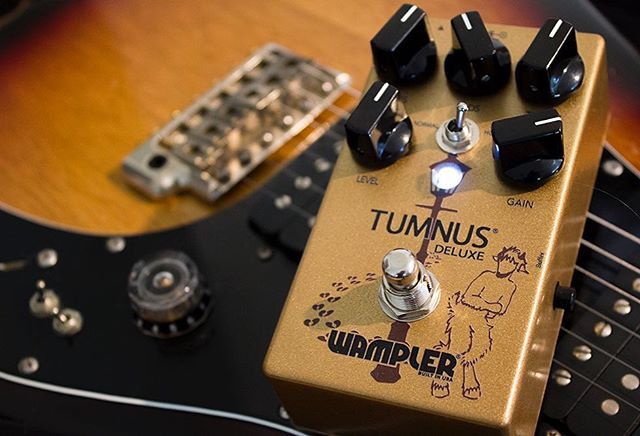
A student brought a Strat into a lesson a few months back wanting to sound like a particular fuzzed-out recording he loved. He'd bought the pedal, dialled in what looked like the right settings, and instead of the thick, sustained wall he was after, he got a thin, crackling, almost broken-up sputter that died the moment he backed off his pick attack. He thought the pedal was faulty. It wasn't. He was hearing, in real time, what happens when a low-output single coil meets a fuzz circuit that was voiced with something hotter in mind.
This comes up more than people expect, and it's rarely discussed with any precision. Most fuzz demos on the internet are filmed with a humbucker-loaded guitar, so the gating behaviour that single-coil players encounter gets treated as a mystery or a flaw, when it's really just the circuit doing exactly what it was designed to do with a different input.
Gating isn't a malfunction, it's a threshold problem
Every fuzz circuit, whether it's a germanium two-transistor Fuzz Face-style design or a silicon Big Muff-style four-stage box, has an input signal level below which the circuit simply can't sustain a clean transistor bias. The signal collapses, the output stutters, and you get that broken, sputtering gate as notes decay. Higher output pickups, hot humbuckers especially, push more signal into that front end and keep the transistors happily biased further into the decay of a note. Lower output single coils, particularly vintage-wound Strat or Tele pickups sitting anywhere from the mid-5k to low-6k ohms range, simply don't deliver the same voltage swing. The fuzz runs out of signal to work with sooner, and you hear the gate kick in earlier and more aggressively.
None of this is inherently bad. Hendrix built half his vocabulary around exactly this behaviour on a Strat through a Fuzz Face. The gating became part of the phrasing. But if you're expecting a Muff-through-humbucker wall of sustain and you're getting single-coil sputter, you're not broken, you're just working with a different set of physics.
Why silicon and germanium respond differently
I've written elsewhere about the tonal differences between germanium and silicon fuzz circuits, but the gating behaviour is really where the two families diverge most audibly with single coils. Germanium transistors have a lower, less stable bias point and are more temperature-sensitive, which gives a softer, more vocal sputter as the note decays, a sort of gradual unravelling rather than a hard cutoff. Silicon circuits tend to have a firmer threshold, so the gate arrives more abruptly. On a Telecaster bridge pickup, which is often wound a little hotter than the neck to compensate for a brighter, thinner position, you'll usually get through that threshold more easily than on a scooped-out Strat neck pickup rolled back on tone.
If you're chasing a specific classic tone and finding a pedal fights you on single coils, it's worth trying the same pedal on a guitar loaded with something hotter just to hear the difference in isolation. A Fulltone OCD or similar overdrive won't show you this at all, because overdrives are largely immune to the effect; it's specifically the open-loop, heavily saturated fuzz circuits that reveal it. Our best fuzz pedals guide covers a spread of germanium and silicon options if you want to compare behaviour across circuit types, and the Dunlop Fuzz Face Mini Silicon (check price) is a useful reference point precisely because its gating character with single coils is well documented and fairly representative of the breed.
Pick attack becomes your gain control
Here's where it gets genuinely useful rather than just an engineering curiosity. On a low-output single coil through a gate-prone fuzz, your pick attack effectively becomes a second gain stage. Dig in and you push past the threshold cleanly, get sustain and bloom. Ease off and the note starts to break up and choke immediately. This is enormously expressive if you lean into it rather than fighting it, and it rewards exactly the kind of light-touch dynamic control I spend most of my teaching time trying to instil anyway. A hard downstroke on the low E versus a ghosted upstroke on the high strings can sound like two different pedals on the same patch. That's not a compromise. That's a genuinely different instrument-and-effect relationship to a humbucker rig, where the fuzz tends to flatten dynamics rather than exaggerate them.
Where it becomes a problem is in an ensemble or recording context where you need consistency, take after take, and the gate is unpredictable because your attack varies slightly under pressure. I'd argue that's actually the bigger practical issue than the gating itself; the gating is a feature once you understand it, but chasing a repeatable performance with an unstable threshold is genuinely difficult, and I've spent more than one session quietly swapping to a hotter pickup selection or nudging the guitar's volume to find a spot where the behaviour became reliable rather than charming.
Practical fixes if the gate is too aggressive
A handful of things actually move the needle here, and they're worth trying before you assume the pedal's wrong for your guitar. Rolling your guitar's volume down slightly, counterintuitively, can sometimes clean up the gate rather than worsen it, because you're altering the impedance relationship at the input rather than just the level; this is closely related to why taming gate and gain on archtop players often comes down to the same volume-pot trick. A buffer placed before the fuzz, despite the received wisdom that fuzz wants to see your guitar directly, can sometimes stabilise the input impedance enough to reduce sputtering, though it will also change the fuzz's fundamental character, so treat that as an experiment rather than a fix. And simply trying the fuzz earlier or later in your signal chain matters too; our piece on where fuzz sits in your pedal chain covers why moving it relative to your other gain stages changes how much clean signal survives to hit that gain-starved front end.
If none of that gets you close, it may simply be that the specific circuit and your specific pickup set aren't a natural match, and that's fine. A Big Muff-style circuit, voiced for thick sustain, generally tolerates single coils better than a vintage Fuzz Face clone does, because the Muff's extra gain stages compensate for lower input signal more gracefully. The Electro-Harmonix Big Muff Pi (check price) is a reasonable starting point if gating has been a recurring frustration on a Strat or Tele, whereas the Boss FZ-5 (check price), being a modelling unit with multiple fuzz voicings on tap, lets you audition several gating personalities without buying four different boxes.
Listen for what the gate is actually telling you
None of this is really about right or wrong. It's about understanding what your specific pickup, at its specific output and impedance, is asking of a fuzz circuit that was almost certainly voiced and tested on something else entirely. Once you hear the gating as information rather than failure, it starts to shape phrasing decisions the same way a compressor's attack time shapes a funk rhythm part. Go and actually listen to where your notes break up on your own guitar before you touch another control. That's more useful than any setting I could give you here.
Common questions
- Does a hotter pickup always fix fuzz gating?
- Usually it reduces it, because more output keeps the fuzz's transistors biased further into a note's decay, but it also changes the fuzz's overall voicing, so treat it as a trade rather than a free fix.
- Why does rolling back my guitar's volume sometimes clean up a gated fuzz instead of making it worse?
- It alters the impedance the fuzz sees at its input, not just the raw signal level, and on some circuits that shift actually stabilises the transistor bias rather than starving it further.
- Is gating specific to fuzz, or do overdrive pedals do it too?
- It's overwhelmingly a fuzz phenomenon. Overdrive circuits use feedback and clipping stages that are far less sensitive to input level, so they rarely exhibit the same sputtering breakup.
- Which fuzz style is most forgiving with low-output single coils?
- Big Muff-style circuits with extra gain stages generally tolerate single coils with less aggressive gating than a classic two-transistor Fuzz Face design, which was largely developed and voiced around hotter pickups.
I'm Marc. My background is jazz — conservatory training, years of session work, and a long-standing love affair with hollowbody archtops and a clean, articulate tone. I think about gear the way I think about voicings: every component shifts the colour of the whole. I'm drawn to instruments that reward a light touch and reveal what your hands are actually doing. You won't find hyperbole in my reviews; you'll find careful listening, and an honest account of how a guitar or amp behaves when you ask something musical of it.
Conservatory-trained jazz guitarist and session musician
More from Marc
 Miking a cab vs. amp-sim: getting a clean DI tone that sits rightWhy clean archtop and jazz tones often translate better through amp-sims than high-gain does, and how to set levels so your DI tone sits in a mix properly.
- Comping technique: why your left hand shapes your tone more than gearYour comping hand controls voicing clarity, dynamics and tone more than any pedal or amp setting. Here's how I actually practise it.
- Fuzz circuit families explained: Muff, Fuzz Face and Tone BenderA jazz player's guide to the three core fuzz circuit families, what separates their voicings, and why the labels on the pedal matter less than the topology inside.
 Why pickup height changes your touch dynamics more than tonePickup height is usually set for volume or tone balance, but it also shapes string pull and touch response — here's what to listen for.
- Fuzz as a volume-swell effect: using your guitar knob, not the pedalMost fuzz control happens on your guitar, not the pedal face. Here's how rolling the volume knob shapes gain, gate and voicing in real time.
- Fuzz voicings for jazz chords: which circuits stay articulateMost fuzz turns jazz voicings to mud. Here's which circuits, settings and chord shapes keep extended chords intelligible under gain.