Where to put fuzz in your signal chain, and why it's fussy about it
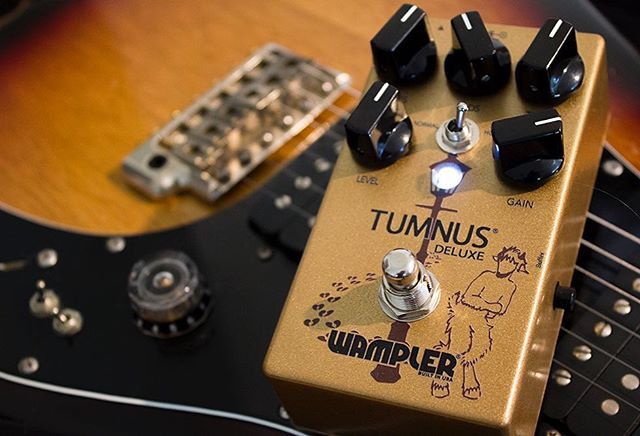
A student brought a fuzz pedal to a lesson last month, plugged it in after his tuner and a compressor, and asked why it sounded like a dying fax machine. Nothing wrong with the pedal. Everything wrong with where he'd put it. Fuzz pedal order isn't really a matter of taste the way overdrive placement often is — it's a matter of impedance, and getting it wrong doesn't make the tone worse so much as it makes the pedal stop doing what it's designed to do.
I come at this from the clean side of the room. Most of my working life has been spent chasing articulation, not saturation, so when I do reach for fuzz — and I do, more than people expect from someone who plays archtops for a living — I'm fussy about exactly where it sits, because a fuzz circuit is arguably the least forgiving thing you can put in a chain.
Why fuzz pedal order matters more than any other pedal
Most fuzz circuits, particularly the vintage-style silicon and germanium designs, want to see your guitar's pickups directly. No buffer, no other circuitry sitting between the two. That's because a classic fuzz — a Fuzz Face-style circuit especially — interacts with the guitar's own output impedance as part of how it generates its distortion character. Feed it a buffered signal, or feed it a signal that's already passed through a low-impedance pedal like most compressors, tuners, or many boost pedals, and the fuzz reacts differently. Usually for the worse: thinner, harsher, less of that vocal, splatty quality that made you buy the thing in the first place.
This is the opposite of how overdrive and distortion pedals generally behave. Those are largely indifferent to what's in front of them. Fuzz is not. It's the diva of the pedalboard, and if you've ever wondered why a Fuzz Face sounds glorious on its own and strangled after a wah or a buffered tuner, that's the reason.
The first-pedal rule, and why it exists
The standard advice — fuzz goes first in the chain, straight off the guitar — exists for exactly the reason above. First in line means the fuzz sees your guitar's raw output impedance, unaltered by anything else. It's not a stylistic preference. It's closer to an electrical requirement for a lot of these circuits.
I'd push back slightly on how absolute this rule gets treated online, though. It's correct for germanium and silicon Fuzz Face-style circuits, and for most vintage-inspired builds. It matters less for Big Muff-style circuits, which have an input stage that isolates them somewhat from what's upstream, and it matters even less for modern fuzzes designed with an internal buffer specifically to solve this problem. A Boss FZ-5 (check price), being digital modelling rather than an analogue interaction-dependent circuit, mostly sidesteps the whole issue. So "fuzz first, always" is good default advice, not gospel.
Buffers: the quiet culprit
Here's what catches people out. A lot of modern pedals are buffered even when they're not doing anything audible — many boss-style compact pedals, tuners left permanently in the chain, and some "always on" utility pedals maintain a buffer whether you're using the effect or not. If any of those sit before your fuzz, you'll get the strangled, brittle version even though the pedal itself is bypassed and, as far as you can tell, out of the picture.
I had exactly this happen on a session a few years back — a lovely germanium fuzz that sounded gorgeous on the bench and sounded like a wasp in a tin can once wired into a board with a buffered tuner ahead of it. Moving the tuner after the fuzz fixed it completely. No pedal changed. Only the order did.
Fuzz after wah: the classic exception nobody explains properly
Hendrix ran fuzz after wah, and that ordering has become its own tradition, repeated without much explanation. The reason it works is that a wah pedal is itself an impedance-sensitive filter circuit, and putting the fuzz after it lets the wah's sweep interact with the guitar signal first, then hands a more complex, filtered waveform to the fuzz to distort. Reverse the order — fuzz into wah — and you get a wah sweeping across an already-fuzzed, harmonically dense signal, which is a usable sound but a distinctly different one: more synthy, more compressed, less of that vocal "cry."
Neither order is wrong. They're different instruments, effectively. Worth trying both before deciding your rig needs to match someone else's.
Where fuzz sits relative to overdrive and your amp's front end
If you're stacking fuzz with overdrive, order changes the character substantially, which is really its own topic — I'd point you to our piece on fuzz into overdrive versus overdrive into fuzz if you want the detail. The short version: fuzz first into overdrive tends to sound more usable and controllable; overdrive first into fuzz gets aggressive and a bit unpredictable fast, though some players like exactly that.
Where the fuzz sits relative to your amp's own breakup matters too. A fuzz pushed into an already-driven amp front end can lose definition entirely, turning to mush with no note separation, particularly on chords. I tend to run fuzz into a clean or barely-broken-up amp channel and let the pedal do the distortion work rather than stacking it on top of tube saturation. If you're shopping for an amp with a genuinely clean, headroom-rich channel to build a fuzz tone on top of, something like the Fender Blues Junior IV (check price) or the Vox AC15C1 (check price) gives you that clean foundation without a lot of preamp grit fighting the fuzz for space.
What this means for your volume and tone controls
One more wrinkle, particularly relevant if you play a guitar with real dynamic range in the controls: rolling back your guitar's volume knob interacts with a Fuzz Face-style circuit far more dramatically than it does with a Big Muff or a modern clipping-diode pedal, because you're changing the very impedance relationship the fuzz depends on. Roll off the volume on a Strat into a silicon Fuzz Face and you'll get a cleaner, slightly compressed tone rather than just a quieter fuzzy one. That's a feature, not a bug, but it only works properly if the fuzz is first in line, seeing your guitar directly. Bury it behind a buffer and that whole dynamic range collapses into one fixed fuzz voice regardless of where your volume knob sits.
If you're building a board around this kind of playing — riding the volume knob, using pick dynamics to move between clean and fuzzed — it's worth reading our breakdown on how fuzz interacts with your guitar's volume and tone controls, because the pedal order question and the guitar-control question are really the same conversation from two angles.
A practical starting point
For most players, I'd suggest: fuzz first off the guitar, full stop, unless you're specifically chasing the wah-into-fuzz sound, in which case wah goes first. Keep buffered pedals, including "invisible" ones like always-on tuners, after the fuzz rather than before it. And before you rebuild your whole board around a rule you read somewhere, test it — plug straight into the fuzz, into the amp, and listen. Then add pedals back one at a time before it and note exactly where the tone changes. It won't take long, and you'll trust your own ears over anyone's diagram after that, including mine.
Common questions
- Does pedal order matter as much for Big Muff-style fuzz as it does for Fuzz Face-style fuzz?
- Less so. Big Muff circuits have an input stage that buffers them somewhat from what's upstream, so they're more tolerant of pedals in front of them than a germanium or silicon Fuzz Face design, which reacts directly to your guitar's raw output impedance.
- Can I put a buffer pedal before my fuzz if I need one for long cable runs?
- You can, but expect the fuzz to sound different, usually thinner and less dynamic. If you need a buffer for a long run, put it after the fuzz in the chain, or use a buffer designed to sit at the very end of your board before a long cable back to the amp.
- Why does my fuzz sound fine on its own but bad on my pedalboard?
- Almost always a buffered pedal sitting ahead of it, even one that's switched off, such as a tuner or compressor. Try running the fuzz first, straight off the guitar, and see if the problem disappears.
- Should fuzz go before or after my wah pedal?
- Traditionally wah first, then fuzz, which is how Hendrix ran his board and gives that vocal, sweeping quality. Fuzz into wah works too, but sounds more synthetic and compressed. Worth trying both.
I'm Marc. My background is jazz — conservatory training, years of session work, and a long-standing love affair with hollowbody archtops and a clean, articulate tone. I think about gear the way I think about voicings: every component shifts the colour of the whole. I'm drawn to instruments that reward a light touch and reveal what your hands are actually doing. You won't find hyperbole in my reviews; you'll find careful listening, and an honest account of how a guitar or amp behaves when you ask something musical of it.
Conservatory-trained jazz guitarist and session musician
More from Marc
- Low-gain overdrive for jazz: pushing an archtop without losing clarityA light touch of overdrive can thicken an archtop's voice without smearing the chord. Here's how I set gain stages to keep jazz tone articulate.
 Miking a cab vs. amp-sim: getting a clean DI tone that sits rightWhy clean archtop and jazz tones often translate better through amp-sims than high-gain does, and how to set levels so your DI tone sits in a mix properly.
- Comping technique: why your left hand shapes your tone more than gearYour comping hand controls voicing clarity, dynamics and tone more than any pedal or amp setting. Here's how I actually practise it.
- Fuzz circuit families explained: Muff, Fuzz Face and Tone BenderA jazz player's guide to the three core fuzz circuit families, what separates their voicings, and why the labels on the pedal matter less than the topology inside.
 Why pickup height changes your touch dynamics more than tonePickup height is usually set for volume or tone balance, but it also shapes string pull and touch response — here's what to listen for.
- Fuzz as a volume-swell effect: using your guitar knob, not the pedalMost fuzz control happens on your guitar, not the pedal face. Here's how rolling the volume knob shapes gain, gate and voicing in real time.