What do the knobs on a distortion pedal actually do?
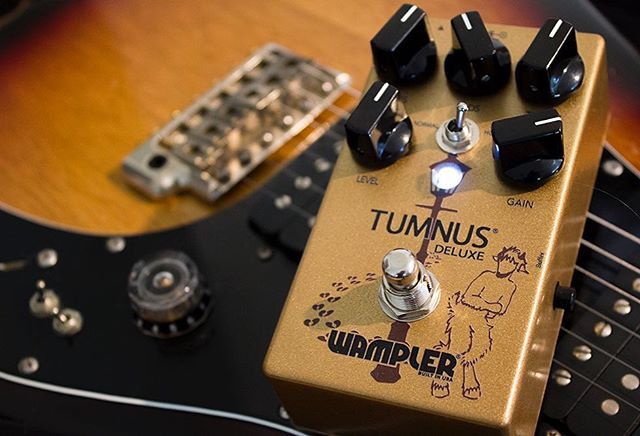
Three knobs. That's all most distortion pedals have. And yet I've had students stare at them like they're defusing a bomb. Gain, tone, level — the labels are on there, but nobody ever explains what they're actually doing to your signal. So let's fix that right now.
Level: the one most beginners set wrong
Start here, because it's the most misunderstood. The level knob (sometimes called volume or output) controls how loud the pedal is when it's switched on. That's it. It does not control how much distortion you get. None of it. Zero.
The goal with level is simple: when you stomp the pedal on, your overall volume should stay roughly the same as when it's off — unless you deliberately want a boost. Most beginners crank this because they think more volume means better sound. What actually happens is they blow everyone out of the room mid-song and wonder why the drummer is giving them a look. Set it matched to your bypassed volume first, then nudge up from there if you want that solo boost.
Gain: this is your dirt dial
Gain is what most people are actually thinking about when they think "distortion." Turn it up, you get more clipping, more saturation, more of that compressed, grinding sound. Turn it down, you get something closer to a light crunch.
Here's the thing beginners don't always hear at first: past a certain point, cranking gain doesn't make things sound heavier — it makes them sound mushy. Notes stop separating. Chords turn into a wall of undifferentiated noise. I'd say at least half the beginners who walk into my lessons at the Sunrise Music School in Brisbane with a "bad tone" problem are just running their gain too high for the music they're trying to play. Back it off to 50–60%, play some chord changes, and the whole thing suddenly locks in.
For context: a classic blues-rock crunch lives between roughly 9 o'clock and noon on the gain dial. Heavy rock sits noon to 3 o'clock. Full-on modern metal territory is 3 o'clock and beyond — and for that, you're usually better off with a dedicated high-gain pedal rather than pushing a general-purpose distortion into the red. The Boss DS-1 (check price) and the ProCo RAT 2 (check price) both cover a wide range, but they respond to gain settings very differently — worth knowing before you buy.
Tone: a high-frequency shelf, not a full EQ
The tone knob on most overdrive and distortion pedals is a single passive filter — essentially a treble cut. Turn it clockwise, you let more high frequencies through: brighter, sharper, sometimes harsh. Turn it back, you roll off the top end: warmer, darker, sometimes muddy if you go too far.
It is not a full equaliser. It won't add bass. It won't scoop your mids. Those things require a different circuit entirely. The tone control is really just shaping how sharp or smooth the distorted signal sounds at the top end.
Where you set it depends entirely on your guitar and amp. A bright single-coil Strat into a bright amp will need the tone dialled back more than a dark humbucker guitar going into a warmer combo. There's no universal "correct" position. I'll admit I got this wrong for years — I used to treat noon as a "neutral" starting point on every pedal, but that's only true on some circuits. Trust your ears on this one, not the clock position.
Why your amp settings change everything
This is the part most beginner guides skip. Your pedal's knobs don't exist in a vacuum — they interact with your amp's own gain, bass, mid and treble controls. A distortion pedal going into a clean amp sounds very different from the same settings going into an amp with its own gain already up.
The standard starting point, and one I give every new student: set your amp clean and use the pedal for all your distortion. That gives you maximum control over the sound. Once you understand what the pedal is doing, you can start experimenting with the amp's own character. But early on, keep one thing simple. Cleaner amp, more predictable result.
If you're still working out your amp situation, our guide to the best practice amps covers the kinds of clean platforms that work well as a base for pedals.
Some pedals have extra controls — here's what they usually are
Not every pedal stops at three knobs. Some common additions:
- Filter or low-pass: Similar to tone but often more dramatic — used a lot on fuzz pedals to tame fizz.
- Voice or contour: Usually a mid-scoop preset, sometimes switchable. Scooped mids sound huge alone and thin in a band. Be careful with this one.
- Presence: A high-frequency boost, often above the treble range. Adds "air" or cuts through a mix. Small adjustments go a long way.
- Bias or symmetry: Less common on basic pedals, more often on boutique stuff. Affects the character of the clipping — how even or uneven the distortion is. Interesting to experiment with, not essential to understand early on.
Don't feel like you need a pedal with all of these. For most players starting out, three knobs is plenty. The Ibanez Tube Screamer TS9 (check price) has exactly three — drive, tone, level — and it's been on more professional pedalboards than almost anything else ever made.
A practical starting point for each style
Rather than leaving you with pure theory, here are three starting points. These aren't rules — they're just somewhere to begin dialling from.
Light crunch (blues, classic rock): Gain around 9–11 o'clock, level matched to bypass, tone at noon. Back the gain off until you can still hear individual strings ring when you play a chord open.
Mid-gain rock: Gain noon to 1 o'clock, level matched or a touch higher, tone just past noon. If it sounds honky or harsh, back the tone off a little.
High-gain: Gain at 2–3 o'clock, level to match bypass or slightly above, tone to taste — often darker than you'd expect. If chords are getting muddy, try picking more lightly or rolling back your guitar's volume knob a touch.
For more on where to take things once you've got the basics sorted, our overdrive and distortion pedal buyer's guide covers the main options at different price points.
Three knobs, and now you know what they're doing. That's really all there is to it at the start.
Common questions
- Should gain be higher or lower for rhythm guitar vs lead?
- Generally lower for rhythm, higher for lead — though it depends on the style. For rhythm playing you usually want more note clarity so chords don't blur together, which means less gain. For lead, a bit more sustain and compression from higher gain can help notes sing. That said, plenty of players use one gain setting for everything and just control the feel with their picking hand.
- Why does my distortion sound great alone but disappear in a band mix?
- Usually a mid-scoop problem. Heavily scooped tones (lots of bass and treble, dipped mids) sound huge by themselves but get buried under drums and bass in a full mix. Try boosting your amp's midrange slightly, or back off on any 'contour' or 'scoop' controls on your pedal. Mids are what let a guitar cut through.
- Does the order of my knob adjustments matter?
- Not really — they all affect the final sound independently. But a useful habit is to set your level first (matched to bypass), then dial in gain for the amount of dirt you want, then adjust tone last once everything else is in place. That way you're not chasing moving targets.
I'm Rob, and I've taught guitar for over fifteen years — which means I've watched hundreds of beginners buy the wrong thing because someone baffled them with jargon. So that's my job here: cut through it. I genuinely love good budget gear, the kind that punches way above its price and actually keeps a new player playing. I'll tell you in plain English what matters, what doesn't, and what's a waste of your first hundred quid. No snobbery, no gatekeeping — just honest help getting started right.
Guitar teacher (15+ yrs); beginner and budget-gear specialist
More from Rob
- Fuzz pedal settings explained: what the knobs actually doFuzz knobs don't work like distortion or overdrive controls. Here's what Fuzz, Volume and Tone actually do — and how to dial in sounds you'll actually use.
- Why your distortion pedal sounds fizzy at home (and how to fix it)Fizzy, thin, buzzy distortion is one of the most common beginner frustrations. Here's why it happens and exactly what to fix first.
 How practising slowly actually changes what gear you needSlow practice exposes setup flaws that fast playing hides. Here's what it reveals about your guitar, amp and technique — and what to fix first.
- Acoustic guitar action explained: what it is, why it matters, and how to spot a bad setupHigh action kills beginners' progress faster than almost anything else. Here's how to understand acoustic guitar action, check it yourself, and know when to fix it.
- Guitar string gauges explained: what the numbers mean and how to chooseConfused by string gauges? Rob breaks down what those numbers actually mean, how gauge affects feel and tone, and which to choose as a beginner.
- How to use an overdrive pedal to boost your amp (and why it works)Confused about using an overdrive as a boost rather than a distortion? Rob explains the technique in plain English — no jargon, just results.