Fuzz pedal settings explained: what the knobs actually do
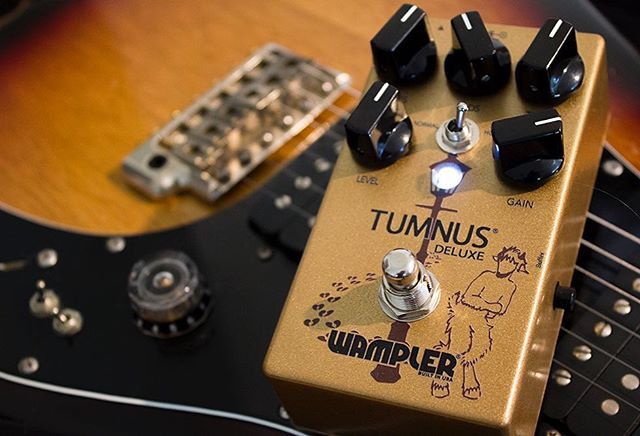
Most beginners turn on a fuzz pedal for the first time, crank the Fuzz knob to maximum, and think either "this is brilliant" or "this is unplayable noise." Both reactions make sense. Fuzz is the bluntest, most opinionated effect on any pedalboard, and unlike an overdrive, it does not reward guesswork in the same way.
The controls look simple — usually just three knobs. But they interact in ways that genuinely confuse people, because they don't behave like the EQ or gain controls on your amp. Let me walk through what each one actually does, then talk about how to find sounds that work.
The Fuzz knob: gain, but not quite
On most classic fuzz designs — your Fuzz Face types, your Big Muff variants — the Fuzz knob controls how hard the input signal is being clipped. Turn it low and you get a woolly, compressed crunch, almost valve-like. Wind it up and the signal saturates completely, sustaining almost indefinitely with that characteristic buzzing, square-wave character.
Here's the thing beginners often miss: maximum Fuzz is not automatically best. At full blast, notes can smear together and chords become genuinely indistinct. Try backing the Fuzz knob off to around 70–80% and you'll often find a sweet spot where the articulation comes back without losing the character. Songs like "Satisfaction" by the Stones sit at a surprisingly moderate fuzz level — it's not fully cranked.
Also worth knowing: on germanium-based fuzzes especially, the Fuzz knob is very sensitive to the volume knob on your guitar. Roll your guitar volume back to 6 or 7, and the fuzz cleans up dramatically. This is by design, not a flaw. See our Dunlop Fuzz Face Mini review (check price) for a closer look at how this plays out in practice.
The Volume knob: louder than you think
Fuzz pedals can push a lot of output. The Volume knob on a fuzz is not setting the effect level like a reverb or delay mix — it's controlling the output gain of the whole pedal, and on many circuits unity volume (matching your bypassed level) sits at somewhere between 9 and 11 o'clock. Everything above that is boosting your signal.
This matters for two reasons. First, if your fuzz sounds weak and flat, the Volume might just be too low — even at noon it can still be quiet on some pedals. Second, if you're stacking fuzz into a driven amp or other pedals, running the Volume hot will push those stages harder, which changes the character of everything downstream.
I tell my students: set the Fuzz where you like the character, then use Volume to match your clean level. That gives you a neutral baseline to work from, rather than chasing a sound that's mostly just "louder."
The Tone knob: it cuts more than it adds
On a Big Muff-style pedal, the Tone control works as a blend between a bass-heavy voicing and a treble-heavy one. It's passive, which means it's really just steering between frequencies rather than adding anything. At 12 o'clock you're at the midpoint. Turn it clockwise and you're bringing treble forward; counterclockwise and you're rolling off the top end for something thicker and more woofer-rattling.
On a Fuzz Face-style pedal, there often isn't a dedicated tone control. Some versions have a basic treble-cut (similar to a guitar tone knob), but many originals just have Fuzz and Volume. The voicing is baked into the circuit.
My honest take: the Tone knob on a Big Muff is one of the most underused controls in beginner rigs. People leave it at noon and never touch it. Try both extremes before you settle — a scooped, bass-heavy setting with Tone fully counterclockwise gives you a completely different pedal than the same unit with Tone at 3 o'clock. The Electro-Harmonix Big Muff Pi (check price) is a good one to experiment on because the controls are responsive and predictable.
Why your guitar volume and pickup choice matter so much
I mentioned the guitar volume thing above, but it's worth its own section because it surprises people every time.
Fuzz pedals — especially vintage-voiced germanium ones — are designed to respond to the signal hitting the input. A hot humbucker at full volume will push the fuzz into complete saturation very quickly. A single-coil guitar, or a humbucker with the volume rolled back, gives the circuit more room to breathe. That's why Hendrix (single-coil Strat through a germanium Fuzz Face) and Billy Corgan (humbucker Strat through silicon Big Muff) sound nothing alike, even though they're both "fuzz."
We've covered this in much more depth in our piece on fuzz pedals and single-coil guitars, which is worth a read if you're trying to match a fuzz to your guitar rather than just buying the famous one.
Where to start: three settings worth trying
Rather than giving you a single "good" setting, here are three genuinely useful starting points for a two- or three-knob fuzz.
Classic rock crunch (think early Stones, Kinks): Fuzz around 65%, Volume at unity or slightly above, Tone at noon or slightly clockwise. Pick with your guitar volume at 7, not 10. Articulate chords, single notes cut through cleanly.
Big, sustaining lead (Gilmour, Mayer): Fuzz at 85–90%, Volume at unity, Tone slightly counterclockwise for warmth. Guitar volume full up. Use your picking attack to control dynamics — hit harder for more saturation.
Wall-of-sound (Smashing Pumpkins, shoegaze): Fuzz fully up, Volume above unity to push the amp, Tone anywhere from noon counterclockwise. Guitar volume full. This setting requires the amp to have some headroom or it turns into pure mud — worth knowing before your next rehearsal in a small room.
What to buy if you're just starting out with fuzz
The Electro-Harmonix Green Russian Big Muff (check price) is my standard recommendation for a first fuzz. It's forgiving, it has three clear controls, and it works with humbuckers and single-coils without needing any fiddling with impedance or bias. The Boss FZ-5 (check price) is worth a look if you want the reliability and tuner-output of the Boss platform — it models a few classic fuzz voices and is harder to break in a live setting.
If you want to go deeper on which pedals are worth your money, our best fuzz pedals guide covers options at every price point.
The main thing is to start simple. Three knobs sounds manageable — and it is, once you understand what each one is actually steering. Spend a session just moving one knob at a time, with everything else held constant. Boring? A bit. But you'll learn the pedal faster than anyone who just dials by feel and hopes.
— Rob, Beginner Gear & Teaching Editor
Common questions
- Why does my fuzz pedal sound so muddy with chords?
- Usually because the Fuzz knob is too high or your guitar volume is at maximum. Back the Fuzz control off to around 70% and roll your guitar volume to 7 — chords will clean up noticeably. Also check where your Tone control is sitting; too far counterclockwise makes chords thick and indistinct.
- Do I need a special amp to use a fuzz pedal?
- No — fuzz works into any amp. But a clean or lightly driven amp gives you more control over the sound, because the fuzz itself is handling all the clipping. If your amp is already heavily distorted, the fuzz can just turn things to mush. A little headroom goes a long way.
- Why does my fuzz sound different every time I turn it on?
- If you have a germanium-based fuzz, temperature affects the transistors — the pedal genuinely sounds different when cold versus warm. It's a known quirk of the circuit, not a fault. Silicon fuzzes are more consistent. If the variation is dramatic rather than subtle, it could also be a dying battery; germanium fuzzes are particularly sensitive to battery voltage.
I'm Rob, and I've taught guitar for over fifteen years — which means I've watched hundreds of beginners buy the wrong thing because someone baffled them with jargon. So that's my job here: cut through it. I genuinely love good budget gear, the kind that punches way above its price and actually keeps a new player playing. I'll tell you in plain English what matters, what doesn't, and what's a waste of your first hundred quid. No snobbery, no gatekeeping — just honest help getting started right.
Guitar teacher (15+ yrs); beginner and budget-gear specialist
More from Rob
- Why your distortion pedal sounds fizzy at home (and how to fix it)Fizzy, thin, buzzy distortion is one of the most common beginner frustrations. Here's why it happens and exactly what to fix first.
 How practising slowly actually changes what gear you needSlow practice exposes setup flaws that fast playing hides. Here's what it reveals about your guitar, amp and technique — and what to fix first.
- What do the knobs on a distortion pedal actually do?Gain, tone, level — three knobs, endless confusion. Rob breaks down exactly what each control does and how to set them as a beginner.
- Acoustic guitar action explained: what it is, why it matters, and how to spot a bad setupHigh action kills beginners' progress faster than almost anything else. Here's how to understand acoustic guitar action, check it yourself, and know when to fix it.
- Guitar string gauges explained: what the numbers mean and how to chooseConfused by string gauges? Rob breaks down what those numbers actually mean, how gauge affects feel and tone, and which to choose as a beginner.
- How to use an overdrive pedal to boost your amp (and why it works)Confused about using an overdrive as a boost rather than a distortion? Rob explains the technique in plain English — no jargon, just results.