How to use an overdrive pedal to boost your amp (and why it works)
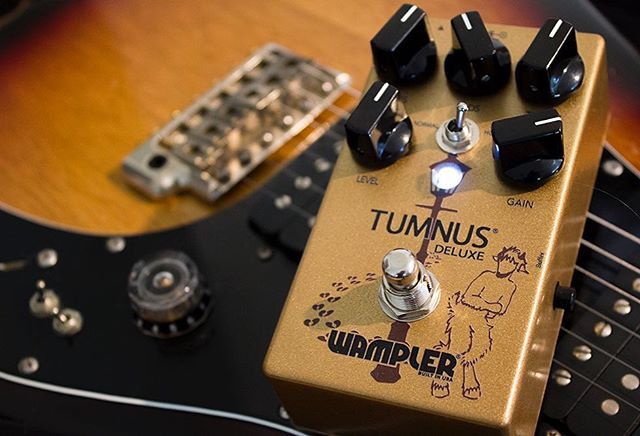
Here's something I see trip up beginners all the time. They buy an overdrive pedal, crank the gain knob up because, well, more must be better, and then wonder why everything sounds like a wasp in a tin can. Then they put the pedal away and assume it just isn't for them.
What nobody told them is that one of the most useful things an overdrive pedal can do has nothing to do with distortion. It's about pushing your amp. Once you understand that, a cheap overdrive becomes one of the most versatile tools on your board.
What's actually happening inside an overdrive
An overdrive pedal clips the audio signal — it shaves off or rounds out the peaks of the waveform, which is what creates that warm, crunchy character. But the amount of clipping depends on how hard the pedal is working, and that depends on two things: the gain (or drive) knob, and the level (or output) knob.
Most beginners touch only the gain knob. That's understandable — it's the exciting one. But the level knob is arguably more important, because it controls how loud a signal hits your amp's input. And when you hit a valve amp's input harder, the amp itself starts to clip. That's a different, often better kind of breakup. You're using the pedal to make the amp do the work.
This is the fundamental idea behind using an overdrive as a boost. If you want to understand the broader landscape of drive pedals before diving in, our explainer on the best overdrive and distortion pedals is a solid starting point.
The two main ways to use an overdrive pedal
There are really two distinct approaches, and understanding both will save you a lot of frustration.
1. The pedal does the dirt. Gain up, level roughly matched to your clean volume. The pedal is adding most of the distortion character itself. This works fine, especially with solid-state amps, but the results can feel a bit flat or artificial depending on the pedal.
2. The amp does the dirt. Gain low (sometimes nearly zero), level turned up above your clean volume. You're hitting the amp with a hotter signal and letting it break up naturally. This is the classic Tube Screamer-into-a-Marshall trick that half of blues and rock guitar is built on. The pedal adds a small amount of colouration and tightens the low end, but the character comes from the amp.
The Ibanez TS9 Tube Screamer (check price) is the most famous example of a pedal built around this second approach. Its mid-forward voicing works with the amp rather than over it. The Boss SD-1 (check price) does something similar at a lower price point.
Does this only work with valve amps?
Honestly, this is where people get confused. The boost technique works best with a valve amp that's already running warm — meaning it's turned up enough to be on the edge of natural breakup. When you hit that kind of amp with a boosted signal, magic happens.
With a solid-state amp running clean, you'll get more volume and a bit of colour from the pedal, but the amp itself won't respond the same way. That's not a reason to avoid the technique, just a reason to set your expectations differently. If you're still working out which amp suits you, our guide to the best practice amps covers a range of options across both amp types.
How to set it up — a starting point
Here's a straightforward approach you can try right now:
- Set your amp to a clean tone you like, turned up as loud as is practical for where you're playing.
- Put the overdrive in front of the amp, engaged.
- Set the gain (drive) knob between 9 o'clock and noon — lower than you think.
- Set the tone knob at noon to start.
- Slowly bring the level knob up until it's noticeably louder than your bypassed signal, then back it off slightly.
- Play, listen, and adjust the gain from there.
You're looking for added punch and a bit of extra grit, not a dramatic change in character. If it sounds harsh or buzzy, the gain is probably too high or your amp is already pushing its limits.
Stacking overdrives
Once you've got one overdrive working as a boost, a natural next step is running two overdrives together. A common setup is a low-gain pedal (like the SD-1) always on as a foundation, with a second pedal — say, the Boss DS-1 (check price) or a ProCo RAT 2 (check price) — kicked in for heavier moments. The first pedal tightens and focuses the signal going into the second, which can give you more definition than running a single high-gain pedal alone.
This is a technique worth experimenting with once you've got the basics sorted. It doesn't require expensive gear — it requires understanding what each pedal is doing.
What if I've only got a modelling amp?
If you're playing through a modelling amp or a multi-effects unit, the boost trick still has value, but the amp sim inside the modeller may already be handling that gain-staging for you. Check your amp model's input sensitivity settings if it has them. Some modellers respond well to a real overdrive in front; others have their own internal boost options. It's worth experimenting rather than assuming it won't work.
The core principle stays the same: control where the saturation comes from, and use your level knob as a tool, not an afterthought.
Common questions
- Can I use any overdrive pedal as a boost?
- Most overdrives can work as a boost — the key is setting the gain low and the level high. Some pedals suit this better than others; those with a relatively flat EQ response tend to colour your tone less when used as a clean boost. Pedals with a strong mid-hump, like a Tube Screamer, add their own character even at low gain settings, which can be a good thing or a bad thing depending on what you want.
- Do I need a valve amp for the boost trick to work?
- It works best with a valve amp that's running a bit warm, because the amp itself starts to clip in a musical way when you hit it harder. With a solid-state amp you'll still get the volume increase and any colouration the pedal adds, but the amp won't respond the same way. It's still worth trying — just expect a different result.
- Why does my overdrive sound fizzy or buzzy?
- Usually this means either the gain is set too high, your amp's master volume is too low to handle the boosted signal cleanly, or there's a mismatch between the pedal's output impedance and your amp's input. Start by lowering the gain knob and making sure your amp is turned up to a reasonable volume before adding the pedal.
- What order should overdrive pedals go in if I'm stacking two?
- Generally, put the lower-gain or cleaner pedal first in the chain, with the higher-gain pedal second. The first pedal shapes and focuses the signal going into the second. That said, reversing the order gives a different sound — neither is wrong, and swapping them around is a useful experiment.
I'm Rob, and I've taught guitar for over fifteen years — which means I've watched hundreds of beginners buy the wrong thing because someone baffled them with jargon. So that's my job here: cut through it. I genuinely love good budget gear, the kind that punches way above its price and actually keeps a new player playing. I'll tell you in plain English what matters, what doesn't, and what's a waste of your first hundred quid. No snobbery, no gatekeeping — just honest help getting started right.
Guitar teacher (15+ yrs); beginner and budget-gear specialist
More from Rob
 Your first fuzz pedal: a beginner's guide that actually makes senseConfused by fuzz pedal jargon? Here's a plain-English guide to picking your first one, with real settings and setup tips that work.
- Overdrive vs distortion: what the names actually meanOverdrive and distortion pedals aren't just marketing labels. Here's the plain-English difference and how to pick the right one for your amp.
- Your first delay and reverb pedal: settings that actually workA plain-English guide to your first delay and reverb pedal settings, so you get lush ambience instead of a muddy mess on stage or at home.
- Solid top vs laminate: what actually matters for a beginnerSolid top or laminate acoustic? Here's what genuinely changes for a beginner, and what's just marketing you can safely ignore.
 How to store an acoustic guitar when you're not playing itWhere and how you store your acoustic between sessions matters more than most beginners realise. Here's what actually protects it, in plain English.
- Metronome practice for beginners: why slow is the only speed that worksMost beginners use a metronome wrong. Here's the plain-English way to practise with one so your gear actually starts sounding like you.