How tube amp breakup differs from pedal distortion — and why it matters
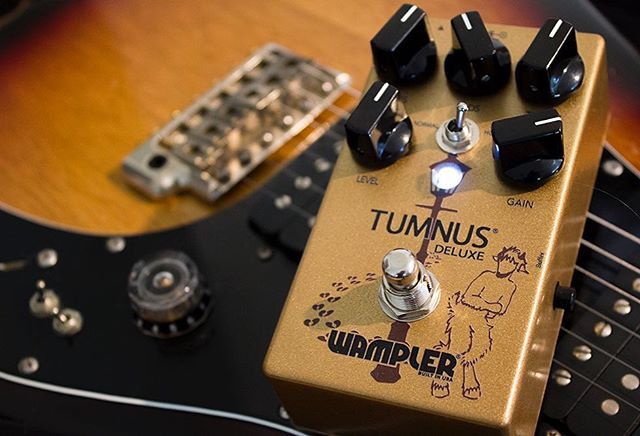
There's a sound I keep coming back to when I'm testing overdrive pedals in my workshop — the difference between a pedal clipping on its own into a clean amp versus that same pedal nudging a valve just past the edge of its comfort zone. They're related sounds. But they're not the same animal.
Understanding why that is will save you a lot of chasing your tail on the pedalboard.
What amp breakup actually is
A valve amplifier — a tube amp, for the Americans in the room — produces harmonic distortion as a byproduct of how the tubes themselves work. When you push more signal into a valve stage than it's designed to handle cleanly, the peaks of the waveform start to compress and round off. The result is soft, even-order harmonic distortion: second and third harmonics mostly, sitting in a musically sympathetic relationship to the fundamental note.
That rounding is asymmetric in a way that adds warmth rather than harshness. It's partly why a pushed Vox AC15 sounds like it's singing rather than grinding. The whole circuit — not just the preamp but the output stage and even the speaker — is involved. The amp is responding dynamically to how hard you hit it, in real time.
Pick softly, it cleans up. Dig in, it blooms. That's the character people spend decades and serious money chasing.
What pedal distortion actually is
A distortion pedal clips a signal before it reaches your amp at all. It uses a solid-state circuit — diodes, op-amps, or in some cases FETs doing their best impression of a valve — to cut the tops and bottoms off the waveform deliberately. The type of clipping, how hard it clips, and the EQ baked around that clipping stage determines whether you get something warm like the Ibanez Tube Screamer TS9 (check price) or something more aggressive like the ProCo RAT 2 (check price).
A Tube Screamer clips asymmetrically and rolls off low end before the clip stage — that's where the midrange honk comes from. The RAT clips harder and lets more bass through, so it sounds tighter and more compressed. Both are doing the same fundamental job, just with different recipes.
The difference from amp breakup? The pedal's distortion is largely fixed. It doesn't know if you're playing hard or soft at the same organic level that a pushed valve does. You can back off your guitar's volume knob and clean things up a bit — and you should; we've covered how that interaction works elsewhere — but it's not the same as a circuit breathing with you in quite the same way.
Why mixing the two changes everything
Here's where it gets interesting. Running an overdrive pedal into an amp that's already running a bit hot is a fundamentally different experience from running that same pedal into a pristine clean channel with headroom to spare.
When you push a lightly breaking-up amp with a moderate overdrive — say a Tube Screamer set low on gain, volume up — the pedal isn't really adding lots of its own clipping. It's boosting the amp's input stage so the amp breaks up harder and earlier. The primary distortion character is still coming from the amp. The pedal is more like a volume and tone shaping tool than a dirt source.
Run that same pedal into a squeaky clean amp and the pedal's own clipping is now the entire story. It can sound great — but different. Tighter, sometimes a touch more sterile depending on the amp. There's a reason a lot of players swear by pairing Tube Screamers specifically with amps that have a natural midrange voice already; the Screamer and a slightly pushed amp complement each other in a way that's hard to get with either alone.
I'll admit I got this wrong for years. I used to dial in too much gain on the pedal and not enough push from the amp, and wondered why the tone felt one-dimensional. The gain sweet spot for a lot of overdrives, when you're running into a valve amp, is lower than you'd expect.
What clean amps do that broken-up amps can't
There's a reasonable argument — one I'd actually push back on slightly — that you should always want some amp breakup in the chain. I don't think that's right across the board. A genuinely clean, high-headroom amp like a clean Fender Twin or a Matchless on its lowest setting gives you a transparent platform where the pedal's character comes through with full fidelity. If you've spent good money on something with a particular voice, a highly coloured amp might obscure it.
The flip side is that a clean transistor amp — or a modeller running a clean patch — tends to reproduce pedal distortion in a way that can feel somewhat two-dimensional. Not bad, just different. You lose the speaker compression, the way a physical cabinet saturates slightly at volume. Those physical elements add texture that a clean solid-state stage doesn't contribute on its own.
This is also why the best overdrive and distortion pedals often get reviewed with tube amps as a reference. They were designed with that interaction in mind.
Finding your own balance
The practical answer for most players is somewhere in the middle. A light-to-moderate amount of amp gain — enough that the amp is responsive to your touch, not so much that the amp itself is the main distortion source — gives you a foundation that cooperates with almost any pedal you put in front of it. The pedal adds definition, sustain, midrange focus. The amp adds the warmth and the feel.
If you're mostly home-playing at bedroom levels, this balance is harder to achieve because most tube amps need volume to really open up. That's a real practical constraint. A low-wattage valve amp — something in the 5-15 watt range — can help, since the power stage starts doing its job at a more neighbourly volume. Some players use an attenuator to get there.
Spend some time with just the amp — no pedals — and find where its own voice starts to change. Then bring the pedal in and see how it responds to that threshold. That's more useful than reading any spec sheet, including this one.
For a broader look at which pedals are worth starting that exploration with, our overdrive and distortion buyers guide is a reasonable starting point. And if you're still working out which amp to pair all of this with, we have thoughts there too.
Common questions
- Can you get amp-breakup tone from a pedal into a clean solid-state amp?
- You can get close, but not identical. Solid-state amps don't respond to input signal the same way valves do — there's no power-stage saturation or speaker compression contributing to the feel. Some pedals, particularly those that model asymmetric clipping, come quite close in terms of harmonic character, but the dynamic responsiveness of a pushed tube circuit is hard to fully replicate before the amp stage.
- Should my overdrive pedal go before or after other effects in the chain?
- Overdrive and distortion pedals almost always work best early in the signal chain — after your guitar, before modulation and time-based effects like reverb and delay. Running reverb or delay into a distortion pedal usually creates a muddy, cluttered mess as the pedal clips those wet signals too. Drive goes first, space effects go last, as a general rule.
- Why does my overdrive pedal sound different at gig volume than at home?
- Several reasons. At higher volumes your amp's power stage starts contributing its own compression and saturation, which interacts with the pedal's clipping. The speaker also behaves differently under load. And frankly your ears process loudness differently — the Fletcher-Munson curve means bass and treble both feel more prominent at higher volumes, which changes your perception of the same tone setting. This is a genuine challenge and worth dialling in at performance volume when you can.
Hey, I'm Doug. I've played the folk circuit for the better part of my life, mostly fingerstyle, and somewhere along the way I started building and repairing acoustics in a little workshop out back. Spend enough time with a sound that comes from wood, air and your bare fingers and you start to hear instruments the way you hear a forest in the morning — alive and full of small details. I'll tell you how a guitar feels under the fingers and how it ages, not just how it photographs.
Folk-circuit fingerstyle player; acoustic builder and repairer
More from Doug
 Recording acoustic guitar at home: DI, microphone, or both?Plugging in vs putting up a mic — or blending both. Here's what actually works when recording acoustic guitar at home, from a builder who's tried all of it.
- How overdrive pedals respond to fingerpicking (and why it's different from a pick)Fingerpicking and overdrive pedals have a complicated relationship. Here's what's actually happening when your tone cleans up — or collapses — under your fingers.
- Fuzz into reverb: how the pedal order shapes your sustain and spacePut fuzz before reverb and you get one sound. Flip the order and everything changes. Doug breaks down why pedal order matters more than most players expect.
 Electric guitar body woods: what they actually contribute to your toneDo tonewoods really matter on a solid-body electric? Doug breaks down what alder, ash, mahogany and basswood actually do — and what they don't.
- Fuzz pedals with acoustic-electric guitars: what works and what doesn'tRunning a fuzz pedal through an acoustic-electric is tricky. Doug explains what actually works, why most fuzz circuits fight piezo pickups, and how to get useful sounds.
- Acoustic guitar saddle intonation: why your guitar goes sharp up the neckYour acoustic sounds great open but goes sharp past the fifth fret. Doug explains why saddle compensation fixes this — and what to do about it.