Fuzz into reverb: how the pedal order shapes your sustain and space
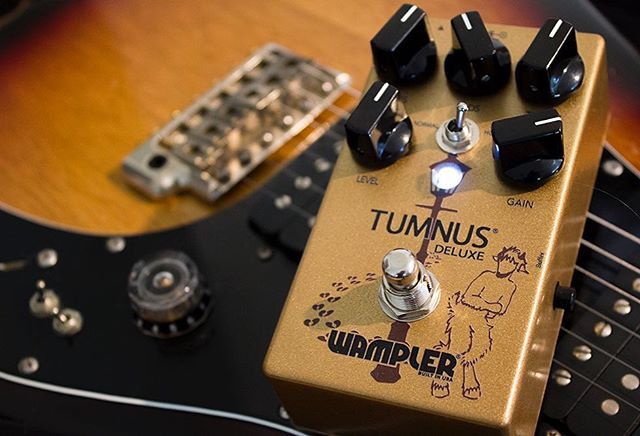
A player came into my workshop a few months back — he'd driven over from the Swannanoa Valley side, which isn't a short trip — carrying a board with a Big Muff and a spring reverb clone, frustrated that his sound was collapsing into mush every time he pushed the fuzz hard. He'd been fighting it for weeks. The fix took about forty-five seconds: I swapped the order of two cables.
That's the thing about fuzz into reverb. The relationship between those two pedals is one of the more interesting and least-explained dynamics in a signal chain. And because fuzz is such a peculiar beast to begin with — not quite distortion, not quite overdrive, something older and stranger — the way it interacts with reverb depends almost entirely on which side of the other pedal it lands on.
Why fuzz behaves differently to other dirt pedals
Most overdrive and distortion pedals clip your signal in a fairly controlled way. They respond to input level, they track your picking dynamics, and they hand off a shaped but readable signal to whatever comes next. Fuzz is less polite. A lot of fuzz circuits — particularly the older germanium designs — are highly reactive to the impedance of whatever feeds them. They can also generate a lot of harmonic content well up into the upper frequencies, and that content sits right where reverb algorithms tend to bloom.
Which means that fuzz, fed into reverb, does something quite specific: the reverb tail isn't just your note decaying in a room. It's the full harmonic texture of the fuzz — all that upper-octave fizz and the thicker low-mid sustain — decaying in that room. The reverb isn't responding to your guitar. It's responding to your fuzz. That distinction changes everything about how the result sounds.
Fuzz before reverb: the classic wash
This is the order most players land on first, and for good reason. Running fuzz into reverb gives you that classic, sustained, slightly surreal cloud of tone that you hear on a lot of early psychedelic recordings and on a fair amount of ambient folk and drone work. The fuzz sustains the note, and the reverb takes that sustained, harmonically dense signal and spreads it through space.
On a long, fingerpicked note, the effect can be genuinely beautiful. The fuzz holds the note past its natural decay, and the reverb fades it out slowly, so a single plucked string becomes something that breathes. If you're playing sparse, open-chord arrangements — the kind of thing where space between notes matters — this order works in your favour.
The problem comes with complexity. Play a chord, or anything with two or more notes close together, and the fuzz's harmonic content starts interfering with itself inside the reverb's decay. Low notes get muddy. The tail turns from a room into a fog. I'd argue this is actually the most common complaint people have about fuzz in a pedal chain, and it's almost always a density problem rather than a level problem.
The Electro-Harmonix Green Russian Big Muff (check price) is a good example of a fuzz that can actually handle this reasonably well before a reverb, because its mid-scoop keeps some of the denser harmonic content out of the way. Something with more upper-frequency aggression will clog faster.
Reverb before fuzz: the dirtier, less-obvious choice
This is the one that surprises people. Putting reverb first, then fuzz after it, means the fuzz is clipping everything — your dry signal and the reverb tail together. The reverb no longer blooms naturally; it gets compressed and distorted along with the rest of the signal.
What you get is a sound that's denser, more saturated, and somewhat less "spacious" in the traditional sense — but it has a quality that's hard to describe other than saying it feels more like one sound rather than two pedals. The reverb tail doesn't drift out behind the fuzz; it gets eaten by it, which pushes the whole thing into a compressed, sustaining blob that some players find genuinely useful for solo work or for drone textures.
I'll admit I got this wrong for years. I dismissed reverb-before-fuzz as a mistake rather than a technique. But spend a session with a plate reverb hit by a Fuzz Face and you'll hear something that has its own character — grittier, more present, less ethereal. For certain kinds of playing it's exactly right.
If you want to explore what's possible here, our best reverb pedals guide covers a range of options from spring to shimmer that all behave quite differently when something as aggressive as a fuzz follows them in the chain.
How reverb type changes the outcome
Not all reverbs respond to fuzz the same way, and this is worth thinking through before you buy.
Spring reverb, with its naturally short, slightly dripping decay, tends to hold up better before a fuzz than a long hall or plate will. The tail is brief enough that the fuzz doesn't have much to saturate before the next note arrives. A long hall reverb, by contrast, generates a tail that keeps feeding the fuzz long after you've lifted your finger. That can be glorious in a slow, ambient context and catastrophic in anything with rhythmic movement.
Room and ambience settings — the shorter, subtler ones — are often the most practical for fuzz-before-reverb in a working rig, because they add depth without generating enough tail to cause problems. Think of it less as reverb and more as a sense of space.
Shimmer reverb is its own conversation. Running fuzz into shimmer is either transcendent or unlistenable, and I've heard both in the same session. The pitch-shifted tails add their own harmonic content, which compounds with the fuzz's harmonics in ways that can be genuinely surprising. If you're curious, the Walrus Audio Slö (check price) has a few modes that interact with upstream fuzz in interesting ways — worth experimenting with at lower fuzz gain settings first.
Practical guidelines for setting the two together
A few things I've found consistently useful, regardless of which order you choose.
First, roll your fuzz's volume knob back slightly from maximum. Most fuzz pedals run hot, and hitting a reverb with a very loud, very saturated signal will push the reverb's input into territory it wasn't designed for — even if it's not a tube circuit. A small reduction in fuzz output level, before the reverb, often cleans the tail up noticeably.
Second, check your reverb's mix and decay settings after you've engaged the fuzz. What sounds like a reasonable reverb depth on a clean signal can sound over-the-top once fuzz is in the chain, because the fuzz is already adding perceived density. You'll often find yourself pulling the mix back by ten or fifteen percent.
Third — and this is the one players skip — try adjusting your guitar's volume knob while both pedals are on. Many fuzz circuits, particularly germanium ones, respond dramatically to the guitar's own volume control. Backing off the guitar volume can reduce the fuzz's clipping without changing the reverb's behaviour, which gives you a third axis of control you're not getting from the pedal knobs alone. There's more on this in our piece on choosing a fuzz pedal — pickup type and output level both factor into how controllable a fuzz is in a chain.
A quick note on buffers
If you're running a true-bypass fuzz into a buffered reverb, you may find the fuzz sounds different from when it's the only pedal on your board. Some fuzz circuits — particularly vintage-voiced silicon and germanium designs — want to see a specific input impedance, and a buffer earlier in the chain can change that. The Dunlop Fuzz Face Mini (check price) is well-known for this; it typically wants to sit right after the guitar, before any buffered pedals. If your fuzz sounds thin or nasal when reverb is engaged, this is worth investigating before you assume it's an order problem.
The man from Swannanoa left happy, his board cabled the other way around. He said it sounded like he'd bought a new pedal. He hadn't — he'd just moved a cable. That's usually how it goes with signal chain problems. The answers are in the details, and the details are usually small.
— Doug, Acoustic & Fingerstyle Editor
Common questions
- Should fuzz go before or after reverb in a signal chain?
- Most players run fuzz before reverb, which lets the reverb respond to the full, sustained fuzz signal and creates a classic spacious wash. Reverb before fuzz is less common but has its own character — it compresses the tail into the fuzz for a denser, more saturated sound. Neither is wrong; they're just different.
- Why does my fuzz sound muddy when I add reverb?
- Fuzz produces a lot of harmonic content, and a long reverb tail compounds that complexity. Try shortening the reverb's decay time, reducing the mix level, or rolling back your guitar's volume knob slightly to reduce how hard you're driving the fuzz. A room or ambience setting will clog far less than a long hall or plate.
- Does the type of reverb pedal matter when running it with fuzz?
- Yes, quite a bit. Shorter reverb types — spring, room, ambience — hold up better before a fuzz because the tail is brief enough not to cause problems. Long plate or hall reverbs generate tails that keep feeding the fuzz and can turn muddy quickly, especially when playing chords.
- Why does my fuzz sound different when I add other pedals to the chain?
- Many fuzz circuits, especially germanium and vintage-voiced silicon designs, are sensitive to input impedance. Buffered pedals placed earlier in the chain can change how the fuzz responds. If your fuzz sounds thin or off once other pedals are active, try placing it first in the chain, directly after the guitar.
Hey, I'm Doug. I've played the folk circuit for the better part of my life, mostly fingerstyle, and somewhere along the way I started building and repairing acoustics in a little workshop out back. Spend enough time with a sound that comes from wood, air and your bare fingers and you start to hear instruments the way you hear a forest in the morning — alive and full of small details. I'll tell you how a guitar feels under the fingers and how it ages, not just how it photographs.
Folk-circuit fingerstyle player; acoustic builder and repairer
More from Doug
 Recording acoustic guitar at home: DI, microphone, or both?Plugging in vs putting up a mic — or blending both. Here's what actually works when recording acoustic guitar at home, from a builder who's tried all of it.
- How tube amp breakup differs from pedal distortion — and why it mattersTube amp breakup and pedal distortion both add grit, but they work differently. Here's what that means for your tone and how you use them together.
- How overdrive pedals respond to fingerpicking (and why it's different from a pick)Fingerpicking and overdrive pedals have a complicated relationship. Here's what's actually happening when your tone cleans up — or collapses — under your fingers.
 Electric guitar body woods: what they actually contribute to your toneDo tonewoods really matter on a solid-body electric? Doug breaks down what alder, ash, mahogany and basswood actually do — and what they don't.
- Fuzz pedals with acoustic-electric guitars: what works and what doesn'tRunning a fuzz pedal through an acoustic-electric is tricky. Doug explains what actually works, why most fuzz circuits fight piezo pickups, and how to get useful sounds.
- Acoustic guitar saddle intonation: why your guitar goes sharp up the neckYour acoustic sounds great open but goes sharp past the fifth fret. Doug explains why saddle compensation fixes this — and what to do about it.