Fuzz pedals with acoustic-electric guitars: what works and what doesn't
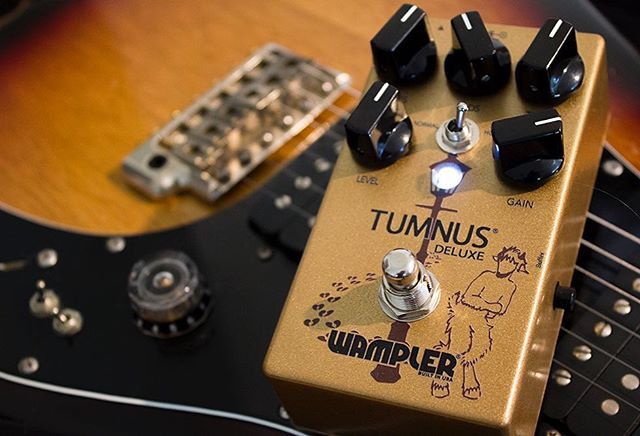
A few years back I was playing a late-night session at the Lexington in Asheville, and the guitarist next to me plugged his Taylor 314ce straight into a Fuzz Face. It sounded like a dying lawnmower. He thought something was broken. Nothing was broken — he just hadn't reckoned with what fuzz actually does to a high-impedance piezo signal.
It's a combination that comes up more often now that players are blurring the line between acoustic and electric. People are curious, and fair enough — there's something genuinely interesting at the intersection of organic acoustic tone and a saturated, wooly fuzz. But most fuzz pedals were designed around the output characteristics of a magnetic electric pickup, and a piezo-equipped acoustic-electric is a very different beast. Understanding that difference is the whole game here.
Why piezo pickups and fuzz circuits argue with each other
A piezo undersaddle pickup has very high output impedance — we're talking anywhere from 1 MΩ up to several MΩ depending on the element. A typical germanium Fuzz Face has an input impedance somewhere in the range of 10–50 kΩ. When a high-impedance source meets a low-impedance input, you get severe high-frequency loading. The result is a thin, nasal, fizzing tone with no warmth and no sustain to speak of. It doesn't sound like fuzz — it sounds like a broken cable.
Silicon-based fuzzes often have higher input impedance, and op-amp designs like the Big Muff tend to be more forgiving still. That's actually worth knowing before you experiment, because circuit type matters more for acoustic use than almost any other application. I've covered the differences in detail elsewhere — if you want the full picture on circuit topology, the EHX Big Muff Pi (check price) review and the Dunlop Fuzz Face Mini (check price) review give you a decent contrast to read alongside each other.
The buffer fix: simple and it actually works
The single most practical thing you can do if you want to run fuzz on an acoustic-electric is to put a buffer between the guitar and the fuzz pedal. A lot of DI boxes — especially active ones — buffer the signal as part of their function. Run the guitar into an active DI or a dedicated buffer pedal first, and now the fuzz sees a low-impedance source regardless of what your pickup is doing upstream. The impedance mismatch disappears and the pedal behaves much more like it does with an electric.
Some onboard preamps on acoustic-electrics do this work already. If your guitar has an active preamp with a battery — a Fishman Aura, an LR Baggs system, a Takamine-branded preamp — chances are the output impedance coming off that system is already reasonably low, sometimes 1 kΩ or below. In that case you've already got a buffer and the fuzz will respond far more predictably. Worth checking your guitar's spec sheet or the manufacturer's site to find out what output impedance your preamp runs at.
Which fuzz styles actually suit an acoustic signal
Even with a buffer in the chain, not all fuzz types translate gracefully. Germanium designs are the hardest to get along. They're touch-sensitive and warm on an electric, but on an acoustic they can sound murky in a way that just obscures the natural resonance of the instrument rather than adding anything. You lose the tap and bloom of a good fingerstyle tone.
Op-amp fuzzes — and here the Big Muff family is the obvious example — handle the acoustic source better. The sustain is long, the clipping is softer and more even, and you have more control over where the tone sits. Turned down, a Big Muff-style circuit on an acoustic can produce something genuinely beautiful: a soft, singing sustain on single-note lines. I wouldn't run one on full-blown chords unless you're after something deliberately abstract, but for melodic lines it's surprisingly musical.
Velcro-style fuzz — the aggressive, splatty, asymmetric stuff — is almost always a bad match for acoustic. There's nothing for the upper-register chime and string separation to hold onto. Everything collapses into noise. I'd steer clear of designs like the Z.Vex Fuzz Factory (check price) unless you're very deliberately after chaos.
Fuzz after reverb: an acoustic-specific trick
One approach that's genuinely worked for me in the workshop and on stage: put a light reverb or a touch of room ambience before the fuzz in the signal chain, not after. It thickens the source signal slightly before it hits the clipping stage, which softens the transients and gives the fuzz something rounder to bite into. The result is less spiky, more like the way a fuzz sounds when it's being fed a slightly compressed signal from an electric guitar's neck pickup.
It's an unconventional order — most players put reverb at the end of their chain. But on acoustic-electric, standard signal-chain logic doesn't always apply, and I've found this arrangement cuts down on the harsh transient click you often get at the front edge of a picked note through fuzz. Experiment with it before you dismiss it.
If you want a wider look at reverb options to sit before your fuzz, our best reverb pedals guide has a range of options across different price points.
Practical suggestions for different setups
If your acoustic-electric has a passive piezo with no active preamp — common on cheaper instruments — start with an active DI box, then a Big Muff-style fuzz, then your amp or PA input. Keep the fuzz gain at around halfway. Play single-note lines first and adjust from there before you even try chords.
If you have an active preamp onboard, try the fuzz directly and see what you get. You may not need the buffer at all. Adjust the output volume on the onboard preamp downward slightly before hitting the fuzz input — a lower input level to the pedal often gives you more control over the gain response.
And honestly, accept that fuzz on acoustic-electric isn't going to sound like fuzz on a Stratocaster. That's not a failure — it's a different texture. Some of the most interesting acoustic sounds I've heard in the last few years have come from players who stopped trying to replicate electric fuzz tone and instead worked with the oddness of what acoustic fuzz actually does. There's a fragile, reedy quality to it that can be genuinely moving in the right context. You just have to meet it where it is.
If you're building a board around an acoustic-electric setup and want to see which fuzz pedals hold up best in testing, our best fuzz pedals guide covers the main options with notes on their circuit behaviour.
Common questions
- Can I plug an acoustic-electric directly into a fuzz pedal?
- You can, but if your guitar has a passive piezo pickup with no active preamp, you'll likely get a thin, nasal sound because of impedance mismatch. Running an active DI box or buffer pedal between the guitar and the fuzz solves most of this. Guitars with active onboard preamps often work better directly.
- Which type of fuzz pedal works best with acoustic-electric guitars?
- Op-amp designs like the Big Muff family tend to be the most workable, mainly because they have higher input impedance and smoother clipping characteristics. Germanium Fuzz Face-style circuits are the hardest to get along with on acoustic due to their low input impedance and sensitivity to source characteristics.
- Does fuzz pedal placement in the signal chain matter more for acoustic than electric?
- Yes. With acoustic-electric the standard rules shift. Putting a light reverb before the fuzz rather than after it can smooth the transient edge of a picked note and give the fuzz a rounder signal to clip. It's worth experimenting rather than defaulting to conventional pedal order.
Hey, I'm Doug. I've played the folk circuit for the better part of my life, mostly fingerstyle, and somewhere along the way I started building and repairing acoustics in a little workshop out back. Spend enough time with a sound that comes from wood, air and your bare fingers and you start to hear instruments the way you hear a forest in the morning — alive and full of small details. I'll tell you how a guitar feels under the fingers and how it ages, not just how it photographs.
Folk-circuit fingerstyle player; acoustic builder and repairer
More from Doug
 Electric guitar body woods: what they actually contribute to your toneDo tonewoods really matter on a solid-body electric? Doug breaks down what alder, ash, mahogany and basswood actually do — and what they don't.
 Acoustic guitar saddle intonation: why your guitar goes sharp up the neckYour acoustic sounds great open but goes sharp past the fifth fret. Doug explains why saddle compensation fixes this — and what to do about it.
- Stacking overdrive pedals: how layering dirt actually worksStacking two overdrive pedals unlocks tones neither can reach alone. Doug explains the signal chain logic, gain staging, and why order matters.
- Running an overdrive pedal into an acoustic-electric: what actually worksOverdrive on acoustic sounds wrong — until it doesn't. Doug walks through how to run dirt into an acoustic-electric without losing what makes the instrument alive.
- Fuzz pedals and single-coil guitars: how pickup choice shapes your fuzz toneSingle-coil pickups and fuzz pedals have a complicated relationship. Doug explains what's really going on — and how to get the best from the pairing.
- How fretting-hand pressure affects acoustic tone — and what it tells you about your setupThe amount of pressure you apply when fretting an acoustic note shapes tone more than most players realise — and it points directly to whether your guitar's setup is working for you.