Stacking overdrive pedals: how layering dirt actually works
A friend of mine, a fingerpicker who plays every Tuesday at the Isis Restaurant on Lexington Avenue, called me a while back puzzled about why his tone had gone muddy. He'd just bought a second overdrive pedal, stacked it in front of his first, and turned both up. Sounded like a wet blanket on a warm amp. He figured more gain meant more character. It doesn't work that way.
Stacking overdrives is one of those things that looks simple on paper and turns into a rabbit hole pretty fast. But there's actual logic underneath it, and once you hear it you can't unhear it.
What stacking actually means
When you run one overdrive pedal into another, the second pedal isn't just receiving your guitar signal. It's receiving a signal that's already been shaped — compressed slightly, harmonically enriched, with some edge added to the transients. The second pedal then responds to that. Both pedals interact. The character of the first reshapes what the second clips, and the result can be richer and more alive than either pedal on its own, or it can collapse into a fizzing mess.
Neither outcome is accidental once you understand what's happening.
The first pedal sets the table
The pedal closest to your guitar does most of the tonal shaping. Think of it as the foundation. A lot of players use a low-to-medium gain overdrive here — something like an Ibanez Tube Screamer TS9 (check price) or a Boss SD-1 (check price) — with the gain set conservatively and the level pushed up. That elevated signal hits the second pedal harder, which pushes it further into its own clipping sweet spot without you having to crank its gain at all.
This is where the magic tends to live. The first pedal isn't really doing heavy lifting on its own; it's conditioning the signal. The compression and mild harmonic saturation it adds make the second pedal feel tighter, warmer, more focused. You get complexity without mush.
The alternative — gain cranked on both — works against you. Two high-gain stages compound the noise floor, smear transient detail, and push you into frequencies that sound dense rather than thick. You lose note separation, especially if you play with any kind of fingerstyle precision.
Order: which pedal goes first?
Swap the order and you get a different result. Full stop.
A brighter, more aggressive pedal first tends to harden the overall tone. A warmer, darker pedal first tends to smooth out what follows. Neither is wrong. They're just different voicings of the same stack.
The classic approach — a mild Tube Screamer-style pedal first into a slightly higher-gain drive second — works because the mid-forward character of that first pedal feeds the second with a signal that's already leaning into the amp's natural breakup zone. The second pedal then pushes it over the edge in a way that feels amp-like rather than pedal-like. That distinction matters a lot if you care about touch response.
Reversing it (the bigger, brighter drive first) can give you a more open, scooped feel on the front end with more saturation piled on top. Some players love that. I find it can lose the woody note-bloom I'm after, particularly on anything that needs to breathe dynamically. That's a personal call.
Gain staging: the part most players skip
Gain staging is just managing signal level at each step in the chain so nothing clips badly and everything plays well together. Most people set each pedal by how it sounds alone and then wonder why the stack sounds wrong.
A better approach: start with both pedals at unity gain (output level matching your bypassed signal). Add dirt gradually. Listen to the interaction. The goal is to find the point where the combined gain feels like a single, coherent sound rather than two separate sounds layered on top of each other.
When a stack sounds like two pedals fighting, that's usually a gain staging problem. Either one or both output levels are too high, or both gain knobs are too far up and neither pedal has room to breathe. Back off the gain on the first pedal, push its level, and let the second pedal do more of the actual saturation work. You'll hear the difference almost immediately.
If you want a broader picture of how individual overdrive and distortion pedals work before you start stacking, our guide to the best overdrive and distortion pedals covers a range of options at different gain levels and voicings — useful reference when you're choosing what to stack in the first place.
What different pedal types bring to a stack
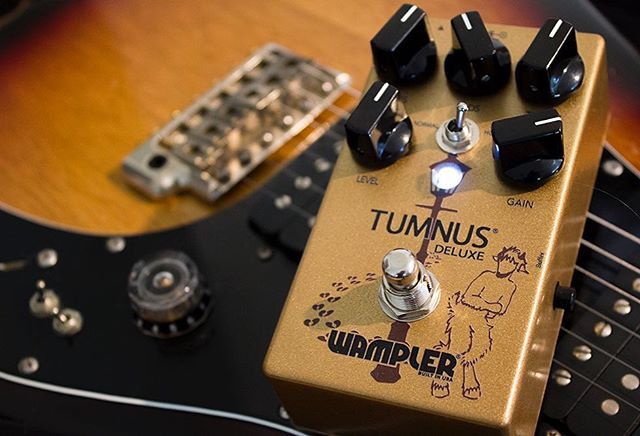
Not all overdrives are the same topology, and the differences matter when you're stacking. Soft-clipping designs (Tube Screamer, OCD, Wampler Tumnus) tend to compress naturally and add even-order harmonics that sit well under a second stage. Hard-clipping designs (Boss DS-1 (check price), ProCo RAT 2 (check price)) clip more aggressively and introduce more odd-order content, which can get brittle if over-stacked.
A common and genuinely effective combination: a soft-clipper first into a harder-clipping drive second. The soft stage adds warmth and slight compression; the harder stage provides definition and cut. The combination can sound more like an amp working hard than either pedal alone. The Fulltone OCD (check price) sits interestingly in both camps depending on whether you run it in HP or LP mode, which makes it a flexible candidate for either position in a stack.
I'd argue most players reach for fuzz in a stack before they're really ready for it. Fuzz into overdrive, or overdrive into fuzz, is its own conversation. Fuzz is reactive in a way that soft-clipping drives aren't — it's extremely sensitive to what's hitting it. For a stack that stays manageable and musical, two overdrives or a drive into a mild distortion is the better starting point.
The amp is part of the equation
A clean, solid-state amp and a slightly broken-up tube amp will respond to a stacked pair very differently. On a clean platform, the pedals carry all the work and the stack needs to be balanced carefully. On an amp already near the edge of breakup, even a mild first pedal can push things into rich, harmonically full territory without needing much gain from either pedal at all.
If you're running into something like a Vox AC15C1 (check price) with the volume up, you might find the amp itself becomes the third stage in your stack — and often the best-sounding one. Set the pedals conservatively and let the amp do some of the work. That layered relationship between pedals and amp is where stacking really shows its depth.
Start with two pedals you already own, swap their order, adjust gain and output levels slowly, and listen. The answer is in the sound, not the settings.
— Doug, Acoustic & Fingerstyle Editor
Common questions
- What's the best order to stack two overdrive pedals?
- The most common approach is a low-to-medium gain overdrive first (closer to your guitar), with its level pushed up and gain kept modest, feeding into a second drive that does more of the actual saturation. This gives the second pedal a slightly hotter, conditioned signal to respond to. That said, reversing the order produces a genuinely different character — experiment rather than follow a rule.
- Why does my stacked overdrive sound muddy?
- Usually a gain staging problem. If both pedals have their gain up high, you're compounding saturation across two stages and losing note definition. Try backing off the gain on the first pedal and raising its output level instead. Let the second pedal handle more of the clipping. Also check whether both pedals are mid-heavy — stacking two mid-forward drives can produce a boxed-in, dense tone.
- Can you stack three overdrive pedals?
- Technically yes, but each additional stage compounds noise and can smear dynamics. Most players find the sweet spot at two. A third pedal is generally more useful as a clean boost or EQ placed after the drives to shape the final character rather than as a third clipping stage.
- Does stacking overdrives work on acoustic-electric guitars?
- It can, but acoustic pickups — especially undersaddle piezo systems — interact with drive pedals differently than magnetic pickups. Piezo sources tend to produce a harder, more compressed clip that doesn't always stack gracefully. If you're plugging in an acoustic, low-gain, low-mix drive settings and careful EQ around the 2–4 kHz range will keep things from going harsh. Start conservative.
Hey, I'm Doug. I've played the folk circuit for the better part of my life, mostly fingerstyle, and somewhere along the way I started building and repairing acoustics in a little workshop out back. Spend enough time with a sound that comes from wood, air and your bare fingers and you start to hear instruments the way you hear a forest in the morning — alive and full of small details. I'll tell you how a guitar feels under the fingers and how it ages, not just how it photographs.
Folk-circuit fingerstyle player; acoustic builder and repairer
More from Doug
 Electric guitar body woods: what they actually contribute to your toneDo tonewoods really matter on a solid-body electric? Doug breaks down what alder, ash, mahogany and basswood actually do — and what they don't.
- Fuzz pedals with acoustic-electric guitars: what works and what doesn'tRunning a fuzz pedal through an acoustic-electric is tricky. Doug explains what actually works, why most fuzz circuits fight piezo pickups, and how to get useful sounds.
 Acoustic guitar saddle intonation: why your guitar goes sharp up the neckYour acoustic sounds great open but goes sharp past the fifth fret. Doug explains why saddle compensation fixes this — and what to do about it.
- Running an overdrive pedal into an acoustic-electric: what actually worksOverdrive on acoustic sounds wrong — until it doesn't. Doug walks through how to run dirt into an acoustic-electric without losing what makes the instrument alive.
- Fuzz pedals and single-coil guitars: how pickup choice shapes your fuzz toneSingle-coil pickups and fuzz pedals have a complicated relationship. Doug explains what's really going on — and how to get the best from the pairing.
- How fretting-hand pressure affects acoustic tone — and what it tells you about your setupThe amount of pressure you apply when fretting an acoustic note shapes tone more than most players realise — and it points directly to whether your guitar's setup is working for you.