Putting delay and reverb before or after your amp's breakup
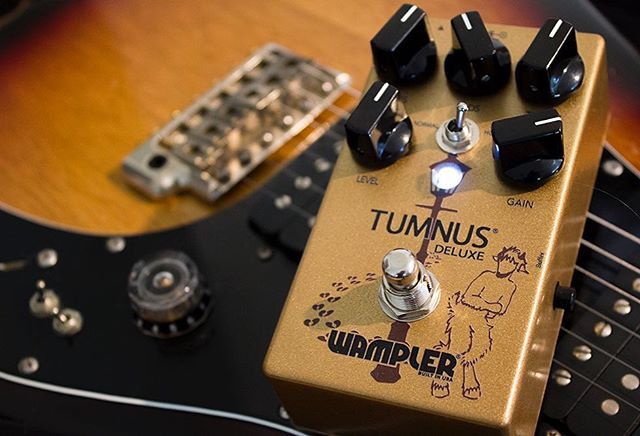
I spent a good few years on the bench telling customers the same thing before I even looked at their amp: "where's your delay pedal plugged in?" More often than not, that was the actual problem, not the amp at all. Get a cranked EL34 power section into proper breakup and stick your ambient effects on the wrong side of it, and you'll spend hours chasing a mud that was never the amp's fault.
This one trips up more players than pickup height or string gauge ever will, and nobody talks about it enough. So right then, let's sort it.
The basic rule, and why it exists
Delay and reverb almost always want to sit after your dirt, whether that dirt comes from a pedal or from the amp's own preamp and power tubes breaking up. Put a repeat or a reverb tail into distortion, and the amp reprocesses every single repeat as if it were the original note, fuzzing them out into a smeared, indistinct wash. Put the delay after the gain stage instead, and each repeat stays a clean, discrete echo of the note you actually played, decaying naturally.
This is straightforward when your dirt is a pedal on the floor in front of a clean amp. It gets a lot less straightforward the moment your dirt is coming from the amp itself, cranked into natural sag and breakup, because now there's no "after the distortion" point on your pedalboard. The distortion is happening inside the chassis.
Why an effects loop exists (and it's not just marketing)
This is exactly what an amp's effects loop is for. A proper series loop taps the signal after the preamp gain stages but before (or in some designs, as part of) the power section, so your time-based effects go in after the tone has already broken up, not before. I've had customers convinced their effects loop was "broken" because their delay sounded thin in it, when actually it was working exactly as designed. The confusion happens because ambient effects react so differently front-of-amp versus in the loop that people assume something's faulty.
An amp like the Marshall DSL40CR (check price) or the Blackstar HT Club 40 MkII (check price) gives you a series loop for exactly this reason. Run your gain-stage pedals (or use the amp's own dirty channel) and keep your delay and reverb in the loop, and the ambience sits behind the breakup properly, each repeat distinct, the reverb tail transparent rather than swampy.
Smaller combos without a loop, the Blues Junior IV (check price) for instance, don't give you that option, so you're stuck putting everything in front. Honestly, that's fine for lower-gain blues tones where the breakup is gentle. It falls apart faster the harder you push the front end.
Where it actually falls apart
Ambient and post-rock players run into this constantly, because the whole point of that sound is big trails and swells sitting under a gained-up tone. If you're chaining something like a MXR Carbon Copy (check price) or a Strymon TimeLine (check price) in front of an amp that's already cranked, you get a wash of indistinct mush the moment the repeats start piling into the gain stage. I've heard players blame the pedal, blame the amp, swap both out, and never actually fix anything, because the problem was never the gear. It was the order.
My honest opinion, and I'll cop some argument on this: most bedroom ambient rigs would sound better with less delay feedback and more attention to loop placement than they currently get. Everyone reaches for another repeat before they reach for the effects loop. Wrong order of priorities, in my book.
Working without a loop
If your amp doesn't have a series loop, you've got two honest options. First, keep your gain modest enough that the amp's own breakup isn't smearing the repeats too badly, this is basically how the blues and classic rock guys got away with running everything front-of-amp for decades on amps like a cranked Vox AC15C1 (check price). Second, get your distortion from a pedal instead of amp breakup, run that pedal first, then delay and reverb after it, all still in front of the amp, with the amp itself kept clean or near-clean. The ProCo RAT 2 (check price) or a Tube Screamer (check price) into a clean-ish valve tone works fine this way, because the amp itself isn't adding a second layer of unpredictable dirt on top of your repeats.
Reverb specifically, a small note
Reverb behaves slightly better in front of breakup than delay does, because a wash of ambience getting a bit of extra grit isn't as obviously wrong to the ear as discrete, countable repeats turning to fuzz. That's why a lot of players get away with a Holy Grail Nano (check price) or Hall of Fame 2 (check price) in front of a pushed amp for years without noticing an issue, while the same placement wrecks a delay pedal's repeats. If you're only running reverb, front-of-amp is far more forgiving. Add delay into the mix and the loop question becomes worth solving properly.
Setting it up in practice
Get your dirt tone sorted first, on its own, whether that's amp breakup, a pedal, or both. Then bring in the delay and listen specifically to whether the tails are staying clean and discrete as they decay, or turning fuzzy and losing pitch definition. If it's the latter and you've got a loop, move the time-based pedals there and A/B it. The difference is usually obvious within about ten seconds, not subtle at all once you know what you're listening for.
Our guide to the best delay pedals covers a few units with proper trails modes worth knowing about here, and if reverb's your main focus the reverb pedal guide is worth a read too, mixing algorithmic and spring-style options that behave differently loop versus front-of-amp.
The bit people forget
None of this matters if your amp's power section isn't doing anything interesting in the first place. A lot of players chase loop placement and pedal order for months while running a solid-state or heavily digital amp that doesn't actually sag or compress the way a valve power section does, so there's no real breakup to place anything around. If that's you, have a look at what a proper EL34 or 6V6 power amp does under load before you spend more money on pedals. It changes the whole equation.
Common questions
- Can I just use two delay pedals, one before and one after the amp breakup?
- Yeah, plenty of players do exactly this. A short slapback in front for texture, then a longer ambient delay in the loop after the dirt, so you get grit on the slapback and clean trails on the longer repeats. It's a legitimate way to get both characters in one rig.
- Does this apply to modelling amps and amp-in-the-box pedals too?
- The principle's the same even without real valves involved. If a modeller or amp-sim has its distortion block before its delay/reverb block in the signal chain editor, the repeats will still pick up the modelled grit. Most modern modellers, the Boss Katana-50 MkII and similar, let you reorder blocks freely, so it's worth checking the signal chain rather than assuming.
- Is a parallel effects loop different from a series loop for this?
- A parallel loop blends the wet effects signal back in alongside the dry, rather than the wet signal passing through the full loop path in series. It can work well for delay and reverb too, and some players prefer it for keeping the dry tone fully intact, but series is more common and simpler to reason about if you're new to loops.
Right then — I'm Jez, and I've spent the best part of 25 years chasing the same thing: a cranked British valve amp on the edge of breakup. Cut my teeth in smoky blues clubs around the North West, then spent a decade on the bench fixing other people's amps, which taught me more about tone than any pedal ever did. I'm a sucker for an EL34 power section and a bit of natural sag. I'll always tell you straight whether an amp's worth the money or whether you're paying for a badge.
Gigging blues-rock guitarist (25+ yrs) and former valve-amp tech
More from Jez
 Dreadnought vs OM vs parlour: acoustic body shapes explainedA dreadnought isn't just louder, it's a different instrument to an OM or parlour. Here's what actually changes in tone, feel and playability.
- How to stack two overdrive pedals for better toneStacking overdrive pedals isn't just doubling up — it's about how each stage shapes the next. Jez explains the approach that actually works.
 How potentiometer taper affects your guitar's volume and tone controlsAudio vs linear taper pots: why your volume knob might jump from dead to full in two turns, and what swapping them actually does to your guitar's feel and tone.
- How to use fuzz as a lead tone: dialling in sustain without losing definitionFuzz pedals aren't just for rhythm mayhem. Jez explains how to shape a fuzz lead tone that sings without turning to mush.
- How your amp's clean channel affects your overdrive pedal toneYour overdrive pedal doesn't work in isolation — the amp behind it shapes everything. Jez explains what the clean channel actually does to your dirt tone.
- How to use a speaker cabinet IR to make your DI tone sound like a real ampImpulse responses turn a flat DI signal into something that breathes like a real cabinet. Jez explains what IRs actually do, how to load them, and why most people get them wrong.