Fuzz pedals with a noise gate: why the two rarely get along
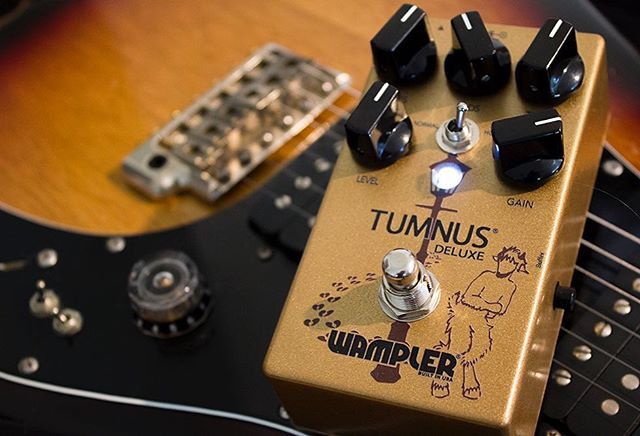
Had a bloke message me after a show a while back asking why his fuzz sounded "strangled" the second he added a gate to clean up his hiss. Honestly, that's not a mystery to me, it's just physics meeting expectations. Fuzz and noise gates are two of the least compatible pedals you can put on a board together, and nobody tells you that until you've already wired it up and wondered why your sustain vanished.
I run a profiler most nights now, gates included, dialled in for drop-tuned riffing where a tight noise floor actually matters. But I still keep a couple of fuzz boxes around for specific songs, and every single time I've tried to gate one properly, it's fought me. Worth explaining why, because the fix isn't "turn the gate down" — it's usually "don't gate the fuzz at all."
What a noise gate actually does to a signal
A gate is a volume cutter. Below a threshold you set, it mutes (or heavily attenuates) the signal. Above that threshold, the signal passes through untouched. Simple concept, and it works brilliantly on high-gain amp distortion or a saturated digital sim, because that kind of distortion has a fairly stable relationship between input level and output level. Palm mute, gate catches the string decay, silence follows. Clean.
Fuzz doesn't behave like that. Most fuzz circuits — germanium or silicon transistor based, think Fuzz Face style circuits — are wildly interactive with input level. Roll your guitar's volume back and the fuzz cleans up and thins out. Pick softly and you get a different harmonic structure than picking hard. The "decay tail" of a fuzz note isn't really decaying to silence in a straight line; it's often producing weird octave-up artefacts, gated-sounding stutters of its own, or a wash of harmonic feedback that rises and falls unpredictably as the note dies. That's not a bug. That's the sound people buy a fuzz for.
Where the gate cuts in and why it sounds wrong
Set a gate's threshold to catch a fuzz's noise floor and you're almost always also catching the tail end of the note, because fuzz noise floor and fuzz signal decay sit close together in level. The gate slams shut right as the fuzz is doing its most interesting, weird, swirling thing. You lose the bloom, the feedback swells, the pick harmonics ringing out. What's left sounds chopped off at the knees. Clinical. Wrong.
It's the same reason a lot of high-gain players find gating an old-school Big Muff nearly impossible without killing sustain — the Electro-Harmonix Big Muff Pi (check price) and its variants have a huge amount of harmonic content living right down near where the gate wants to cut. Same story with something like the Dunlop Fuzz Face Mini Silicon (check price) — that circuit's whole appeal is touch sensitivity and long, splattery decay. A gate doesn't understand touch sensitivity. It understands a number on a meter.
Fuzz into high gain: it's already a fight before the gate shows up
I've written before about how fuzz into a high-gain amp can fall apart because the fuzz's low output impedance and weird gain staging don't always play nicely with an already-saturated front end. Add a gate into that same chain and you've now got three unstable elements stacked on top of each other. The fuzz is reactive to input level, the amp's gain stage is compressing everything on top of that, and the gate is trying to make a binary decision about a signal that's anything but binary at that point. It's not that it can't work — I've heard players make it work on stage — but the margin for error is tiny and the tone cost is real.
What actually works instead
If noise is the actual problem you're solving, and not just "I want a gate because metal guys use gates," there's a simpler answer: fix the fuzz's noise at the source. Check your power supply first — fuzz circuits, especially germanium ones, are notoriously sensitive to noisy power and will pick up hum from a cheap daisy-chained supply far more readily than a modern digital drive will. An isolated supply solves more fuzz-noise complaints than any gate ever will.
Second thing: pedal order. Fuzz almost always wants to be first in the chain, hitting your guitar's output directly, not buffered, not preceded by a wah or compressor unless you're deliberately chasing that interaction. Stack it after a buffered pedal and you can introduce exactly the kind of harsh, unstable noise a gate then tries and fails to control.
If you genuinely need noise control and you're not willing to give up the gate, put it in the effects loop after the fuzz and any amp gain stage, and set the threshold conservatively, well below where the fuzz's own decay lives, accepting that some hiss between phrases is the price of keeping the tail intact. I'd rather have a bit of noise between riffs than a fuzz tone that cuts off like someone's pulled the plug.
My honestly-not-neutral opinion
Gates on fuzz are one of those "because everyone else does it" habits carried over from high-gain rigs, and I reckon it's often the wrong move. A fuzz pedal's noise floor is part of its character. Big Muffs hiss a bit. Fuzz Faces hiss a bit. That's the deal you signed up for when you plugged in a 60-year-old circuit design instead of a modern low-noise drive like the ProCo RAT 2 (check price) or something out of the overdrive and distortion world, which are engineered to behave far more predictably under gain. If quiet and controlled is the priority, fuzz was never really the right tool. If fuzz is the priority, let it breathe.
Last thing worth saying: test any gate decision with your amp at gig volume, not bedroom volume. Fuzz noise floors change completely once a power amp section is pushing air, and a gate setting that seemed fine at home can either do nothing at a gig or chop your tone to bits the moment the venue's PA adds its own hum into the mix.
FAQ
Common questions
- Can I use a gate with fuzz if I set the threshold really low?
- Yes, and it's the best compromise. A low threshold only catches hiss between phrases and leaves the fuzz's decay and harmonic tail intact. You'll still get some noise, but you keep the character.
- Does this apply to all fuzz pedals, or just vintage-style ones?
- It's worst on germanium and silicon transistor fuzzes with reactive, touch-sensitive decay, like Fuzz Face style circuits. Modern fuzz pedals with more stable output, or hybrid fuzz-distortion designs, tolerate gating better.
- Where should a noise gate go if I insist on using one with fuzz?
- After the fuzz, ideally in an effects loop post-amp-gain, not in front of it. Gating before the fuzz does nothing useful since the fuzz itself generates most of the noise.
- Is fuzz noise a sign something's wrong with my pedal?
- Usually not. Some hiss and hum is normal for fuzz circuits, especially on cheap or daisy-chained power supplies. Try an isolated supply before assuming the pedal's faulty.
I'm Daz and I play LOUD. Spent years on the road playing modern metal — drop tunings, seven and eight strings, the works — so high-gain tone is genuinely my whole life. Honestly, I came up worshipping tube heads and 4x12s, then digital modellers got good enough to change my mind completely, and now I run a profiler at every gig. I care about two things: does it djent, and does it hold together when you stack the gain? I'll measure the noise floor so you don't have to.
Touring metal guitarist; multi-scale and digital-modelling specialist
More from Daz
 How pick attack technique changes what high-gain rig you actually needYour picking hand shapes high-gain tone more than any pedal or amp setting. Here's how attack angle and force change what gear actually works for you.
- Reamping explained: why recording a clean DI first will save your takeReamping means tracking a clean DI first, then running it through amps or sims later. Here's why that one habit fixes most of your home recording headaches.
- String gauge for drop tunings: what actually holds up and what doesn'tDaz breaks down which string gauges actually work for drop tunings on 6, 7 and 8-string guitars, and why going too light wrecks your tone.
- Fuzz into high-gain amp: why it works (and when it falls apart)Running fuzz into a high-gain amp sounds like a terrible idea — until it isn't. Daz breaks down why the combination works, when it collapses, and how to dial it in.
- Scale length explained: how it shapes high-gain tone, feel and tuning stabilityScale length is one of the most overlooked specs on a metal guitar. Here's what it actually does to your tone, tension and tuning stability.
- How neck profile affects your high-gain tone and playing speedNeck profile shapes how fast you play, how your hand fatigues, and how clean your riffing sounds under gain. Here's what actually matters.