Scale length explained: how it shapes high-gain tone, feel and tuning stability
Most players shopping for a heavy guitar obsess over pickups, body wood, hardware finish. Honestly, the spec that matters more than almost all of that is the one buried halfway down the page in small text: scale length.
I've had this argument at every guitar shop I've walked into over the past decade and a half. Scale length determines how your strings feel under tension, how your low end sits in a mix, and — critically for anyone running drop tunings or extended range instruments — whether your guitar actually stays in tune when you're battering it at speed. Get it wrong and no amount of swapping pickups will save you.
What scale length actually means
Scale length is the vibrating length of the string: measured from the nut to the saddle, roughly double the distance from the nut to the 12th fret. A standard Fender Stratocaster runs 25.5 inches. A Gibson Les Paul is 24.75 inches. Modern extended-range and metal-focused instruments often push to 26.5 inches or beyond for seven and eight strings.
Even three-quarters of an inch sounds trivial. It isn't. That difference changes string tension noticeably at standard pitch, and the effect compounds hard once you start dropping tunings.
What longer scale length does for high-gain tone
Higher tension at a given pitch means tighter, more defined low end. This is the big one for metal. Run a seven-string tuned to drop A on a 25.5-inch scale and the low string is floppy, the pick attack turns to mush, and your tight-palm-muted chug becomes a slow, indistinct thud. Move that same string to a 26.5-inch scale — or the 27-inch you'll find on a lot of modern baritone builds — and suddenly it feels and sounds like a properly tensioned guitar string again.
The tightness isn't just a feel thing, either. Tighter strings track faster under the pick, which means your profiler or amp sim has a cleaner, more consistent input signal to work with. I run a Kemper at every gig and the difference between a sloppy input signal and a tight one is absolutely audible in the profile output. Definition in the low mids, pick articulation on fast runs, palm mute chug that actually cuts — all of that improves with appropriate scale for your tuning.
If you're shopping for a dedicated metal guitar, something like the Schecter Hellraiser C-1 (check price) sits at 24.75 inches and handles standard and drop-D territory well. For anything lower, I'd push hard toward a longer-scale option. The Jackson Pro Plus Soloist SL3 (check price) at 25.5 inches splits the difference nicely for players staying in drop C and above. Our best guitars for metal guide gets into specific models in more detail if you want a broader overview.
Shorter scale length has its own legitimate case
Here's where I'll say something slightly unpopular: shorter scale length isn't just a compromise. For standard-tuned six-string heavy playing, 24.75 inches produces a slightly warmer, more compressed character at the front end of a high-gain tone that some players genuinely prefer. The Les Paul sound in metal — think the mid-heavy, vocal lead tone — is partly about that neck pickup on a shorter scale, where the overtones bloom differently than they do on a Fender-spec instrument.
I came up thinking longer always meant better for metal. I was wrong for about four years. Then I played a proper 24.75-inch set-neck on a cranked amp and understood what I'd been missing for leads. Both have their place. The short version is: match scale length to your tuning range first, then worry about tonal character.
Tuning stability and why scale length is part of the equation
Longer scale means you're running higher tension to reach pitch. Higher tension strings are less susceptible to detuning from aggressive picking, because the string resists displacement more. It also means your bends require more finger force, which is worth knowing before you buy.
The relationship between scale length and tuning stability is real, but it doesn't exist in isolation. Nut slot depth, bridge saddle contact, string-through vs. top-load bridge design and the quality of your tuning machines all matter alongside scale length. I've seen a 27-inch baritone go constantly out of tune because of a poorly cut nut. Scale length is one piece of a system. That said, starting with the right scale for your tuning is the most efficient single variable to get right.
If you're interested in how nut slot depth feeds into all of this, we've covered it in detail separately — it's worth reading alongside this.
Multi-scale and fanned frets: the logical extension
Multi-scale instruments — where the bass strings run a longer scale than the treble strings — solve an obvious problem. Your low B or low F# gets the tension it needs; your high strings stay comfortable to play and bend. Brands like Strandberg, Skervesen and Aristides have built serious reputations here, and you'll find fanned-fret options trickling down into mid-range pricing more and more.
Honestly, the ergonomic adjustment is less dramatic than it looks on paper. The frets angle slightly and after a few hours of playing you stop noticing. The tension benefit across the whole neck is immediate and audible. For extended range players especially, I'd at least try one before dismissing it. The Ibanez RG550 (check price) lineage that influenced a lot of modern shred design stuck to 25.5 inches throughout — and that's still a benchmark for feel at that scale — but the extended range world has largely moved toward either multi-scale or longer fixed-scale designs for good reason.
Practical guide: which scale length for which tuning
As a rough working framework, not a rigid rule:
- Standard E to drop C: 25.5 inches handles it well. 24.75 inches works, may feel slightly loose in drop C depending on gauge.
- Drop B to drop A on a six-string: 26.5 inches starts to make real sense. Use heavier gauges regardless.
- Seven-string in standard B: 26.5 inches. Many players use 27 inches for extended range in this territory.
- Eight-string in standard F# or lower: 27 to 28 inches. Shorter scales in this range produce genuinely problematic low-string tension.
String gauge works with scale length, not as a substitute. You can compensate somewhat for a shorter scale with heavier strings, but you're changing the feel of every other string on the neck when you do that. Better to match scale length to your tuning and then choose gauge for feel.
The best guitars for metal guide and the best intermediate electric guitars roundup both list scale lengths for every recommendation if you want a reference while you're shopping.
Get the scale right first. Everything else — pickups, hardware, finish — is fine-tuning after that foundation is set.
Common questions
- Does scale length affect how hard it is to bend strings?
- Yes, directly. Longer scale means higher string tension at a given pitch, which requires more finger force to bend. Most players adapt quickly, but if you have smaller hands or play a lot of lead with wide bends, a 26.5-inch guitar will feel noticeably stiffer than a 24.75-inch instrument strung the same gauge.
- Can I just use heavier strings on a short-scale guitar instead of buying a longer-scale instrument?
- To a point. Heavier strings increase tension and can compensate for some of the floppiness in lower tunings on a shorter scale. The trade-off is that every string on the neck gets heavier, which changes the feel across the whole instrument. For serious extended-range or very low drop tunings, it's generally better to match scale length to your tuning range rather than fighting it with gauge alone.
- What scale length do most production seven-string guitars use?
- Most production seven-strings land at 26.5 inches, which has become something of a standard for the format. Some budget seven-strings use 25.5 inches, which works in standard B tuning with the right string gauge but can feel loose on the low string. Boutique and extended-range specialists often go to 27 inches or use multi-scale designs.
I'm Daz and I play LOUD. Spent years on the road playing modern metal — drop tunings, seven and eight strings, the works — so high-gain tone is genuinely my whole life. Honestly, I came up worshipping tube heads and 4x12s, then digital modellers got good enough to change my mind completely, and now I run a profiler at every gig. I care about two things: does it djent, and does it hold together when you stack the gain? I'll measure the noise floor so you don't have to.
Touring metal guitarist; multi-scale and digital-modelling specialist
More from Daz
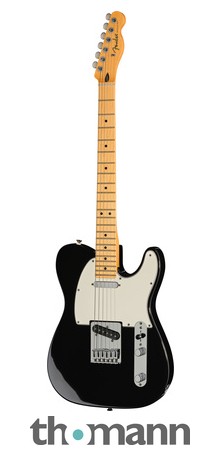 Why fan-fret and multiscale necks actually matter for low tuningsMultiscale necks aren't a gimmick for drop-tuned players. Here's what fan frets actually fix, and when a straight scale is still the smarter buy.
- Why a metalhead should still own one acoustic guitarDaz explains why even a drop-tuned, high-gain player benefits from one decent acoustic, and what actually matters when picking one.
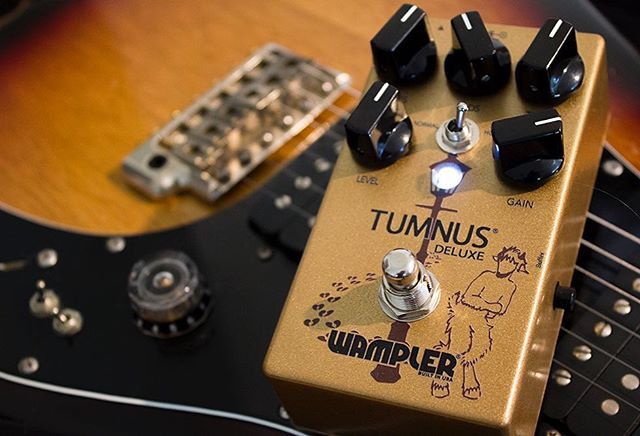 Pickup output vs string gauge: the real relationship for high gainDaz breaks down how pickup output and string gauge actually interact on high-gain rigs, and why chasing bigger output isn't the fix for a flabby low string.
- Trails and freeze effects: building ambience that doesn't fight your riffTrails and freeze modes can build huge ambient textures on a high-gain rig without turning your chug into soup. Here's how I actually use them.
- Analog vs digital ambient tones on a high-gain rigAnalog or digital delay and reverb for a high-gain rig? Here's how each behaves under gain, and how to set them so the chug survives.
- Scale length and drop tunings: why it matters more than you thinkStruggling to keep drop tunings tight and in-tune? Scale length changes string tension more than gauge does. Here's what actually works.