Fuzz into high-gain amp: why it works (and when it falls apart)
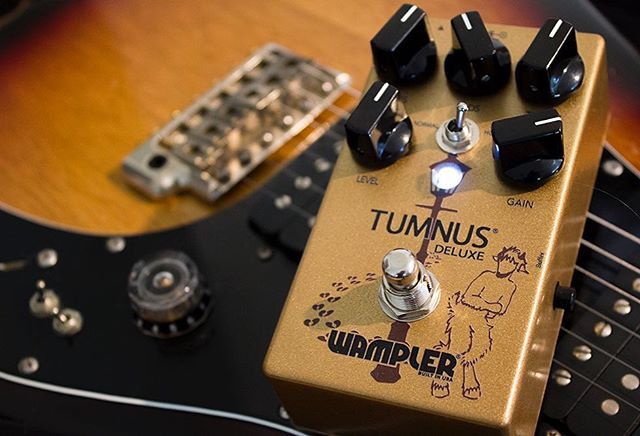
Nobody told me this was a bad idea, so I just did it anyway. Fuzz pedal straight into the high-gain channel of a Mesa, cranked. Sounded absolutely disgusting — and I mean that as a compliment, mostly. That experiment went sideways enough times that I eventually worked out why it sometimes sounds enormous and sometimes sounds like a broken speaker, and I figured that's worth writing down.
Why anyone runs fuzz into high-gain in the first place
Honestly, it usually starts by accident. You've got a Big Muff on your board for a lead tone, you accidentally hit it while the amp's already on the gain channel, and the result is either incredible or horrifying. The appeal when it works: massive sustain, a kind of compressed, woolly thickness that modern high-gain by itself doesn't quite get you, and a mid-push character that cuts through a loud mix. Fuzz into high-gain can sound enormous on slow, grinding riffs — think early Melvins or Electric Wizard territory, where the amp and pedal are essentially compounding each other's saturation.
The problem is that high-gain circuits are already doing a lot of clipping. Stack a fuzz in front and you're clipping a signal that's about to be clipped again, hard. The math only works out in your favour under specific conditions.
What actually happens in the signal chain
A fuzz pedal — whether it's a silicon transistor circuit like the Dunlop Fuzz Face Mini (check price), a Big Muff-style op-amp design like the EHX Green Russian (check price), or something chaotic like the Z.Vex Fuzz Factory (check price) — is sending a heavily clipped, often fairly loud signal into your amp's input. On a clean or lightly driven amp, the preamp responds to that and adds its own colour on top. Mostly fine.
On a high-gain preamp already running a lot of gain stages, you're compressing an already-compressed signal. The attack gets squashed, the dynamics flatten out almost completely, and the low end — which in a fuzz circuit is often already inflated — starts to turn into a kind of undefined, low-frequency mush. That's the wall of mud everyone warns you about. It's real.
But here's the thing: controlled mud is a texture, not a failure. Doom metal players have been weaponising exactly this interaction for decades. The trick is knowing where the line is.
When it works, and what makes it work
The combination holds together best when you dial the amp's gain back before you introduce the fuzz. I know — feels counterintuitive. But if your amp is already at 70-80% gain, adding a full-blast fuzz just creates noise and undefined low end. Drop the amp gain to 50-60%, set the fuzz to taste, and now the two circuits are working together instead of competing. The fuzz handles the initial saturation character; the amp's preamp adds body and sustains the note. That's a different sound to either one alone, and it can be genuinely massive.
Amp voicing matters a lot here. High-gain amps with a tight, scooped low end — your typical modern metal voicing — will clean up the low end mud better than an amp voiced for a big, open bottom. The bass tightness in something like an ENGL or Mesa Rectifier preamp acts almost like a filter on the fuzz's expanded low end. An amp with a naturally loose, open low-end voicing? That mud compounds fast.
Your guitar's output also matters more than you'd think. Active pickups going into fuzz already present some quirks — high-output actives (check price) tend to push fuzz circuits into a stiffer, more compressed clipping character — and that character then hitting a high-gain preamp gets even more compressed. Passive humbuckers with a fuzz into a gain channel are often more dynamic and more controllable. Passive single-coils? Can actually work brilliantly in this context, especially on the neck pickup — you get this thick, vocal lead tone that's unusual and very usable.
The right fuzz type makes a difference
Not all fuzzes behave the same into a high-gain amp. Germanium circuits, which are voltage-sag-sensitive and temperature-dependent, tend to be spongier and less defined — great for stoner/doom applications into high gain, less great if you want note clarity. Silicon transistor fuzzes are tighter and more aggressive. Big Muff-style circuits (two clipping stages in series) produce that characteristic long sustain and mid-scoop, which can either sit beautifully or disappear completely depending on your amp's EQ.
Honestly, the Big Muff into high-gain is the combination that requires the most care. That mid-scoop gets deeper when you add more gain stages — you can find yourself with enormous bass and presence but nothing in the mids, and in a full-band context you just won't exist. If you're using a Muff-style circuit, bump the amp's mids up, or run a light overdrive after the fuzz to restore some midrange presence before the amp input. A TS-style pedal like the Ibanez TS9 (check price) between the fuzz and the amp input is a classic fix for exactly this.
Pedal-order variations worth trying
Most players run fuzz first in the chain, and that's usually correct — fuzz circuits are often sensitive to the impedance of whatever's before them, so keeping them close to the guitar preserves their most interactive, responsive character. But running a boost or overdrive after the fuzz and before the amp's high-gain input gives you a different kind of control: the overdrive shapes the EQ and pushes the amp harder, while the fuzz character sits underneath that. It's a layered thing.
I've also experimented with running fuzz through the effects loop of a high-gain amp — so the preamp is doing its job first, and then the fuzz colours the already-gained signal before the power amp. This is genuinely weird and mostly produces chaos, but in a studio context with the amp gain relatively low, you can get a very unusual texture. Not a live-rig move. Just something to try when you're bored in the rehearsal room.
If you're looking to go deeper on pedal stacking generally, our piece on the best overdrive and distortion pedals covers the foundation stuff, and the guide on the best fuzz pedals will give you specific circuit options worth trying in this context.
The amp matters as much as the fuzz
This sounds obvious but people underestimate it. A high-gain amp with a built-in noise gate, like a lot of modern metal heads, is going to fight you constantly when fuzz is in the chain — the gate doesn't know how to read the fuzz's sustained, compressed output correctly and will start chopping your notes. Turn the gate off or use an external gate placed after the fuzz in your chain.
EQ on the amp becomes more critical than usual. With fuzz adding significant low-end content, you almost always need to cut the amp's bass control and bring the mids up. Find the amp's EQ sweet spot without the fuzz first, then introduce the fuzz and adjust from there — don't try to dial both simultaneously or you'll chase your tail.
One last thing I'll say: if the combination sounds bad, it might just not be right for your specific rig. I've had fuzz-into-high-gain sound glorious through one amp and genuinely unworkable through another. There's no formula that works every time. Try it, adjust the gain structure, adjust the EQ — and if it still sounds like a dying wasp, that's a legitimate answer too.
— Daz, High-Gain & Modelling Editor
Common questions
- Can you run a fuzz pedal into a high-gain amp without it sounding like mud?
- Yes, but you need to manage the gain structure. Drop your amp's gain to 50-60% before adding the fuzz, and tighten up the amp's bass EQ. The fuzz handles the saturation character; the amp adds body. Stack too much gain on both ends simultaneously and the low end turns to mush.
- Where should fuzz sit in a high-gain pedal chain?
- Generally first — right after the guitar. Fuzz circuits are impedance-sensitive, so keeping them close to the guitar preserves their most responsive, interactive character. If you run a buffer or other pedals before the fuzz, the behaviour can change significantly, often becoming stiffer and less musical.
- Why does my Big Muff disappear in a band mix when running into a high-gain amp?
- The Big Muff has a mid-scoop built into its circuit, and adding more gain stages deepens that scoop. You end up with plenty of bass and presence but almost no mids, so you vanish in the mix. The fix is to boost the amp's mids, or run a mid-focused overdrive (like a Tube Screamer) after the Muff to restore midrange before hitting the amp input.
- Does fuzz work better with active or passive pickups into a high-gain amp?
- Passive humbuckers are generally more controllable — they produce a more dynamic, responsive interaction with the fuzz circuit. High-output active pickups push the fuzz into a stiffer, more compressed clipping character, which then compounds into the high-gain preamp. It can work, but it requires more careful gain staging.
I'm Daz and I play LOUD. Spent years on the road playing modern metal — drop tunings, seven and eight strings, the works — so high-gain tone is genuinely my whole life. Honestly, I came up worshipping tube heads and 4x12s, then digital modellers got good enough to change my mind completely, and now I run a profiler at every gig. I care about two things: does it djent, and does it hold together when you stack the gain? I'll measure the noise floor so you don't have to.
Touring metal guitarist; multi-scale and digital-modelling specialist
More from Daz
 Why fan-fret and multiscale necks actually matter for low tuningsMultiscale necks aren't a gimmick for drop-tuned players. Here's what fan frets actually fix, and when a straight scale is still the smarter buy.
 Why a metalhead should still own one acoustic guitarDaz explains why even a drop-tuned, high-gain player benefits from one decent acoustic, and what actually matters when picking one.
- Pickup output vs string gauge: the real relationship for high gainDaz breaks down how pickup output and string gauge actually interact on high-gain rigs, and why chasing bigger output isn't the fix for a flabby low string.
- Trails and freeze effects: building ambience that doesn't fight your riffTrails and freeze modes can build huge ambient textures on a high-gain rig without turning your chug into soup. Here's how I actually use them.
- Analog vs digital ambient tones on a high-gain rigAnalog or digital delay and reverb for a high-gain rig? Here's how each behaves under gain, and how to set them so the chug survives.
- Scale length and drop tunings: why it matters more than you thinkStruggling to keep drop tunings tight and in-tune? Scale length changes string tension more than gauge does. Here's what actually works.