How neck profile affects your high-gain tone and playing speed
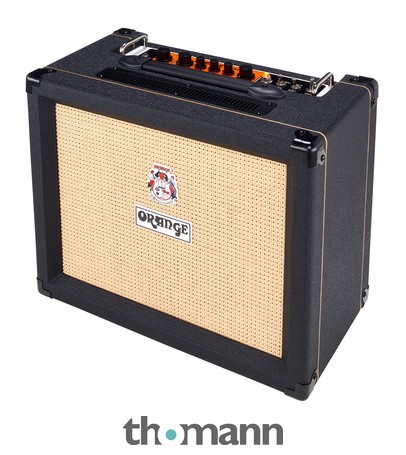
Three months ago I picked up a guitar at a shop on Denmark Street in London and thought I'd found my new main axe — great pickups, solid construction, price was right. Then I played it for forty minutes straight and my fretting hand locked up like I'd been wringing out a wet towel. Wrong neck profile. And honestly, under high gain, that kind of fatigue kills your technique faster than almost anything else.
Nobody talks about neck profiles in the context of metal playing specifically. Everybody obsesses over pickups and string gauge and whether their amp sim has the right cab IR. But the shape of wood your hand wraps around for two-hour sets determines whether your palm muting stays tight, whether your fast runs stay clean, and whether you can actually finish a show without your wrist giving up on you.
What neck profile actually means
The "profile" is the cross-sectional shape of the neck — what you feel when you wrap your hand around the back of it. There are a handful of common shapes: C, U, V, D, and various asymmetric or compound variants. Most modern metal guitars run a thin C or a "Wizard"-style profile, which is essentially a very flat C pushed to extremes. The measurement that matters most is the depth at the first fret and the depth at the twelfth fret, usually expressed in millimetres.
A shallow, fast neck — something like 19–20 mm at the first fret — lets your thumb travel quickly across positions without fighting the mass of the wood. A thick U profile, great for vintage blues players who want that chunky feel, turns fast legato runs into a workout.
Why it matters more under high gain than clean
Here's the thing most players don't connect: high-gain tone is unforgiving of sloppy fretting. Any note you're not fully committing to — any finger that's not pressing cleanly behind the fret, any slight roll onto a neighbouring string — comes back amplified. Under clean or light crunch, those micro-mistakes get swallowed. Under 600+ gain with tight down-tuned djent, they become full-on buzzes and unintended harmonics. HORRIBLE.
When your hand is fighting an uncomfortable neck, your fretting position suffers. You start squeezing too hard. Your wrist angle goes wrong. All of that translates directly into timing and accuracy problems — and those problems get exposed the moment you push the gain past a certain point.
I'll admit I got this wrong for years. I assumed any thin neck was fast. But "thin" and "fast" are not the same thing, and some thin necks feel fast in isolation but create tension during sustained playing because of their nut width or the radius of the fingerboard, not just the profile depth.
Profile shapes and what they suit
Thin C profiles — what you'll find on most Ibanez RG-series guitars and a lot of the ESP/LTD range — suit players who do a lot of position shifting, shredding, and legato. The Ibanez RG550 Genesis (check price) runs the original Wizard profile and it genuinely is one of the fastest-feeling necks I've ever played. If you're coming from a more modern metal background and haven't tried one, do it.
Chunky C or D profiles — more common on Les Paul-style guitars — work for players with larger hands or those who rely heavily on thumb-over fretting for low-string mutes. The ESP LTD EC-1000 (check price) sits in this territory: not a razor-thin neck, but the three-piece construction keeps it stable and it plays faster than the depth would suggest once you adjust. For drop-tuned, palm-heavy playing, some players actually prefer a bit more mass there.
Asymmetric profiles — thinner on the bass side of the neck, fuller on the treble side — are genuinely worth trying if you've never had one under your hand. Schecter uses these on several of their models, including the Hellraiser C-1 (check price). The idea is that your thumb and palm sit comfortably while your fingers still have clearance. Sounds gimmicky. Honestly isn't.
Fingerboard radius: the other half of the equation
Neck profile and fingerboard radius work together, and treating them separately is a mistake. Radius is the curve across the width of the fretboard — a rounder, smaller-radius board (like 7.25" on vintage Fenders) feels comfortable for chord work but causes fretting-out on big bends up the neck. Flatter boards — 12", 16", or compound-radius that transitions from one to the other — let you play hard without notes choking.
For high-gain metal, you want a flat-to-compound radius. Almost every purpose-built metal guitar ships with 12" or flatter for exactly this reason. If you're evaluating a guitar and the spec sheet says 9.5" radius, that's not automatically a dealbreaker, but know that your string action needs to be slightly higher to avoid fret-out on bends, and that changes the feel entirely.
This connects directly to the setup point: a good neck profile on a badly set-up guitar is still a bad playing experience. If you're not sure how setup affects what you're feeling, the existing piece on best guitars for metal covers some of this ground in terms of what to look for when evaluating spec sheets.
How to actually test a neck profile before buying
Play it tired. Seriously. Go to the shop when your hands have already been working. Your rested hand will tolerate almost anything for twenty minutes. Your fatigued hand will tell you the truth about whether that neck is going to cause problems on night three of a run of shows — or even just two hours into a rehearsal.
Play something repetitive: an eight-string-style chromatic run across all strings, or your standard palm-muted chug pattern sustained for sixty seconds. If you feel tension creeping into your palm or your thumb starts migrating to a weird position to compensate, that neck is telling you something.
Don't just test the open position. Play up at the twelfth fret. Many necks that feel fine in first position get awkward as the body joins the neck and forces your wrist into a different angle. That joint heel — how the neck meets the body — affects upper-fret access more than any profile spec will.
What I'd actually recommend
If you're building a high-gain rig from scratch and you're not sure where to start with guitar selection, a thin-to-medium C profile with a 12" or compound radius is the most reliable starting point for most players. It's not the absolute fastest neck out there, but it's forgiving enough to adapt to different technique styles while still being genuinely fast under sustained playing conditions.
Where I'd push back on the conventional wisdom: the "thinner is always better for metal" claim is oversold. I know players with bigger hands who play faster on a medium C than on a Wizard profile because they're not fighting the neck to maintain contact. Fit matters more than spec.
And once you've got the right neck under your hand, a lot of the other variables — how you're muting, how clean your picking is — start sorting themselves out. The gear you need to sound good often changes when the guitar actually fits you. Check what we've covered on best intermediate electric guitars if you're still in that evaluation stage and want to cross-reference profiles against price tiers.
Get the neck wrong and no amount of great pickups or amp sims will save you. Get it right and everything else gets easier.
Common questions
- Does neck profile actually affect tone, or just playability?
- Mostly playability, but there's an indirect tonal effect. A neck profile that causes hand tension changes how hard you press and how cleanly you fret — and under high gain, sloppy fretting becomes audible buzzing and note bleed. So while the wood mass of the neck has some minor acoustic influence, the bigger tonal impact comes from how well you can play the thing consistently.
- What neck profile do most metal guitars use?
- Most purpose-built metal guitars use a thin C or Ultra-Thin C profile — Ibanez calls theirs the Wizard, ESP/LTD use a thin U variation. Depths typically run 19–21 mm at the first fret. Compound-radius fingerboards (transitioning from around 10" at the nut to 16" at the body join) are increasingly common on higher-spec instruments.
- Can I change my guitar's neck profile if I don't like it?
- Yes, but it's a specialist job — a luthier can reshape a neck profile by removing material from the back of the neck and refinishing. It's not cheap and it's not reversible, so it's worth exhausting other options (setup adjustments, trying different hand position) before committing. On bolt-on necks, swapping the entire neck is often more practical.
I'm Daz and I play LOUD. Spent years on the road playing modern metal — drop tunings, seven and eight strings, the works — so high-gain tone is genuinely my whole life. Honestly, I came up worshipping tube heads and 4x12s, then digital modellers got good enough to change my mind completely, and now I run a profiler at every gig. I care about two things: does it djent, and does it hold together when you stack the gain? I'll measure the noise floor so you don't have to.
Touring metal guitarist; multi-scale and digital-modelling specialist
More from Daz
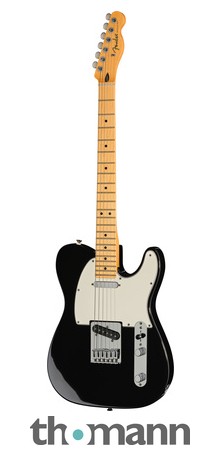 Why fan-fret and multiscale necks actually matter for low tuningsMultiscale necks aren't a gimmick for drop-tuned players. Here's what fan frets actually fix, and when a straight scale is still the smarter buy.
- Why a metalhead should still own one acoustic guitarDaz explains why even a drop-tuned, high-gain player benefits from one decent acoustic, and what actually matters when picking one.
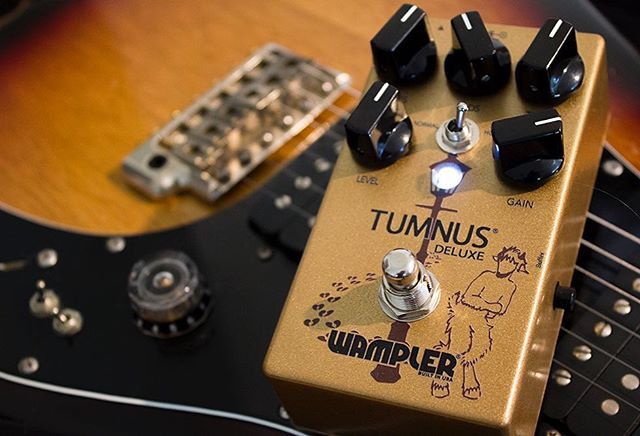 Pickup output vs string gauge: the real relationship for high gainDaz breaks down how pickup output and string gauge actually interact on high-gain rigs, and why chasing bigger output isn't the fix for a flabby low string.
- Trails and freeze effects: building ambience that doesn't fight your riffTrails and freeze modes can build huge ambient textures on a high-gain rig without turning your chug into soup. Here's how I actually use them.
- Analog vs digital ambient tones on a high-gain rigAnalog or digital delay and reverb for a high-gain rig? Here's how each behaves under gain, and how to set them so the chug survives.
- Scale length and drop tunings: why it matters more than you thinkStruggling to keep drop tunings tight and in-tune? Scale length changes string tension more than gauge does. Here's what actually works.