How to place a fuzz pedal in your signal chain (and why position changes everything)
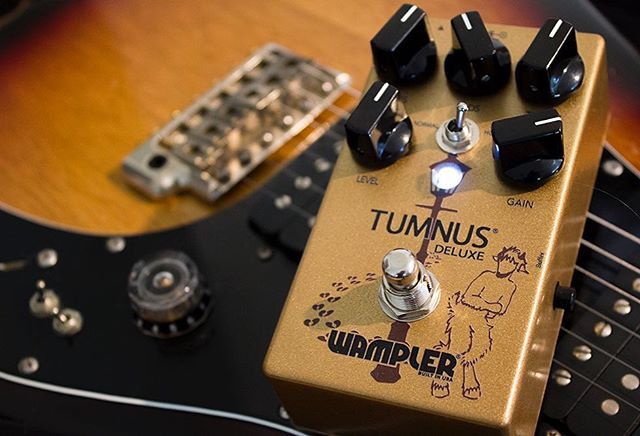
I came to fuzz late. My world is archtops, clean amplifiers, and the kind of tone where every finger movement is audible and accountable. Fuzz, with its saturation and harmonic chaos, seemed antithetical to that. But the more I worked in session contexts — pop dates, occasional psychedelic projects, even some experimental jazz — the more I realised that fuzz is just another colour. The question is where in the chain you place the canvas.
And that question matters more with fuzz than with almost any other effect category. Unlike a delay or a reverb, which tend to behave predictably wherever you put them, a fuzz pedal is deeply reactive. Its behaviour changes depending on what signal it sees at its input and what it feeds into downstream. Get the order wrong and you lose the character entirely. Get it right and the thing sings.
Why fuzz is different from overdrive and distortion
Most overdrives and distortions have buffered inputs — they present a consistent impedance to whatever precedes them and largely ignore the output impedance of your guitar's pickups. A germanium-based fuzz circuit, by contrast, is genuinely reactive to the impedance it sees. Put a buffered pedal — a tuner, a chorus, most modern overdrives — in front of a classic germanium fuzz and you'll notice the sound tightens, loses that woolly, almost alive quality that defines the circuit. The fuzz begins to behave more like a distortion pedal. That might occasionally be what you want, but it's rarely what you bought the pedal for.
Silicon-based fuzzes, like many Big Muff variants, are generally less sensitive to what precedes them. They'll take a buffer without significant complaint. But even with silicon designs, signal chain position shapes the character in ways worth understanding deliberately rather than discovering by accident. If you want a clearer overview of the distinction between fuzz types, the piece on the EHX Big Muff Pi (check price) covers the circuit's particular behaviour in some detail, and our broader best fuzz pedals guide is a good reference for comparing characters across designs.
The guitar-first position: the default for a reason
For most players, most of the time, a fuzz pedal belongs first in the chain — directly after the guitar, before any other effect. This preserves the direct relationship between the pickup's output impedance and the fuzz's input stage. With a germanium circuit especially, this is where the design expects to find itself. You get the full dynamic range, the amp-knob cleanup (rolling the guitar's volume down reduces gain and cleans up the tone on many fuzz circuits, which is a genuinely useful technique), and the most faithful representation of what the designer intended.
If you use a wireless system or a tuner pedal at the very front, be aware that many of these are buffered. That buffer sits between your guitar and the fuzz. Some players use a true-bypass tuner specifically to avoid this. Others find they prefer the buffered sound — tighter, more defined — and leave it. Neither is wrong, but the choice should be conscious.
Fuzz after overdrive: stacking and the order question
Placing an overdrive before a fuzz is an experiment worth making deliberately. The overdrive compresses and shapes the signal before it reaches the fuzz, which can smooth out some of the fuzz's more erratic harmonic content. The result is often a denser, more sustained sound — useful for lead tones where you want the fuzz's character without its tendency to unravel at high gain settings.
Reversing that order — fuzz into overdrive — gives you something different again. The fuzz's clipped, harmonically complex output gets a further push from the overdrive. This can be too much for many applications, but in the right context it produces a thick, almost synth-like quality. The key is that once you understand what each arrangement does, you're making choices rather than stumbling across them.
Our overdrive and distortion pedals guide goes into the stacking question in broader terms if you want to think through combinations further.
Modulation and fuzz: before or after?
Placing modulation — chorus, vibrato, phaser — before the fuzz feeds a moving, pitch-shifting signal into the saturation stage. The fuzz then processes those variations in a way that can sound unpredictable or interestingly warped, depending on the circuit. After the fuzz, modulation acts on the already-saturated signal and tends to sound more controlled and musical. For most applications, modulation after fuzz is the cleaner choice. But running a slow vibrato into a Big Muff-style circuit can produce a particularly expressive swell that some players find extremely useful.
Reverb and delay: these belong after the fuzz
Time-based effects — reverb and delay — almost universally belong at the end of the chain, after the fuzz. Placing them before the fuzz causes the saturated circuit to process the decaying trails and reflections, which collapses the sense of space and turns the reverb into an indistinct wash. After the fuzz, both effects retain their clarity and dimension. The fuzz's character is preserved and the space opens up around it rather than being consumed by it.
If you're building a board where fuzz and reverb need to coexist, that ordering is as close to universal as this kind of advice gets.
A practical approach to finding your position
The most useful thing I can suggest is this: move the fuzz deliberately to at least three positions in your chain and spend time at each one. Note what happens to the cleanup response when you roll back your guitar's volume. Note how the fuzz reacts when it follows a buffer versus when it sees the guitar directly. None of this requires technical knowledge — only attention.
If you're still assembling a board and thinking through the full signal chain, our overdrive and distortion guide and the broader discussion in the best fuzz pedals round-up both address how different circuits behave in real playing contexts. The position question and the pedal choice question are connected — some fuzzes are specifically designed to sit anywhere in a chain, while others genuinely need to be first. Knowing which you have is where the work starts.
Common questions
- Does a true-bypass fuzz pedal need to be first in the chain?
- True bypass means the pedal is completely removed from the circuit when switched off, so it doesn't affect signal when you're not using it. What matters for fuzz placement is whether there's a buffer between the guitar and the fuzz when the fuzz is engaged. If you have a buffered pedal earlier in the chain and your fuzz is germanium-based, you may notice a change in character — tighter and less reactive. Whether that's a problem depends on the fuzz circuit and your preference.
- Can I use a fuzz pedal with a hollowbody or semi-hollow guitar?
- Yes, though hollowbodies can be prone to feedback at high gain settings because of their acoustic resonance. A fuzz's high saturation can amplify that tendency. Managing your distance from the amp and your fuzz gain level usually keeps it workable. Some players find the interaction between a hollowbody's natural resonance and a fuzz circuit produces an unusually expressive, dynamic quality — particularly at lower gain settings.
- Why does my fuzz sound different when I use it with a wah pedal?
- Wah pedals present a varying impedance as you rock the pedal, which interacts with the fuzz input stage — especially in germanium designs. Running the wah before the fuzz tends to produce a more dramatic, reactive wah sweep, while placing the wah after the fuzz gives a smoother, more controlled filter effect. Both approaches are used deliberately by different players. Try both positions and notice which gives you the response you want.
I'm Marc. My background is jazz — conservatory training, years of session work, and a long-standing love affair with hollowbody archtops and a clean, articulate tone. I think about gear the way I think about voicings: every component shifts the colour of the whole. I'm drawn to instruments that reward a light touch and reveal what your hands are actually doing. You won't find hyperbole in my reviews; you'll find careful listening, and an honest account of how a guitar or amp behaves when you ask something musical of it.
Conservatory-trained jazz guitarist and session musician
More from Marc
 How to get a good guitar tone recording direct: DI, amp sims and signal chain basicsRecording guitar direct doesn't mean compromising on tone. Here's how to think through your DI and amp-sim signal chain and get results that hold up.
 When Should You Upgrade Your Guitar? Signs You're ReadyHow to know when your first guitar is holding you back — and what a step-up instrument actually gets you for the money.
 Single Coils vs Humbuckers: Which Pickups Are Right for You?The two great pickup families, and how they shape everything about your tone. A clear, practical guide to choosing the right voice for your playing.