Why your overdrive pedal sounds better through some amps than others
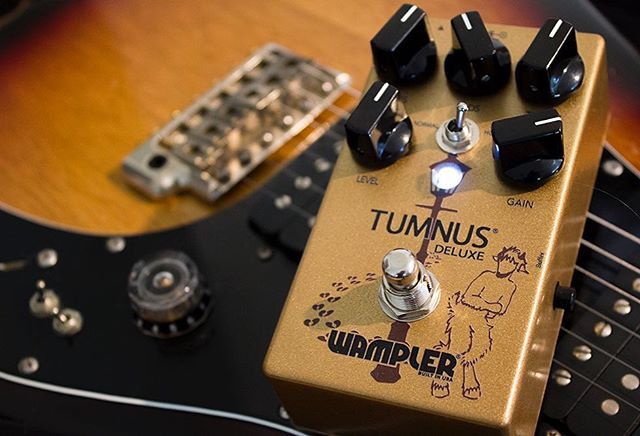
A student of mine bought a Tube Screamer (check price) last year after watching his favourite YouTuber demo it. Sounded huge online. Sounded thin and buzzy through his solid-state practice amp at home. He was convinced he'd bought a dud. He hadn't. The pedal was fine. The mismatch was the problem.
This is probably the most common source of confusion I see with new players getting into overdrive pedals — and nobody really explains it plainly. So let's fix that.
Overdrive pedals don't work in isolation
An overdrive pedal isn't a self-contained sound. It's more like a cooking ingredient than a finished meal. What it produces depends heavily on what it's feeding into. Change the amp, and you can change the result dramatically — same settings, same guitar, same pedal, completely different outcome.
The reason comes down to how overdrive pedals actually work. Most of them — Tube Screamers, the Boss SD-1 (check price), the Wampler Tumnus and that whole family — push a fairly mid-heavy, gently clipped signal into your amp's input. They're not really doing the heavy lifting themselves. They're nudging the amp, giving it a stronger signal and a particular voicing, and asking the amp to do the rest of the work.
If the amp can do that work, magic happens. If it can't — or if it responds to a hot input differently than expected — you get something that sounds nothing like the demo.
What tube amps do that solid-state amps don't
Tube amps compress and saturate in a way that's genuinely interactive. Push the input stage harder with a pedal, and the tubes start working in that sweet spot where clean tips into crunch. The amp is contributing its own texture to the sound. The pedal and the amp are having a conversation.
Solid-state amps — most budget practice amps fall here — don't behave the same way under that kind of input. Their clean channel stays cleaner under more signal, or it clips in a way that sounds harsh rather than warm. The amp isn't adding its own compression and harmonic colour. It's just amplifying whatever the pedal gives it, flat and faithfully. Sometimes that works fine, but for overdrive pedals specifically, it often doesn't.
This is why you'll see most overdrive demos done through valve amps set just on the edge of breaking up. The pedal tips them over. That's the intended use case.
The clean-headroom question
Here's the wrinkle though. Not all tube amps behave identically either. An amp with a lot of clean headroom — one that stays spanking clean at high volumes — responds to an overdrive pedal differently than an amp that's already breaking up at medium volumes.
A Vox AC15 (check price), for instance, runs Class A circuits and starts saturating on its own at moderate volumes. Feed a Tube Screamer into that and you get layers of harmonic complexity fast. It can be glorious. It can also be too much if you're not careful with your settings.
Something like a Fender-style clean amp with lots of headroom gives the pedal more room to define the character. The amp adds less of its own flavour, so the pedal's voicing is more exposed. These amps tend to reward pedals that have a complete, satisfying sound on their own.
Neither approach is wrong. They're just different tools. The thing to understand is that the combination is the instrument — not just the pedal on its own.
Channel-switching amps and where overdrive pedals fit in
A lot of beginner and intermediate amps — the Boss Katana-50 (check price), the Blackstar ID:Core (check price), modelling amps generally — have their own built-in overdrive and distortion voices. These are designed to be self-contained. Running an overdrive pedal in front of them can work, but it's worth understanding you're layering two different gain sources that weren't necessarily designed to interact.
The result is sometimes great. Sometimes it sounds cluttered. If you're using a modelling amp, I'd suggest treating the overdrive sounds built into the amp as your main dirt and keeping pedals for specific sounds where the amp's own voices don't get you there — a little clean boost for solos, say, rather than a full overdrive stacked on top of the amp's own crunch channel.
Honestly, the players who get the most out of overdrive pedals tend to be running them into a simpler amp — one clean channel, maybe one crunch channel, not seventeen preset voices — because there's less going on upstream to fight with.
Practical things to try if your pedal sounds bad
Before you conclude the pedal is rubbish, try a few things. First, turn the amp's gain down if it has any. Run the amp as clean as you can get it and let the pedal do the work. Second, check your amp's EQ — a scooped midrange setting on the amp fights badly with the mid-heavy voicing of most overdrive pedals. Bring the mids up on the amp and see what happens.
Third — and this catches people out — check the amp's input sensitivity. Some amps have a gain or input level control separate from the master volume. A Tube Screamer going into an input set too hot can sound fizzy and unpleasant. Back that off and try again.
If you've worked through all of that and it still sounds rough, the issue genuinely might be a pairing problem. Not every pedal suits every amp. A high-output distortion pedal like the ProCo RAT (check price) into a tiny solid-state practice amp at bedroom volume is going to struggle — there's nowhere for the sound to breathe. Our buyer's guide to overdrive and distortion pedals gives you a clearer sense of which pedals are designed for which kinds of rigs, which might help you narrow things down.
What this means when you're buying your next amp
If overdrive pedals matter to you — and at some point they probably will — it's worth thinking about amp choice with this in mind. A simple, clean-platform amp that responds well to pedals up front is often more useful than a feature-heavy amp with twelve built-in gain stages. Check out our guide to practice amps if you're still figuring out the amp side of things. I'd lean toward amps that describe themselves as having a good clean headroom rather than ones that lead with how many overdrive voices they've got built in.
The pedal-and-amp relationship is something you develop a feel for over time. Once you hear a well-matched pair working together, you'll understand what all the fuss is about. It just takes a bit of experimentation to get there — and knowing what you're actually listening for helps enormously.
— Rob, Beginner Gear & Teaching Editor
Common questions
- Why does my overdrive pedal sound thin through my practice amp?
- Most overdrive pedals are designed to push the input stage of a valve amp and let the amp add its own warmth and compression. Solid-state practice amps don't respond to a hot input the same way, so the pedal's sound can come out flat or harsh rather than warm. Try setting your amp's gain to zero and EQ-ing the mids up — that often helps.
- Should I run my overdrive into my amp's clean channel or crunch channel?
- Clean channel, nearly always. If the amp's crunch channel is already adding gain, stacking an overdrive on top produces a muddy, cluttered result. Let the clean channel give the overdrive room to breathe, and use the amp's own gain channel separately for a different sound.
- Does an expensive pedal sound better through a cheap amp?
- Not necessarily. A mid-priced pedal through a well-matched amp will often sound better than an expensive pedal through the wrong amp. The pairing matters more than the price of either component on its own.
I'm Rob, and I've taught guitar for over fifteen years — which means I've watched hundreds of beginners buy the wrong thing because someone baffled them with jargon. So that's my job here: cut through it. I genuinely love good budget gear, the kind that punches way above its price and actually keeps a new player playing. I'll tell you in plain English what matters, what doesn't, and what's a waste of your first hundred quid. No snobbery, no gatekeeping — just honest help getting started right.
Guitar teacher (15+ yrs); beginner and budget-gear specialist
More from Rob
 How often should you actually restring your guitar?No, it's not every three months by law. Here's how to actually tell when your strings are done, based on playing habits, not the calendar.
- What does 'true bypass' actually mean on a pedal?True bypass is one of the most-argued terms in pedal-land. Here's what it actually means, why it matters (and when it really doesn't).
- Electric guitar action explained: what it is and why beginners should careHigh action makes learning guitar harder than it needs to be. Here's what action actually is, how to spot a bad setup, and what to do about it.
- How alternate picking technique affects the guitar you needYour picking technique shapes your tone before any amp or pedal gets involved. Here's what that means for choosing your first or next guitar.
- Guitar capo explained: what it does, how to use it, and which type to buyA capo is one of the cheapest, most useful bits of kit a beginner can own. Here's exactly what it does to your guitar and how to use it properly.
- Electric guitar pickup selector switches explained: what each position actually doesConfused by your guitar's pickup switch? Here's what each position does to your tone, in plain English — no jargon required.