How volume knob technique changes the way your amp behaves
Right then. I had a student come into the rehearsal room above The Pilgrim on Peter Street a few years back, genuinely convinced his amp was broken. The clean channel was fizzy, the overdrive was either way too much or nothing, and nothing felt responsive. He'd spent months blaming the amp. Turned out he'd never moved the volume knob on his guitar from 10. Not once.
That one session changed how he played. I'm still thinking about it.
What your guitar's volume knob is actually doing to the signal
Most players treat the guitar's volume control as an on/off switch. Full up for playing, roll it back to silence between songs. That's leaving an enormous amount of tonal control sitting completely unused.
Here's the thing: when you roll back the volume pot on a passive guitar, you're not just making the signal quieter. You're changing the electrical impedance the pickup presents to whatever's next in the chain — your amp input, your pedals, or both. And that change in impedance affects frequency response. Typically, rolling back bleeds off some of the upper midrange and treble first, which is exactly why a cranked amp softens and cleans up when you roll off the guitar volume. The distortion doesn't just get quieter; it gets smoother.
On a good valve amp — something like the Vox AC15C1 (check price) or a pushed Fender Blues Junior IV (check price) — this interaction is the whole game. The amp is already working hard, sitting in that sweet spot of natural breakup, and your picking hand plus your volume knob together become a continuously variable gain control. Hard pick attack with the volume at 10 gives you grit. Back off to 7 and pick lightly; suddenly you're clean and glassy. No channel switching, no tap-dancing on pedals.
Why this only works properly on a valve amp (and some solid-states)
I'll be honest: this technique is a bit underwhelming on most bedroom-level solid-state amps with preamp-generated distortion. Those circuits tend to be less sensitive to the input level changes a volume rollback creates. They clip at a fixed threshold regardless, so the dynamic relationship between guitar volume and amp response is much flatter.
Valve power stages with natural sag — especially EL34-equipped British-voiced amps — are particularly responsive because the whole power supply flexes slightly under load. Your picking attack literally changes the supply voltage momentarily. That's the sag everyone talks about. Rolling back the guitar volume reduces how hard you're hitting that stage, which makes the amp react differently to your dynamics rather than just compressing everything into the same saturated mush.
Some solid-state and modelling amps do model this behaviour reasonably well now. The Boss Katana-50 MkII (check price) is actually better than most at responding to input level in a way that feels somewhat amp-like. But nothing quite replicates the real power-stage sag of a valve amp when you're chasing this specific technique.
The treble bleed mod: why your volume rollback might sound dull
One common complaint: "I roll back the volume and it just goes dark and muddy, I lose all the presence." That's a real thing, and it's down to the tone capacitor bleed circuit — or more accurately, the absence of one.
A treble bleed is a small capacitor (sometimes paired with a resistor) wired across the volume pot. Its job is to let the high-frequency content through even as the overall volume drops, which maintains clarity and note articulation during rollback. Many guitars, particularly lower-cost ones, don't have them fitted from the factory. Some players deliberately remove them because they prefer the darker rollback response — SRV famously ran his Strats without them and embraced that rounder, softer sound at lower volumes.
If your rollback sounds like you've thrown a blanket over the amp, a treble bleed cap is a simple, cheap solder job that makes a notable difference. Any decent tech can fit one in twenty minutes. Whether you want it or not is a taste decision, but at least know it exists and that you have a choice.
Practical technique: using volume as a real-time tone control mid-song
This is where it gets genuinely useful for gigging. Set your amp up so it's slightly too dirty for your cleanest rhythm parts at full guitar volume. Then:
- Rhythm with some edge — volume at 8–9, moderate pick attack
- Clean verse parts — roll back to 6–7, lighten the right hand
- Lead/solo — full 10, dig in
You're navigating three distinct tonal zones without touching the amp. Players like B.B. King and Eric Clapton built entire careers on this approach; it's not an exotic technique, it's just been forgotten in the era of multi-channel amps and five-pedal drive stacks.
The interaction with overdrive pedals is worth understanding too. If you're running an Ibanez TS9 (check price) or similar in front of a pushed amp, rolling back the guitar volume changes how hard you're hitting the pedal's input stage as well. The Tube Screamer's soft-clipping circuit responds to input gain, so a subtle rollback can take you from saturated lead to a thicker, smoother rhythm tone without fiddling with the pedal at all. That layered response is the reason people stack light drives in front of amps rather than just buying a higher-gain pedal — but that's a different conversation entirely.
What this means for choosing an amp
If volume-knob technique is something you want to build into your playing — and I'd encourage anyone to try it — then amp choice matters more than most buying guides admit. You need an amp that's actually responsive to input level changes. A channel-switching amp with a hundred watts of solid-state headroom won't give you much. A 15–40 watt valve amp set to the edge of breakup will give you everything.
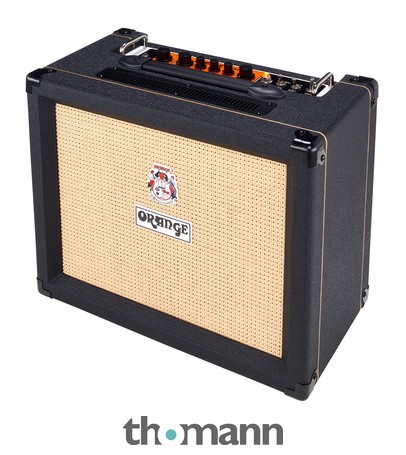
For home players who want this at manageable volume levels, the Orange Rocker 15 (check price) has a half-power and power-reduction switch that lets you get the power stage working at reasonable volumes. Same principle applies: it needs to be loud enough that the output valves are actually doing some of the work, not just idling while the preamp does everything. Our best tube amps under $1000 guide covers several options that hit this sweet spot well, and for anyone just starting the valve-amp journey, the best practice amps guide is worth a read too — some of the smaller valve options there are ideal for learning this technique at home without the neighbours hating you.
In my view, the single biggest underrated tone tip I give to players is this one. Before you buy another pedal, spend a week playing with your volume knob in places you'd normally ignore — 5, 6, 7 — and just listen to what the amp does. Some people find it revelatory. All it costs is attention.
— Jez, Amps & Valve Tone Editor
Common questions
- Does rolling back the guitar volume really clean up a cranked amp?
- Yes, on a valve amp that's already pushed into breakup, rolling back the guitar's volume pot reduces the input signal enough that the preamp and power stage receive less drive, which lets the amp clean up while still retaining some character. The effect is more pronounced on amps where natural power-stage saturation is part of the tone — smaller EL34 or EL84 designs particularly.
- Why does my guitar sound dark and muddy when I roll back the volume?
- This is common with guitars that don't have a treble bleed circuit fitted. As the volume pot drops, it bleeds off high-frequency content faster than low-mids, resulting in a dull, thick sound. A treble bleed capacitor across the volume pot corrects this and maintains clarity at lower volume settings. It's a cheap and straightforward modification any guitar tech can install.
- Does this technique work with active pickups?
- Less effectively, because active pickups have a low-impedance buffered output that doesn't interact with the downstream circuit in the same way. The impedance-loading effect that gives passive guitars their volume-rollback tone response doesn't really apply with actives. You'll get quieter, but the tonal shift and amp-cleaning behaviour is much reduced.
Right then — I'm Jez, and I've spent the best part of 25 years chasing the same thing: a cranked British valve amp on the edge of breakup. Cut my teeth in smoky blues clubs around the North West, then spent a decade on the bench fixing other people's amps, which taught me more about tone than any pedal ever did. I'm a sucker for an EL34 power section and a bit of natural sag. I'll always tell you straight whether an amp's worth the money or whether you're paying for a badge.
Gigging blues-rock guitarist (25+ yrs) and former valve-amp tech
More from Jez
 Why pickup magnet type changes how your valve amp breaks upAlnico and ceramic pickups push a valve amp's front end differently. Here's how magnet type shapes breakup, feel and sag, from a former amp tech.
 Clipping types explained: why diodes shape your drive pedal's feelSilicon, germanium, LED or asymmetrical — the clipping diodes in your overdrive decide how it feels under your fingers, not just how it sounds.
- Choosing between a dreadnought and an OM: a real-world guideDreadnought or OM? Jez breaks down how body shape actually changes feel, volume and tone, and which one suits your playing style.
- Where to put fuzz in your pedal chain (and why it moves)Fuzz pedal order isn't fixed like your other drives. Here's why it moves depending on your rig, and how to find the spot that actually works.
- Germanium vs silicon fuzz: which one suits your amp?Germanium and silicon fuzz behave completely differently through a valve amp. Here's how to pick the right one for your rig, not just your ears in a shop.
- Why fresh strings can make your valve amp sound worse, not betterNew strings aren't always the tone fix you think they are. Here's why a fresh set can clash with a cranked valve amp, and how to get both dialled in together.