Stacking two overdrives on bass: how to do it without mud
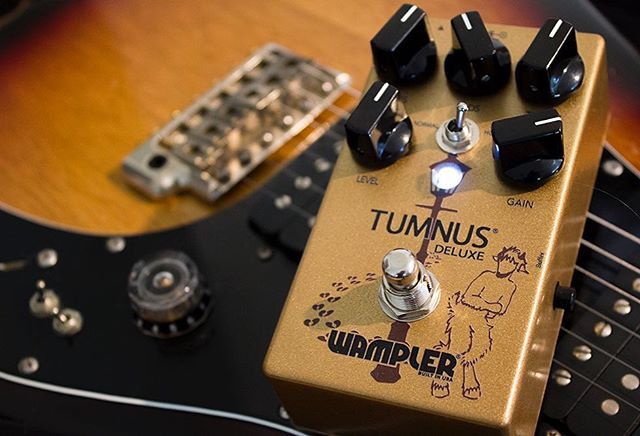
Last session I did, the guitarist had two overdrives running into each other and it sounded massive. I tried the same trick on my bass rig that night at rehearsal and for about four bars the whole band lost the one. That's the thing nobody tells you about stacking drives on bass: it's not guitar with a lower string. The fundamental is doing real work down there, and two overdrives fighting for the same frequency space will cancel out the exact note your bandmates are locking onto.
I've spent a fair chunk of my playing life chasing that fat-but-defined low end, the kind that sits under a Meters or Tower of Power groove without turning into a smear. Stacking overdrives can absolutely get you there. It can also turn your bass into a fuzzy suggestion of itself. The difference is entirely in how you set the two pedals up relative to each other, not which two pedals you buy.
Why stacking is different on bass
On guitar, stacking two overdrives is mostly about gain staging into an amp's front end — one pedal shapes, the other pushes harder. On bass the stakes are different because so much of your tone lives below 200Hz, and clipping circuits do strange things to low frequencies. Hard clipping especially tends to squash the fundamental and boost odd harmonics, which is exactly why a lot of standard overdrives thin bass out rather than fatten it. Stack two of those in series and you're compounding the problem twice over.
We've covered this before — most overdrive pedals aren't designed with a 41Hz low B in mind, they're voiced for guitar's frequency range and the loss shows up fast once you plug a bass in. Stacking makes that flaw more obvious, not less, unless you actively manage it.
The blend-first approach
My actual rule, developed the hard way over a lot of gigs: at least one of the two drives in your chain needs a clean blend or dry mix control. That's non-negotiable for me now. If neither pedal lets your uncompressed low end pass through underneath the distortion, you're relying on hoping the clipped signal alone carries enough fundamental to stay musical. It usually doesn't past a certain gain setting.
With a blend knob, I run pedal one (usually the lower-gain, more transparent one) with a fairly aggressive blend toward dry, maybe 70/30 clean-to-dirt. That gives me grit without losing the note's weight. Pedal two comes in with more gain but at a lower volume in the chain, essentially adding harmonic complexity on top rather than trying to be the main distorted voice. Think of it as one pedal doing texture and one doing the actual push.
Ordering the two drives
Order matters more than most players expect. Put the higher-gain, more compressed pedal first and a lower-gain, EQ-shaping drive second, and you get a different result than the reverse. In my experience, running a mid-gain, tube-screamer-style pedal into a fuzzier or harder-clipping drive tends to work better for bass than the other way round, because the second pedal is reacting to an already-compressed, mid-forward signal rather than trying to distort your full unclipped low end (which is where things get flabby and undefined).
The Ibanez Tube Screamer TS9 is a decent example of a pedal that works well in the first slot for this — it scoops very little, keeps mids present, and hands off a controlled signal to whatever comes next. Something like the ProCo RAT 2 (check price) in the second slot can add aggression and harmonic bite without swallowing what the first pedal already shaped. That's just one combination; the logic transfers to plenty of other pairings.
EQ and frequency separation
If either pedal in your chain has its own EQ or tone control, use them to carve out different territory rather than letting both drives fight over the same 300Hz-800Hz mid hump, which is where most overdrive circuits like to live. I'll often roll the tone back slightly on the first pedal to keep it warmer and darker, then let the second pedal carry more top-end grit and presence. That separation is what stops the stack from turning into one undefined wall of mid-range fuzz.
A high-pass filter or a pedal with a dedicated low-end blend, positioned either at the start of the chain or in a parallel loop if your board has one, is worth the investment if you're serious about stacking. It's the single biggest fix for the "my low B disappeared" problem, because it protects the fundamental from ever hitting the clipping stage at all.
In the room, not just on the bench
Everything above sounds fine solo in a practice room. The real test is in a full band mix, ideally with a drummer playing at gig volume, because that's where you find out whether your stacked tone still locks with the kick or just adds noise. I'd rather have a slightly less exciting solo tone that sits perfectly in a mix than an impressive bedroom tone that vanishes the second the guitars come in. That's a genuinely unpopular opinion with some pedal-board obsessives, I know, but the pocket doesn't care how many stompboxes you own.
Worth trying this at soundcheck rather than five minutes before doors: play your stacked tone against just the kick and snare, then bring in a rhythm guitar. If the low end starts folding in on itself, back off the gain on pedal two before you touch anything else. It's almost always the second pedal in the chain doing the damage, not the first.
If you're still building out your board and haven't settled on a first drive, our rundown of the best overdrive and distortion pedals is a reasonable starting point, though remember most of those recommendations are written with guitar in mind and you'll want to audition anything on bass specifically before committing. And if fuzz is part of your stacking plan rather than a second overdrive, it's worth reading up on fuzz pedal options too, since fuzz behaves quite differently from clipping-diode overdrive when you push a low B through it.
A simple starting recipe
If you want somewhere concrete to start rather than trial and error for a month: run a transparent, blend-capable overdrive first with the blend around 60-70% dry, gain kept modest. Follow it with a second pedal set for texture rather than volume, gain lower than you'd think, mix low in the overall loudness of your signal. Check it against a drummer, not just your amp alone. Adjust the second pedal's gain down before you touch anything else if things get muddy.
It's not a formula that works identically for every rig, every bass, every style. Flat vs round wound strings change how this all reacts too — a roundwound bass through two mid-gain drives behaves quite differently to flats, which already roll off some of that top-end harmonic content before the pedals even get involved. But the underlying principle holds: protect the fundamental, separate the frequencies, and let the two pedals do different jobs rather than the same job twice.
Common questions
- Can I just use two of the same overdrive pedal stacked together?
- You can, but it tends to just compound whatever that pedal already does to your low end, good or bad. Two different pedals with different clipping styles and EQ shapes usually give you more control and a clearer result.
- Should the overdrive with more gain go first or second in the chain?
- In most cases I've tried, a lower-gain, transparent drive first followed by a higher-gain or harder-clipping pedal second keeps more low-end definition than the reverse order, because the second pedal reacts to an already-shaped signal rather than your raw unclipped bass.
- Do I need a blend knob to stack overdrives on bass?
- You don't strictly need one, but it makes a big difference. Without a way to blend in your dry signal, you're relying entirely on the clipped tone to carry the fundamental, which gets harder as gain increases.
Sheildon here. I'm a bass player, funk and soul mostly, so for me it always comes back to one thing: the pocket. I've spent years in session rooms learning that the best low-end isn't the loudest — it's the note that lands in exactly the right place and just sits there, fat and easy. I get geeky about pickups, string tension and how an amp reproduces the fundamental, but I never lose the groove. Give me something that makes me want to lock in with the kick drum and I'm a happy man.
Funk and soul session bassist; groove and low-end specialist
More from Sheildon
 Bass through a guitar amp: why it never quite worksPlugging bass into a guitar amp seems harmless until the speaker starts farting out. Here's the actual physics of why it struggles, and what to do about it.
- Why a bass amp's wattage number lies to youWatts on a bass amp don't mean what they mean on a guitar amp. Here's why headroom, speaker size and valve vs solid-state design matter more than the number.
- Bass fuzz without the mud: how to keep low end under gainMost fuzz pedals were voiced for guitar and strip your bass of fundamental. Here's how to pick, blend and EQ fuzz so the low end survives.
- Muting technique for bass: why your left hand controls the pocketGood bass tone starts with what you stop ringing, not what you play. Here's how left-hand muting shapes the pocket more than any pedal or EQ setting.
- How acoustic body shape changes the low end you actually hearA bass player's take on why dreadnoughts, jumbos and smaller-bodied acoustics throw the fundamental differently, and what that means when you're picking one.
- Bass string gauge and pickup output: matching the two properlySwapping to heavier bass strings without checking pickup output leaves you fighting your own tone. Here's how gauge, pole spacing and output actually interact.