Stacking overdrives before high gain: a practical guide
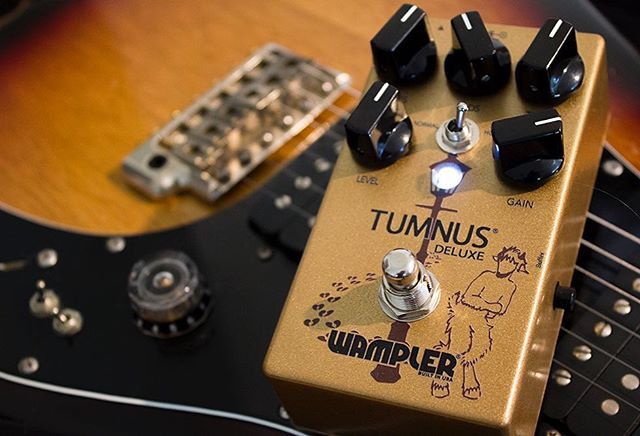
Last Tuesday I had a student message me after a jam asking why his "wall of gain" rig sounded like someone had thrown a wet towel over his cab. Seven string, high-gain amp sim dimed, boost pedal shoved in front at full drive. Honestly, that's the most common mistake I see when guys first discover that overdrive pedals and high-gain amps can be friends. The instinct is more gain equals more heavy. It's backwards. An overdrive in front of distortion is a shaping tool, not a volume knob for aggression.
I've run a profiler at every gig for years now, and before that it was 5150s and Mesa heads through 4x12s on the road. Stacking overdrive into high gain is one of those things that works identically whether you're running valves or a modeller, because the physics of clipping stages doesn't care what's downstream. That's actually the bit most players miss.
What stacking actually does to the signal
A high-gain amp channel, whether it's a real 6L6 monster or a captured profile, is already pushing your signal through several gain stages until the waveform is heavily clipped. That's where the saturation and sustain come from. When you put an overdrive pedal in front of that, you're not asking the amp for more distortion exactly. You're changing the shape and density of what hits the first gain stage.
Most overdrives, the Tube Screamer family especially, scoop bass and push upper mids before the signal even gets clipped. So when that EQ-shaped, slightly compressed signal hits an already-saturated amp front end, the amp has less low-end mud to deal with and more defined pick attack to work with. The result is tighter palm mutes and a note that speaks instead of farting out. This is the entire reason the mid-hump-into-5150 thing became a cliché in the first place. It's not magic, it's just gain staging.
If you've never really dug into how clipping stages interact, it's worth reading our piece on overdrive vs distortion: what the names actually mean, because the terminology confusion is exactly what trips people up when they start stacking.
Choosing the right pedal for the job
Not every overdrive stacks well. You want something with a tight bottom end and a mid push, not a flat, full-range boost. A Tube Screamer TS9 (check price) is the obvious reference point because half of modern metal's rhythm tone was built on exactly this trick, but a Boss SD-1 (check price) does a similar job with slightly more headroom and less compression, which some players prefer on seven and eight strings where you don't want the low B getting squashed further.
The Fulltone OCD (check price) sits at the other end, it's got more low end and a harder clip, so it works better as a genuine second distortion voice rather than a tightening tool. I've used it in front of lower-gain amps to get them into proper metal territory, but stacked in front of an already-high-gain channel it can get woolly fast if you're not careful with the tone control.
Setting the controls so it actually djents
Here's the bit nobody tells beginners. The overdrive's own gain knob should usually sit low, often under nine o'clock. You are not trying to distort with the pedal, you're using it as an EQ and compression stage. Level gets set so you're pushing the amp's input a little harder than unity, enough to feel the extra push on palm mutes, not so much that you're adding a second layer of fizz on top of the amp's own distortion.
Tone control is where the tightening happens. Roll it up slightly from noon on a Tube Screamer-style pedal and you'll notice the low string chug stop flapping around and start thudding. Too far and you lose body entirely and it gets thin and buzzy, which is its own kind of bad. I'd argue most players run the tone control too high because they're chasing "clarity" when what they actually want is just less mud, and those aren't the same adjustment.
Where it sits in the chain and why that doesn't change
For this specific trick, the overdrive goes before the amp's input, full stop, whether that's a real amp or a modeller's virtual input block. This is different to the fuzz placement discussion we've covered before in where to put fuzz in your pedal chain, because fuzz circuits interact badly with buffers and other pedals in ways overdrives generally don't. An overdrive stacking into gain is predictable and repeatable. You're not fighting impedance issues, you're just reshaping a signal before it hits a clipping stage that's going to clip it further anyway.
On a modeller like the units I run at gigs now, I'll put a Tube Screamer-style block directly before the amp block in the signal chain, same as I would with a physical pedal in front of a physical head. The modelling companies have done their homework here, the interaction behaves the same as the real analog version because they're literally emulating the same cascading gain stage behaviour.
The mistakes I see constantly
Running too much gain on the overdrive itself is the big one, it just adds fizz and noise without the tightening benefit. Second mistake is ignoring the amp's own gain knob, if your amp channel is already maxed there's nowhere for the stacked signal to go except into harsh, undefined distortion. Pull the amp gain back a touch when you add a stacked overdrive, you'll often end up with more usable tone at a lower overall gain setting than you'd get maxing the amp alone.
Third mistake, and I was guilty of this for about two years on the road before a tech at a festival in Download pointed it out to me, is not checking the stacked tone at actual gig volume. Bedroom levels and PA-through-a-wedge levels behave differently, low end that sounds tight at low volume can turn to mush once the air's actually moving. Test loud if you're going to rely on it live.
Does any of this matter if you're on a modeller?
Genuinely, yes. I get asked this a lot, usually by players who assume digital amp sims have some kind of smarter gain structure that doesn't need this stuff. They don't, not really. The captures and amp models are built to behave like the real circuits they're modelled on, cascading gain stages and all, so a Tube Screamer block in front of a 5150 capture behaves close enough to the real pedal in front of the real amp that the technique transfers directly. If you're shopping for your first overdrive to try this with, our best overdrive and distortion pedals guide covers the main contenders including both pedals mentioned above.
It still comes down to your ears and your riffs though. A chuggy drop-A riff and a fast tremolo-picked tech-death line want different settings, and no article's going to tell you the exact knob position for your exact amp and guitar. Get the concept right, then turn knobs until it does what you want.
Common questions
- Do I need an overdrive pedal if my amp already has plenty of gain?
- You don't need one, but it changes the character rather than just the amount of distortion. A lot of players with high-gain amps still run a stacked overdrive purely for the tightening and mid push, not because the amp lacks gain on its own.
- Should the overdrive go before or after other pedals like noise gates?
- Overdrive goes before the amp input, and if you're running a noise gate as a pedal rather than in the amp's effects loop, the gate usually goes after the overdrive so it's gating the full stacked signal, not just the dry guitar.
- Will stacking overdrive work the same on a lower-gain amp like a Blues Junior?
- It'll push a clean or edge-of-breakup amp into genuine distortion rather than just tightening existing gain, which is a different effect but a genuinely useful one if you're trying to get metal tones from a lower-gain combo.
I'm Daz and I play LOUD. Spent years on the road playing modern metal — drop tunings, seven and eight strings, the works — so high-gain tone is genuinely my whole life. Honestly, I came up worshipping tube heads and 4x12s, then digital modellers got good enough to change my mind completely, and now I run a profiler at every gig. I care about two things: does it djent, and does it hold together when you stack the gain? I'll measure the noise floor so you don't have to.
Touring metal guitarist; multi-scale and digital-modelling specialist
More from Daz
 Why fan-fret and multiscale necks actually matter for low tuningsMultiscale necks aren't a gimmick for drop-tuned players. Here's what fan frets actually fix, and when a straight scale is still the smarter buy.
 Why a metalhead should still own one acoustic guitarDaz explains why even a drop-tuned, high-gain player benefits from one decent acoustic, and what actually matters when picking one.
- Pickup output vs string gauge: the real relationship for high gainDaz breaks down how pickup output and string gauge actually interact on high-gain rigs, and why chasing bigger output isn't the fix for a flabby low string.
- Trails and freeze effects: building ambience that doesn't fight your riffTrails and freeze modes can build huge ambient textures on a high-gain rig without turning your chug into soup. Here's how I actually use them.
- Analog vs digital ambient tones on a high-gain rigAnalog or digital delay and reverb for a high-gain rig? Here's how each behaves under gain, and how to set them so the chug survives.
- Scale length and drop tunings: why it matters more than you thinkStruggling to keep drop tunings tight and in-tune? Scale length changes string tension more than gauge does. Here's what actually works.