Pickup output vs string gauge: the real relationship for high gain
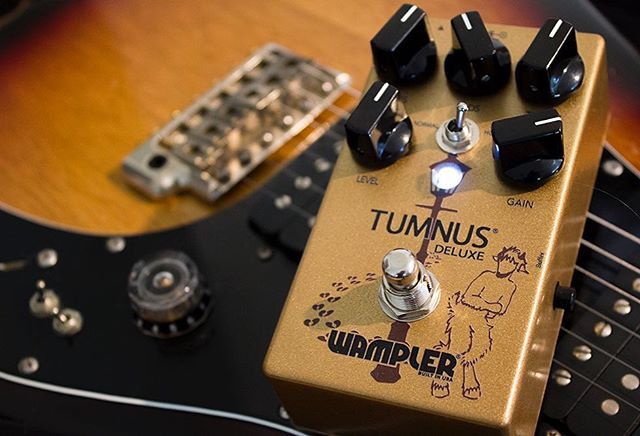
Had a bloke message me last month asking whether he needed a "hotter" pickup for his seven-string because his low B sounded like wet cardboard through his profiler. Spoiler: the pickup wasn't the problem. The strings were too light for the tuning and nothing downstream was ever going to fix that. This mix-up comes up constantly, so let's sort it properly.
Pickup output and string gauge aren't the same lever. They do different jobs, and when people treat them as interchangeable they end up chasing their tail, swapping pickups every few months while the actual issue sits untouched in the string drawer.
What pickup output actually controls
Output is about signal level and, to a lesser extent, frequency response. A higher output pickup, more winds of wire, often with ceramic magnets in metal-oriented sets, pushes a stronger signal into your amp or interface. That means more front-end gain stage saturation for a given amp gain setting, and usually a slightly darker voice because more winds adds inductance, which rolls off top end.
What output does NOT control is string tension, note definition, or how tight your palm mutes feel. That's the bit people get backwards. A hotter pickup on a loose, under-tensioned string doesn't make the note tighter. It just makes the flub louder and pushes your amp's front end harder into a signal that was already a bit woolly to begin with. Honestly, that's often worse, not better.
What string gauge actually controls
Gauge and tuning together set string tension, and tension is what gives you note definition, especially on the low strings in drop tunings. Too light a gauge for the tuning and the string flaps around more than it should, which reads as a loose, undefined low end no matter how good your pickups are. This is the single biggest avoidable mistake I see from guys moving down to seven or eight strings, or dropping a six-string lower than standard without rethinking the set.
We've covered the maths side of this properly in scale length and drop tunings, but the short version: a 25.5" scale in drop A needs considerably heavier gauge than the same tuning on a 27" baritone-scale metal guitar, because the longer scale partially compensates for the tension loss. Get the scale-to-gauge relationship wrong and even boutique pickups will sound flabby.
Where they actually interact
Here's the bit that's genuinely useful once you've got tension sorted. String gauge changes the actual magnetic coupling with the pickup, not just the mechanical tension. Heavier strings, especially wound strings, have more mass moving through the magnetic field, which generates a stronger signal even with the exact same pickup. So when you go up in gauge for a drop tuning, you're often getting a small output bump for free, on top of the tension fix.
This is why a guitar that sounds thin and papery in drop C with a .010-.052 set can sound genuinely massive with a .011-.060 set and the same pickups. Nothing electronic changed. The string just has the mass and tension to drive the pickup and hold pitch properly when you're chugging.
I run this exact combination on my main seven: a mid-output passive humbucker, not a screaming ceramic monster, paired with a gauge set specifically chosen for the tuning I'm in. The pickup doesn't need to work hard because the string is already doing its job.
Why "just get a hotter pickup" is bad advice
I'll be blunt about this one. A lot of younger players get told to chase higher output ceramic pickups to get a "tighter" high-gain tone, and it's backwards thinking. Extra output into an already-saturated front end, whether that's a real tube preamp or a modelled one, just adds mush and compresses the pick attack further. You lose the transient, the bit that makes a palm mute actually chug instead of smear.
If your rig feels loose under gain, work the problem in this order: check your tuning-to-gauge match first, then your amp or profiler's gate and EQ, then consider pickup output last. Swapping pickups before fixing tension is like changing your drummer's cymbals because the kick drum sounds flat. Wrong part of the chain.
For players building a metal rig from scratch, our best guitars for metal guide covers a few factory pickup and scale combinations that already get this balance right out of the box, which saves some of the trial and error.
A practical way to dial it in
Start with a tension reference. The free online tension calculators that string manufacturers like D'Addario publish are genuinely useful here, they're not just marketing fluff. Aim for roughly the same felt tension on your low string as you'd get from standard gauge in standard tuning, then adjust from there based on feel. If you like a looser, more Page/Hendrix-style low end even in drop tunings, fine, that's a valid choice, but make it on purpose rather than by accident.
Once tension feels right, then listen to your pickup output. If it's still too hot or too dark for the amp you're running, that's when a pickup swap earns its keep. I've gone lighter output on two of my guitars in the last few years, not heavier, because the modern profiler and amp-sim front ends I use don't need the same kick a real tube amp input stage did. That's probably a bit against the typical "more output for more gain" instinct, but it's worked better for me.
If you're running pedals into your high-gain chain rather than straight into an amp-sim, string gauge changes your pick dynamics into the gain stage too, worth bearing in mind if you're also sorting out overdrive and distortion pedal choices for tightening up a loose-feeling rig.
Common questions
- Does a higher output pickup make palm mutes tighter?
- Not on its own. Tightness under palm mutes comes mostly from string tension and your right-hand muting technique. A hotter pickup just amplifies whatever tightness or looseness is already there.
- What string gauge should I use for drop tunings on a seven-string?
- It depends on scale length and personal feel, but most players drop-tuning a 25.5" to 27" scale seven-string land somewhere in the .010 to .059 or .011 to .062 range for the low strings. Check a tension calculator for your specific scale and tuning rather than copying someone else's set blindly.
- Should I change pickups and strings at the same time?
- I'd avoid it. Change one variable at a time so you actually know what fixed the problem. Sort your string gauge and tuning first, live with it a week or two, then reassess the pickup.
I'm Daz and I play LOUD. Spent years on the road playing modern metal — drop tunings, seven and eight strings, the works — so high-gain tone is genuinely my whole life. Honestly, I came up worshipping tube heads and 4x12s, then digital modellers got good enough to change my mind completely, and now I run a profiler at every gig. I care about two things: does it djent, and does it hold together when you stack the gain? I'll measure the noise floor so you don't have to.
Touring metal guitarist; multi-scale and digital-modelling specialist
More from Daz
 Why fan-fret and multiscale necks actually matter for low tuningsMultiscale necks aren't a gimmick for drop-tuned players. Here's what fan frets actually fix, and when a straight scale is still the smarter buy.
 Why a metalhead should still own one acoustic guitarDaz explains why even a drop-tuned, high-gain player benefits from one decent acoustic, and what actually matters when picking one.
- Trails and freeze effects: building ambience that doesn't fight your riffTrails and freeze modes can build huge ambient textures on a high-gain rig without turning your chug into soup. Here's how I actually use them.
- Analog vs digital ambient tones on a high-gain rigAnalog or digital delay and reverb for a high-gain rig? Here's how each behaves under gain, and how to set them so the chug survives.
- Scale length and drop tunings: why it matters more than you thinkStruggling to keep drop tunings tight and in-tune? Scale length changes string tension more than gauge does. Here's what actually works.
- Neck pickup, bridge pickup, or both: wiring choices for high-gain rigsWhy your pickup selector switch matters more than your amp settings for tight, djenty high-gain tone, and what actually changes between positions.