Why fan-fret and multiscale necks actually matter for low tunings
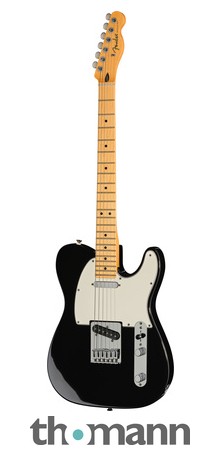
Last count I had three multiscale guitars in rotation and two straight-scale sevens that never left the stand for about a year. That tells you something, honestly. Multiscale necks got sold to a lot of players as a tech-metal fashion statement, all sharp angles and Instagram shred clips, but the actual reason they exist is dead boring and completely practical: string tension math. Once you understand that, you can work out whether you actually need one or whether you're just buying the look.
I came up on straight-scale guitars, 25.5 inch Strats and a Les Paul's 24.75, same as everyone. Then I started tracking down to drop A and lower for a touring gig and the straight-scale sevens I owned turned to rubber bands on the low string. Floppy, no fundamental, no djent. That's when fan frets stopped being a gimmick to me and started being the fix.
The tension problem multiscale actually solves
Scale length is the distance from nut to bridge, and it directly affects how much tension a string needs to reach a given pitch. Short scale, lower tension for the same note. Long scale, higher tension. On a standard 25.5 inch guitar tuned to standard E, that balance is fine because the strings were basically designed around that scale and tuning a century or so of steel-string development ago.
Drop the whole guitar down to drop A or lower and you're asking a low string built for roughly 25.5 to 27 inches of scale to hold pitch at a much lower tension than it wants. Result: flubby attack, dead sustain, and that annoying pitch bend when you palm mute hard. You can band-aid it with a heavier gauge, but then the trebles feel like steel cable if you don't also adjust those.
A multiscale neck fixes this by using a longer scale on the bass side, often 27 to 28 inches on the low string, and a shorter scale on the treble side, maybe 25.5 inches, with the frets fanning between the two. Low string gets the extra scale length it needs to stay tight and articulate at low tunings. High strings stay comfortable for bends and fast lead lines. You get both ends of the guitar behaving the way they should instead of compromising one for the other.
Does it actually feel weird to play?
First twenty minutes, yes. The fanned frets mean your fretting hand has to adjust its angle slightly as you move across the neck, and barre chords feel different because the fret isn't perpendicular to the strings anymore. I remember handing my first multiscale, an Ibanez, to a mate at a rehearsal space off Dudley Road and watching him pull a face like I'd given him a guitar from an alternate dimension.
But here's the thing, it stops being noticeable fast. Your hand adapts to the fan within a few sessions, especially if you're already used to ergonomic stuff like compound radius fretboards. The actual payoff, tighter low end with zero loss of playability up top, is worth the short adjustment window if you're genuinely living in drop tunings.
When you honestly don't need one
I'll be the contrarian here because most gear writers won't say this straight: if you're in drop D or even drop C on a six string, you probably don't need multiscale. A longer baritone-style straight scale, something in the 26.5 to 27 inch range, solves that problem without the fanned frets, and it's cheaper and easier to source parts for. Multiscale earns its keep once you're down around drop A, drop G, or running an eight string into genuinely stupid territory. Below that it's often just added cost and a steeper learning curve for a problem a straight baritone scale already fixes.
If you're shopping for your first proper metal guitar and you're not sure where your tuning is heading yet, something like the ESP LTD EC-1000 (check price) or a straight-scale seven covers a lot of ground before multiscale becomes necessary. Our best guitars for metal guide has a few straight and extended-scale options side by side if you want to compare before committing to fanned frets.
Pickups and setup, the stuff nobody mentions
Multiscale changes more than string feel. Pickup placement relative to the harmonic nodes shifts slightly because the string length under the bass-side pickup is longer than under the treble-side pickup. Most builders compensate for this in the routing, but it does mean the low string's fundamental and the pickup's sweet spot interact a bit differently than on a straight scale. In practice I haven't found it to be a dealbreaker, output and clarity are still there, but don't expect a multiscale and a straight-scale guitar with the same pickups to sound identical.
Setup is also fiddlier. Intonation involves two bridge saddle positions moving on different trajectories rather than one straight line, and a tech who hasn't worked on fanned frets before can genuinely make a mess of your action if they're not paying attention to how the fan changes string height requirements across the neck. If you're getting one set up, ask whoever's doing the work if they've handled multiscale before. It's a different job to a standard setup, not dramatically different, but different enough that I'd check our guide on how often you really need a professional guitar setup is worth a read before you hand it over to just anyone.
Matching tension to your actual tuning
None of this works without also sorting your string gauge properly. A multiscale neck gives you the mechanical headroom for proper tension at low tunings, but you still need to put the right gauge on it. I run heavier gauges on the low strings of my drop A guitar than I would on a straight-scale drop C guitar, because even with the extended scale you're still fighting physics. There's crossover with the string gauge and pickup output relationship too, worth checking our piece on pickup output vs string gauge for high gain if you're tuning down and wondering why your tone got muddy instead of tighter.
The honest summary: multiscale isn't styling, it's solving a tension problem that's real once you're down low enough. But it's a tool for a specific job, not a universal upgrade, and plenty of players would get more mileage out of a sensible baritone scale and the right string gauge than they would from fanned frets and a steeper learning curve they didn't actually need.
Common questions on multiscale necks
Common questions
- Do I need multiscale for drop C or drop D on a six string?
- Usually not. A longer baritone-style straight scale, around 26.5 to 27 inches, handles drop C and drop D fine without the fanned frets and the adjustment period. Multiscale starts earning its keep once you're down around drop A or lower, or running a seven or eight string in a genuinely low tuning.
- Is a multiscale neck harder to learn on if I'm already an experienced player?
- It feels odd for the first few sessions because your fretting hand angle changes slightly as you move across the neck, especially on barre chords. Most players who already have solid technique adapt within a week or two of regular practice. It's a bigger adjustment for brand new players still building fundamental habits.
- Does multiscale change my tone, or just the feel?
- Both, a bit. The extended bass-side scale gives you tighter low-end fundamental and better note definition at low tunings. Pickup placement relative to the string's harmonic nodes also shifts slightly compared to a straight scale, so expect a subtly different voicing even with identical pickups, not a dramatic change.
- Can a regular guitar tech set up a multiscale instrument properly?
- Most competent techs can, but it is a different job to a standard setup because intonation involves two saddle trajectories rather than one straight line across the bridge. Ask before booking the work in if they've handled fanned-fret instruments before, particularly for intonation and action across the fan.
I'm Daz and I play LOUD. Spent years on the road playing modern metal — drop tunings, seven and eight strings, the works — so high-gain tone is genuinely my whole life. Honestly, I came up worshipping tube heads and 4x12s, then digital modellers got good enough to change my mind completely, and now I run a profiler at every gig. I care about two things: does it djent, and does it hold together when you stack the gain? I'll measure the noise floor so you don't have to.
Touring metal guitarist; multi-scale and digital-modelling specialist
More from Daz
 Why a metalhead should still own one acoustic guitarDaz explains why even a drop-tuned, high-gain player benefits from one decent acoustic, and what actually matters when picking one.
 Pickup output vs string gauge: the real relationship for high gainDaz breaks down how pickup output and string gauge actually interact on high-gain rigs, and why chasing bigger output isn't the fix for a flabby low string.
- Trails and freeze effects: building ambience that doesn't fight your riffTrails and freeze modes can build huge ambient textures on a high-gain rig without turning your chug into soup. Here's how I actually use them.
- Analog vs digital ambient tones on a high-gain rigAnalog or digital delay and reverb for a high-gain rig? Here's how each behaves under gain, and how to set them so the chug survives.
- Scale length and drop tunings: why it matters more than you thinkStruggling to keep drop tunings tight and in-tune? Scale length changes string tension more than gauge does. Here's what actually works.
- Neck pickup, bridge pickup, or both: wiring choices for high-gain rigsWhy your pickup selector switch matters more than your amp settings for tight, djenty high-gain tone, and what actually changes between positions.