Octave fuzz on bass: the classic sound and why it's so easy to get wrong
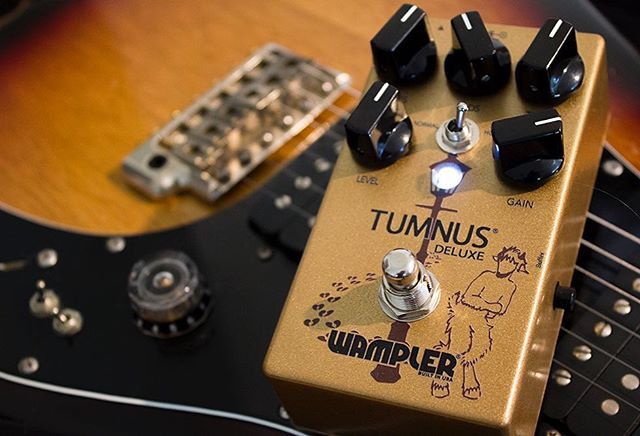
There's a session I did a few years back in Melbourne, a soul revival gig where the producer wanted "that Justin Chancellor thing, but for a Motown tune." I knew exactly what he meant and exactly why it was going to be a fight. Octave fuzz on bass is one of those sounds everyone recognises the second they hear it and almost nobody sets up correctly the first time. It's glorious. It's also one of the fussiest tools in the whole fuzz family, and if you've ever plugged an octave fuzz into your bass rig and got a farty, gated mess instead of that thick synth-like roar, you're not alone.
Let's sort out what's actually happening in these circuits, why bass makes them behave so differently to guitar, and how to get the tone without losing your pocket in the process.
What octave fuzz actually does
Most octave fuzz pedals, the classic ones anyway, use a circuit that generates a note an octave above (sometimes above and below) your fundamental, then mangles the whole thing through a fuzz stage. The magic and the misery both come from the same source: these circuits track pitch, and tracking pitch on a signal as harmonically complex as a bass string is genuinely hard for a simple analog circuit to do.
Guitar strings are thinner, the fundamental is higher, and the waveform crosses zero more cleanly and more often. Bass strings, especially your E and A, are fat, slow-moving waveforms with huge amounts of harmonic content sitting underneath the note you're actually playing. The octave circuit is trying to find a clean zero-crossing to trigger from, and on a low, thick bass note, it often can't find one reliably. That's why octave fuzz on bass tends to fall apart, glitch, or refuse to track at all below the octave or so above open E.
Why the classic recordings still work
Here's the thing that trips people up: most of the iconic octave-fuzz bass tones you're thinking of weren't played down low. Listen closely to those parts and you'll notice the bassist is usually working in the upper register, often above the twelfth fret, sometimes doubling a riff that could just as easily have been played on guitar. That's not an accident. Playing higher up the neck gives the octave circuit a cleaner, faster waveform to track, which means better tracking, less glitching, and that satisfying synth-lead quality instead of a stuttering mess.
I'd argue this is the single most important thing nobody tells beginners about octave fuzz on bass: it's as much a playing technique as it is a pedal setting. You can own the right pedal and still sound wrong if you're trying to use it the way you'd use a standard fuzz or overdrive, sitting in your normal register and expecting it to behave.
Setting up your rig so it actually tracks
A few practical things make a real difference here, and I've worked through all of them the hard way in rehearsal rooms rather than reading about them somewhere.
Play single notes, not chords or double-stops. Octave circuits are monophonic by nature; feed them two notes at once and they'll try to track both and usually fail at both. Roll your tone knob back slightly before the pedal if your bass is bright or your pickups are hot, since excess high-end harmonic content confuses the tracking. And if your bass has an active preamp, try running it in passive mode into the fuzz, then EQ afterwards. Active electronics often push a hotter, more complex signal into the pedal than a vintage-style passive circuit expects.
String choice matters too. Fresh strings with clear fundamentals track more reliably than old, dead ones where the harmonic balance has shifted. This is one of the rare cases where slightly worn-in strings, not brand new, sometimes track a shade better, because the very brightest overtones have settled down. It's marginal, but it's real.
Where to put it in the chain
Octave fuzz wants to see your bass signal directly, or as close to it as possible. Put it first in your chain, before compressors, before EQ pedals, definitely before any other drive or modulation. A compressor ahead of an octave fuzz will squash the dynamics the tracking circuit relies on to read your attack cleanly, and that's a fast way to get unreliable results. If you're chaining a fuzz with other gain pedals, this is the same gain-staging logic we've covered before around how signal order changes where things actually clip; octave fuzz is just far more sensitive to it than a standard drive.
If you want low end and octave fuzz at the same time, and most of us do, the practical answer is a parallel blend rather than fighting the circuit. Run your dry signal to the desk or amp alongside the fuzzed signal, either with a blend knob on the pedal itself or an ABY/mixer setup, so the fundamental stays solid underneath the glitchy top-register fuzz line. This is the same principle behind blending fuzz with a clean bass signal generally, just applied specifically to an octave circuit that needs the help even more.
A few honest tradeoffs
Octave fuzz is not a set-and-forget pedal, and I think that's worth saying plainly rather than pretending it's plug-and-play. It rewards a specific playing style, upper register, single notes, deliberate attack, and it punishes sloppy technique more than almost any other pedal type on your board. If your band needs you holding down a low, steady root through a verse, this isn't the pedal for that moment. It's a lead voice, a hook, a moment, not a rhythm section tone.
For general fuzz shopping on bass, our best fuzz pedals guide covers a range of circuits including octave-capable options, and it's worth reading alongside our piece on overdrive and distortion pedals if you're building out a full gain section rather than a single fuzz moment. And if standard fuzz already gives you grief below open E, our guide on why most fuzz pedals fall apart below E covers the underlying tracking problem in more depth, since it's the same physics causing both issues.
Getting the most out of it live
In a live mix, octave fuzz cuts through best when the rest of the band drops out slightly, a classic call-and-response arrangement, or when you're doubling a synth or guitar line rather than holding the bottom alone. Talk to your drummer and guitarist about where these moments sit in the arrangement rather than just switching it on whenever you feel like it. The pedal wants space to be heard clearly, and a busy mix will bury exactly the frequencies that make it sound good.
It's a genuinely fun pedal once you stop expecting it to behave like your regular fuzz or dirt box. Respect what it's actually trying to do, feed it the right signal, and it'll give you one of the most distinctive sounds in the whole bass toolkit.
Common questions
- Why does my octave fuzz glitch out when I play low notes on bass?
- The circuit is trying to detect a clean pitch from a low, harmonically dense waveform and often can't lock on reliably. This is normal behaviour for most octave fuzz designs, not a fault. Playing higher up the neck, using single notes, and keeping your tone slightly darker into the pedal all improve tracking.
- Should I use active or passive bass electronics with octave fuzz?
- Passive generally tracks better. Active preamps often push a hotter, more complex signal into the pedal than these circuits expect, which can make tracking worse. Try switching to passive mode if your bass has that option and EQ after the fuzz instead.
- Can I blend octave fuzz with my clean bass tone?
- Yes, and for most playing situations I'd recommend it. A parallel blend keeps your fundamental and low end solid while the octave fuzz sits on top as a lead texture, rather than replacing your low end with an unreliable, glitchy signal.
- Where should octave fuzz sit in my pedal chain?
- As close to your bass as possible, before compressors, EQ pedals or other drives. Compression especially will flatten the dynamics the tracking circuit needs to read your note cleanly.
Sheildon here. I'm a bass player, funk and soul mostly, so for me it always comes back to one thing: the pocket. I've spent years in session rooms learning that the best low-end isn't the loudest — it's the note that lands in exactly the right place and just sits there, fat and easy. I get geeky about pickups, string tension and how an amp reproduces the fundamental, but I never lose the groove. Give me something that makes me want to lock in with the kick drum and I'm a happy man.
Funk and soul session bassist; groove and low-end specialist
More from Sheildon
 Bass through a guitar amp: why it never quite worksPlugging bass into a guitar amp seems harmless until the speaker starts farting out. Here's the actual physics of why it struggles, and what to do about it.
- Why a bass amp's wattage number lies to youWatts on a bass amp don't mean what they mean on a guitar amp. Here's why headroom, speaker size and valve vs solid-state design matter more than the number.
- Bass fuzz without the mud: how to keep low end under gainMost fuzz pedals were voiced for guitar and strip your bass of fundamental. Here's how to pick, blend and EQ fuzz so the low end survives.
- Muting technique for bass: why your left hand controls the pocketGood bass tone starts with what you stop ringing, not what you play. Here's how left-hand muting shapes the pocket more than any pedal or EQ setting.
- How acoustic body shape changes the low end you actually hearA bass player's take on why dreadnoughts, jumbos and smaller-bodied acoustics throw the fundamental differently, and what that means when you're picking one.
- Bass string gauge and pickup output: matching the two properlySwapping to heavier bass strings without checking pickup output leaves you fighting your own tone. Here's how gauge, pole spacing and output actually interact.