Where to put fuzz in your pedal chain (and why it moves)
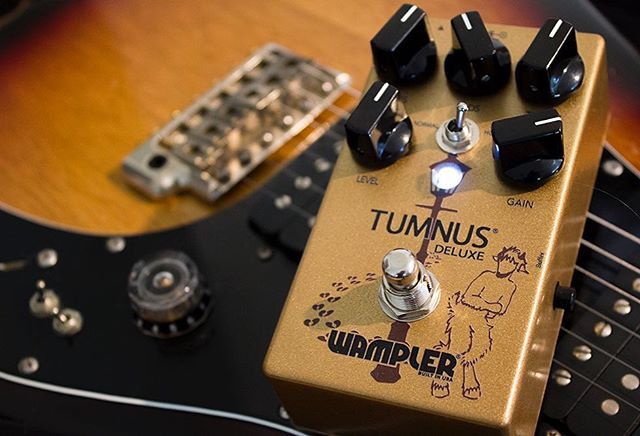
Had a lad in the shop years back, convinced his fuzz pedal was faulty. Bought it secondhand, plugged it in after his wah and a compressor, and it farted out this thin, choked splutter that sounded nothing like the demo he'd watched. Nothing wrong with the pedal. Wrong spot in the chain, simple as that. Fuzz is the one pedal on your board that genuinely does not follow the same rules as everything else, and if nobody's told you that, you'll spend money chasing a fault that isn't there.
Right then — let's sort out why fuzz pedal order matters more than any other stage in your chain, and how to actually find the spot that works for your particular rig, because it isn't always the same answer twice.
Why fuzz breaks the normal rules
Your standard drive pedal — a Tube Screamer, an OCD, that sort of thing — is designed to be reasonably tolerant of what's in front of it. Buffers, wah pedals, compressors, they'll all pass a drive pedal's input signal through more or less intact, and the drive does its clipping regardless. Fuzz doesn't play that game. Most fuzz circuits, especially the old germanium and silicon transistor designs based on the Fuzz Face and the Tone Bender, interact directly with your guitar's pickups and whatever's sitting between the guitar and the fuzz itself. Change what's upstream, even slightly, and the fuzz's whole character shifts.
This comes down to impedance, which I've banged on about before in relation to fuzz and amp inputs. A buffered pedal — and a lot of pedals buffer your signal even if they're bypassed, wahs and compressors being the classic culprits — presents a low output impedance to whatever comes next. Fuzz circuits, particularly two-transistor Fuzz Face types, want to see the high impedance of a passive guitar pickup directly. Stick a buffer in between and the fuzz loses top end, gets farty, sometimes gates oddly on sustained notes. It's not broken. It's just not seeing what it wants to see.
The classic position: first in line
For germanium and silicon Fuzz Face style circuits, first in the chain, straight after the guitar, is where they were designed to live. No buffer, no wah, nothing between the guitar and the fuzz input. This is why so many players who love a vintage-style fuzz end up putting it right at the start of the board, guitar cable in, fuzz out to everything else.
If you're running something like the Dunlop Fuzz Face Mini Silicon (check price), this is genuinely the easiest way to get it sounding like the demos you've heard. Guitar straight in, volume on the guitar doing a lot of the cleanup work (I've written separately about why fuzz pedals respond so dramatically to rolling back your guitar's volume knob — it's one of the most useful and least understood tricks in the whole pedal world). Put a wah or a compressor before it and you'll often lose that cleanup range entirely.
Wah before or after — the eternal argument
Hendrix put his wah before the fuzz, mostly because that's the order his rig ended up in, not because of some grand design philosophy. Plenty of players since have found wah-after-fuzz gives a vocal, more aggressive sweep, because the wah is now shaping an already-fuzzed signal rather than a clean one feeding into fuzz. Neither is wrong. I'd say if you want the classic spitty Fuzz Face character, wah after fuzz preserves it better, since the fuzz still sees your guitar directly. Try both. It takes ten seconds and your ears will tell you faster than I can.
Big Muff and silicon fuzz: more forgiving territory
Not every fuzz is as fussy as a vintage-spec Fuzz Face clone. Big Muff style circuits, including the Electro-Harmonix Big Muff Pi (check price) and the fatter-voiced Green Russian Big Muff (check price), use a different topology with more gain stages, and they're considerably less allergic to buffers and pedals in front of them. You can get away with a compressor or a buffered tuner ahead of a Muff and it'll still sound like a Muff, just voiced a touch differently. That extra tolerance is honestly one of the reasons the Muff circuit became such a mainstay for players who don't want to rebuild their whole board around one pedal.
The Boss FZ-5 (check price) is a slightly different case again — it's a digital modeller of several fuzz types, and Boss have designed it to be more chain-friendly than the vintage circuits it's emulating, buffered in and out like most Boss pedals. Handy if your board's already built around a fixed signal path and you don't fancy rewiring it around one temperamental pedal.
Stacking fuzz with overdrive or distortion
Fuzz into overdrive tends to sound like mud — the overdrive can't decide what to do with an already-clipped, complex waveform and it just compresses the whole thing into a wall. Overdrive into fuzz is more usable, the overdrive adding a bit of midrange push into the fuzz's front end, though again this depends heavily on which fuzz. If you're chasing a heavier, more modern voicing and want the fuzz to behave more predictably alongside gain stages, something like a ProCo RAT 2 (check price) ahead of a silicon fuzz can work, though I'd not call it a classic pairing — it's more a "have a punt and see" combination than a tried-and-tested one. Worth reading the wider piece on overdrive and distortion pedals if you're building out a full gain stage rather than chasing one fuzz tone in isolation.
What your amp's front end does to the fuzz
This is the bit players skip and it costs them. A fuzz that sounds glorious into a clean valve amp front end can sound absolutely dire into an amp that's already pushing its preamp into gain, or into a solid-state amp with a lot of negative feedback in the front end. I've had this out on the bench more times than I can count — someone brings in an amp convinced it's broken because their fuzz sounds like a dying wasp, and it's the amp's input impedance and gain structure fighting the pedal, not a fault.
Amps like the Vox AC15C1 (check price) or the Fender Blues Junior IV (check price), with a fairly high-impedance, low-gain clean channel, tend to let a vintage fuzz breathe properly. Push the amp's own gain up first and stack a fuzz on top, and you're fighting two gain sources trying to occupy the same space. Set your amp clean, let the fuzz do the dirty work, that's the general rule, and I've made the case for setting your clean tone properly before you add any drive in another piece worth a look if you've never done it deliberately.
A practical way to test it
Don't overthink this at the planning stage — just physically move the pedal. Fuzz first, everything else after: play a few bars. Fuzz after your wah or compressor: play the same bars. Fuzz after a boost or overdrive: same again. It takes five minutes and you'll hear the difference immediately, usually within the first chord. I'd rather a player spend five minutes physically swapping pedal positions than twenty minutes reading forum arguments about the "correct" order, because there isn't one correct order — there's the order that works for your specific fuzz, your specific amp, and what you're trying to get it to do.
One thing I'll say plainly, and it's a bit of an unpopular opinion on forums: chasing an exact vintage fuzz placement with a modern pedalboard full of buffered utility pedals is often more trouble than it's worth. If your board's got a buffered tuner, a buffered volume pedal and a looper switcher all before your fuzz, you're better off accepting a slightly different fuzz voicing than ripping the whole board apart to satisfy a purist's signal chain. Tone is what you hear, not what the diagram says you should hear.
Common questions
- Should fuzz always go first in the pedal chain?
- For vintage-style germanium and silicon Fuzz Face circuits, yes, generally — they want to see your guitar's pickups directly without a buffer in between. Big Muff style fuzzes and digital fuzz modellers are more tolerant and can sit later in the chain without losing much character.
- Why does my fuzz sound bad after my tuner or wah pedal?
- Most tuners and wah pedals include a buffer, even when bypassed, which lowers the impedance the fuzz sees. Vintage-style fuzz circuits are designed around a high-impedance input straight from a passive guitar, so a buffer ahead of them often causes a thin, farty or gated sound.
- Can I run fuzz and overdrive together?
- You can, but fuzz into overdrive tends to sound compressed and muddy. Overdrive into fuzz is generally more usable, though the exact result depends heavily on which two pedals you're pairing — it's worth testing rather than assuming.
- Does my amp affect how my fuzz pedal sounds?
- Significantly. A clean, higher-impedance valve amp front end tends to let a fuzz pedal behave as intended. An amp that's already driven into gain, or a solid-state design with heavy negative feedback, often fights the fuzz and produces a splattery or thin result.
Right then — I'm Jez, and I've spent the best part of 25 years chasing the same thing: a cranked British valve amp on the edge of breakup. Cut my teeth in smoky blues clubs around the North West, then spent a decade on the bench fixing other people's amps, which taught me more about tone than any pedal ever did. I'm a sucker for an EL34 power section and a bit of natural sag. I'll always tell you straight whether an amp's worth the money or whether you're paying for a badge.
Gigging blues-rock guitarist (25+ yrs) and former valve-amp tech
More from Jez
 Why pickup magnet type changes how your valve amp breaks upAlnico and ceramic pickups push a valve amp's front end differently. Here's how magnet type shapes breakup, feel and sag, from a former amp tech.
- Clipping types explained: why diodes shape your drive pedal's feelSilicon, germanium, LED or asymmetrical — the clipping diodes in your overdrive decide how it feels under your fingers, not just how it sounds.
 Choosing between a dreadnought and an OM: a real-world guideDreadnought or OM? Jez breaks down how body shape actually changes feel, volume and tone, and which one suits your playing style.
- Germanium vs silicon fuzz: which one suits your amp?Germanium and silicon fuzz behave completely differently through a valve amp. Here's how to pick the right one for your rig, not just your ears in a shop.
- Why fresh strings can make your valve amp sound worse, not betterNew strings aren't always the tone fix you think they are. Here's why a fresh set can clash with a cranked valve amp, and how to get both dialled in together.
- Humidity and your acoustic: why it cracks in winter, not summerAcoustic guitars crack from dry winter air, not summer heat. Here's why, and how to actually protect the top without overthinking it.