Clipping types explained: why diodes shape your drive pedal's feel
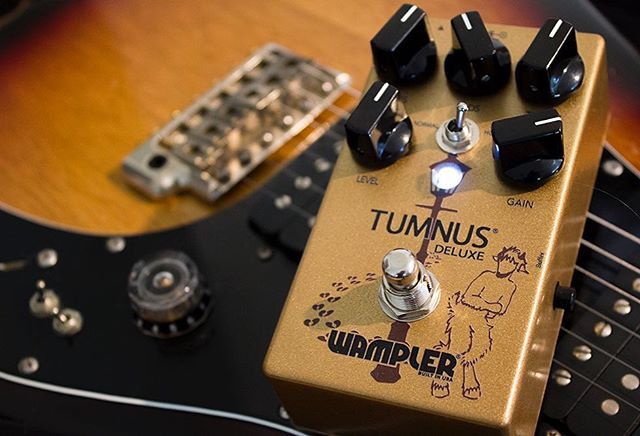
Had a student-turned-mate bring three overdrives round to the workshop last month, all set to roughly the same gain and volume, all going into the same Fender Blues Junior IV, and asking why they "felt" completely different under his pick hand even though the gain knobs were in identical spots. Good question. The honest answer has nothing to do with gain stages or EQ voicing and everything to do with a pair of diodes most players never think about.
Clipping is the thing that actually turns your clean signal into overdrive or distortion — it's where the waveform gets squashed, flattened or chopped, and the shape of that squashing is what you feel as "sag" or "snap" under your fingers. Gain stages just make the signal bigger. Clipping decides what happens once it's too big to pass through cleanly. Get your head round that distinction and a lot of pedal-buying decisions get a lot easier.
What clipping actually does to your signal
Every overdrive or distortion pedal amplifies your signal past the point where the circuit can pass it cleanly, then uses diodes (sometimes transistors) to cut the peaks off the waveform. Soft clipping rounds those peaks gradually, which is why a mild overdrive feels springy and dynamic — dig in and it pushes back a bit, like a cranked valve amp starting to compress. Hard clipping flattens the peaks abruptly, which reads as more aggressive, more buzzy, and less forgiving of pick attack. That's genuinely most of what separates an overdrive from a distortion pedal, and if you want the fuller breakdown of that naming mess we've covered it in overdrive vs distortion: what the names actually mean.
Where the clipping happens matters too. Some circuits clip in the feedback loop of an op-amp (classic Tube Screamer territory), others clip after the gain stage entirely. Feedback-loop clipping tends to feel more compressed and even-handed; post-gain clipping tends to feel more open and touch-sensitive, because your pick dynamics get amplified before they're squashed rather than during.
Silicon, germanium and LED diodes, and why they feel different
Silicon diodes clip at a higher voltage threshold, around 0.6 to 0.7 volts, so you need more signal before they start doing their job. That gives you a clearer, tighter low end and a more defined breakup point — it's why the ProCo RAT 2 and most hard-rock-voiced drives lean silicon. Germanium diodes clip earlier, around 0.3 volts, so they engage sooner and roll off the top end more as they do it. That's the warmer, fuzzier, less predictable character you get out of vintage-style circuits and a lot of fuzz designs, which is a big part of why germanium and silicon fuzz behave so differently against the same amp. LEDs clip later still, generally over 1.5 volts, which means more clean headroom before breakup and a more open, dynamic feel right up until it lets go. The Fulltone OCD and Boss SD-1 Super Overdrive use different diode arrangements specifically to chase these different thresholds, and it's worth switching between pedals like these on the same amp just to hear the threshold shift for yourself rather than taking my word for it.
Symmetrical vs asymmetrical clipping
This is the one that trips people up most. Symmetrical clipping flattens both the positive and negative halves of the waveform equally, using matched diode pairs. It's even-handed and a bit more "polite" sounding, with fewer odd-order harmonics. Asymmetrical clipping uses mismatched diodes (or an uneven number on each side), so one half of the wave gets clipped harder than the other. That generates extra even-order harmonics, which your ear reads as richer, more tube-like, sometimes a bit more aggressive depending on the circuit. The Ibanez Tube Screamer TS9 is the textbook asymmetrical example and it's precisely why it sounds "furry" rather than flat when you push it. The Boss SD-1 is similar in concept but voiced differently. None of this is better or worse in the abstract — it's about what you're trying to get the amp to do next in the chain.
Why the same pedal behaves differently on different amps
Here's the bit that caught my mate out. A drive pedal's clipping character interacts with your amp's own clipping and compression, because a valve amp pushed into breakup is doing its own soft-clipping at the power stage. Stack a hard-clipping silicon pedal in front of an amp that's already compressing hard and you can end up with something that sounds thin and fizzy rather than thick, because you're essentially clipping an already-clipped signal in a way that cancels out the dynamics you wanted. This is why I'll always tell people to dial the amp's own clean headroom properly before reaching for the drive pedal — if you can't hear what the amp is doing on its own, you can't tell what the pedal is adding. An EL34-based amp like the Marshall DSL40CR or the Orange Rocker 15 has a different natural compression curve to a 6V6 combo like the Blues Junior, and the same OCD will feel noticeably different on each, not because the pedal changed but because what it's clipping against changed. I'll admit this took me years on the bench to properly internalise — I spent ages chasing "better" pedals when the actual issue was amp gain structure the whole time.
Stacking clipping types, and where gain goes in the chain
Stacking two overdrives with different clipping types is one of the more useful tricks going, and it's not just "more gain." A low-gain, asymmetrical pedal like the Wampler Tumnus pushing into a harder-clipping pedal like the RAT gives you shaped compression before the harder clip happens, which tightens up the low end and controls pick dynamics before the aggressive stuff kicks in. Do it the other way round and you mostly just get mud, because the harder clipper has already flattened the dynamics the softer one needed to work with. As a general rule your drive and distortion pedals want to sit toward the front of the chain, ahead of time-based effects — we've gone through the logic properly in putting an overdrive before your ambient chain, and the short version is clipping needs a clean low end to work with, which delay and reverb muddy up if they come first.
Picking diode type for what you actually play
If you want touch sensitivity and something that cleans up when you back off the guitar's volume knob, look toward LED or asymmetrical soft-clipping circuits. If you want a consistent, somewhat compressed wall of gain that doesn't change much with pick dynamics, hard-clipping silicon circuits will get you there more reliably, which is partly why so many high-gain players default to them. Neither is the "correct" choice — it depends whether you want the pedal doing the work or your hands doing the work, and in my experience most players who complain their overdrive "feels dead" have actually bought a hard-clipping pedal while playing in a dynamic, volume-knob-riding style that wants a soft-clipping one. For a wider shortlist across clipping styles it's worth skimming our best overdrive and distortion pedals guide before you commit, because the spec sheet rarely tells you which diode arrangement you're getting.
Next time you're AB-ing pedals in a shop, forget the tone knob for five minutes. Set everything flat, hit the same chord at the same volume, and just listen for how the note dies away. That decay shape is the diodes talking, and it'll tell you more about whether a pedal suits you than any demo video will.
Common questions
- Does diode type matter more than the gain knob setting?
- For overall loudness, no, the gain knob wins. But for how the pedal feels under your pick, and how it responds when you roll back your guitar's volume, the diode type matters more. Two pedals with identical gain settings can feel completely different because one clips early and soft, the other late and hard.
- Can I hear the difference between symmetrical and asymmetrical clipping on a clean amp?
- Yes, more easily than on a saturated amp actually. On a clean channel the asymmetrical pedal will sound slightly richer and less even, with a bit more texture on sustained notes. Stack it against an already-breaking-up valve amp and the difference gets harder to isolate.
- Is LED clipping always better for low gain and silicon always better for high gain?
- Not always, but it's a reasonable starting assumption. LEDs clip later and stay more open at low-to-moderate gain, which suits blues and classic rock players chasing dynamics. Silicon diodes clip earlier and more predictably, which high-gain and metal players often prefer because it's more consistent regardless of pick attack.
- Why does the same overdrive sound different through two different amps?
- Because the amp's own power-stage compression is also a form of clipping, and the pedal's clipped signal interacts with it. An EL34-based amp compresses differently to a 6V6 amp, so the combined result changes even though the pedal settings haven't.
Right then — I'm Jez, and I've spent the best part of 25 years chasing the same thing: a cranked British valve amp on the edge of breakup. Cut my teeth in smoky blues clubs around the North West, then spent a decade on the bench fixing other people's amps, which taught me more about tone than any pedal ever did. I'm a sucker for an EL34 power section and a bit of natural sag. I'll always tell you straight whether an amp's worth the money or whether you're paying for a badge.
Gigging blues-rock guitarist (25+ yrs) and former valve-amp tech
More from Jez
 Why pickup magnet type changes how your valve amp breaks upAlnico and ceramic pickups push a valve amp's front end differently. Here's how magnet type shapes breakup, feel and sag, from a former amp tech.
 Choosing between a dreadnought and an OM: a real-world guideDreadnought or OM? Jez breaks down how body shape actually changes feel, volume and tone, and which one suits your playing style.
- Where to put fuzz in your pedal chain (and why it moves)Fuzz pedal order isn't fixed like your other drives. Here's why it moves depending on your rig, and how to find the spot that actually works.
- Germanium vs silicon fuzz: which one suits your amp?Germanium and silicon fuzz behave completely differently through a valve amp. Here's how to pick the right one for your rig, not just your ears in a shop.
- Why fresh strings can make your valve amp sound worse, not betterNew strings aren't always the tone fix you think they are. Here's why a fresh set can clash with a cranked valve amp, and how to get both dialled in together.
- Humidity and your acoustic: why it cracks in winter, not summerAcoustic guitars crack from dry winter air, not summer heat. Here's why, and how to actually protect the top without overthinking it.