Delay and reverb order: why the sequence changes your ambience
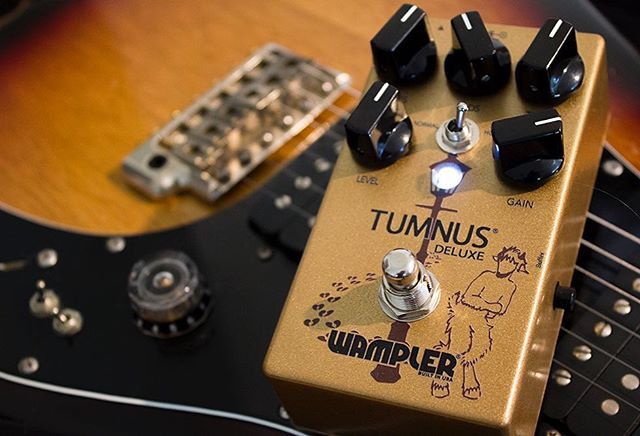
Had a lad in the shop last month, plugged into a Blues Junior, dead set convinced his board was faulty because his ambient swells sounded "muddy and small" instead of huge. Nothing wrong with the pedals. He had his reverb before his delay and wanted the opposite result. Took thirty seconds to swap the order and his whole face changed. That's the thing nobody tells beginners: the order you stack delay and reverb in matters just as much as the settings on each pedal.
I've been fiddling with this exact question for the better part of two decades, on stages and on the bench, and I still don't think there's a single correct answer. But there is a correct answer for what you're trying to achieve, and that's what we'll sort out here.
The basic rule, and why it exists
Signal chain convention says delay goes first, reverb goes second, right at the end of the chain closest to the amp. The logic is straightforward enough: reverb is meant to represent the space the sound happens in, so it makes sense for it to be the last thing applied, wrapping around everything else including your echoes. Each delay repeat gets its own little wash of ambience, and the effect reads as one instrument in one room, just with echoes bouncing round it.
Flip that order, reverb first then delay, and you're now feeding a reverberated signal into your delay. Each repeat carries its own trailing "verb" tail with it, so you get layers of smeared, decaying ambience stacking on top of each other. It's not wrong. It's just a different picture. Genuinely lush for ambient and post-rock textures, genuinely a mess if you wanted clarity on a lead line.
Where it actually falls apart in practice
Here's my mildly contrarian bit: I reckon most players obsess over this ordering question far more than the room they're actually playing in deserves. I've heard guys spend twenty minutes reordering a board for a gig at a pub with a low ceiling and carpeted floor, where the room itself is already doing half the reverb work whether they like it or not. Get the amp positioned right and mic'd sensibly and the pedal order becomes a much smaller variable than they think.
That said, in a mix, on a recording, or through in-ears where there's no room helping you, the order absolutely matters and you'll hear it clearly. If you're recording direct or through a modeller and pulling up delay pedals and reverb blocks side by side, do the shootout with headphones on. It's obvious in a way it sometimes isn't through a loud amp on a stage.
Analogue vs digital changes the calculation too
This is where I'll bang my usual drum. An analogue delay like the MXR Carbon Copy (check price) or the older-school EHX Deluxe Memory Man (check price) degrades its repeats as they decay, getting darker and softer each cycle. That degradation reads as more natural when reverb is applied after it, because the reverb tail is then smoothing over echoes that already sound like they're fading into a room, not calculator-clean copies.
A digital delay like the Boss DD-8 (check price) or a proper multi-engine unit like the Strymon TimeLine (check price) keeps its repeats pristine and consistent right up until the last one. Stick reverb after that and you get very clean, very "produced" ambient washes, the sort of thing you hear on a lot of modern ambient and post-rock records. Stick reverb before a digital delay instead and you get those hazy, smeared clouds I mentioned earlier, which honestly is a gorgeous effect for pads and swells but murder for anything with actual note definition, like a melodic lead.
None of this is about one being better than the other. It's about knowing which tool gives you which picture, the same way I'd never tell a bloke his EL34s are "wrong" for wanting 6L6 headroom instead. Different job, different tool.
Where the amp's effects loop comes into it
If your amp has a proper effects loop, and something like the Marshall DSL40CR (check price) or the AC15 (check price) both do, that's the better home for time-based effects than the front of the amp. Put your delay and reverb after the preamp gain stage and they sit on top of your distortion cleanly, rather than getting chewed up and made muddy by the gain circuit in front of them. This matters more than people realise: an overdriven front end will distort your echoes and reverb trails right along with your guitar signal, and it usually just sounds like sludge rather than ambience.
Front of amp is still fine for clean and edge-of-breakup work, which is most of what I do anyway, being a sucker for that cranked EL34 sag rather than a wall of gain. But if you're running higher-gain rigs and stacking your overdrive or distortion ahead of your ambient pedals, seriously consider whether your amp has a loop and whether you're using it. I've fixed more "why does my delay sound terrible" complaints with that one conversation than with any pedal swap.
Building an actual setting from scratch
For a fairly standard ambient swell sound, I'd start with delay set around 350-450ms, feedback low, maybe two or three repeats, mix around 25-30%. Then reverb after it, a plate or hall algorithm like you'd get from something like the TC Electronic Hall of Fame 2 (check price) or the more textural Walrus Slö (check price), decay time long, mix maybe 30-40%. Play a slow melodic phrase, not chords, and listen to how the tail behaves. If it turns to soup, back off the delay feedback before you touch the reverb; feedback is nearly always the culprit, not decay time.
If you want something simpler and more compact, the EHX Holy Grail Nano (check price) or Boss RV-6 (check price) paired with a basic analogue-voiced delay covers the ambient basics without needing a PhD in routing. Not everyone needs a TimeLine with eleven pages of menus, and I'd argue most gigging players are better served by two simple, well-ordered pedals than one enormous multi-effect they never fully learn.
A quick word on stereo
Running true stereo delay and reverb changes this conversation slightly, because panned repeats interacting with a wide reverb field behave differently to mono. That's a whole separate rabbit hole though, and one for another day. For now, get your mono ordering sorted first. It's the foundation everything else sits on, and most players never actually test it properly, they just leave the pedals in whatever order they bought them.
Common questions
- Should delay always go before reverb?
- As a starting convention, yes, that's the more common and generally more natural-sounding order. But reverb-then-delay is a legitimate choice for thicker, more ambient textures. Try both on your own rig before assuming one is correct.
- Does pedal order matter less if I'm using an amp's built-in reverb?
- Not really, it just changes where the split happens. If your amp has onboard spring reverb, your delay pedal is effectively going in front of it, since the reverb lives in the amp's output stage. Some players prefer this because it keeps the reverb sounding like the amp's natural character.
- Why does my ambient sound turn to mud in a full band mix?
- Usually too much feedback on the delay and too long a decay on the reverb competing with bass and drums. Cut delay feedback first, then trim reverb mix rather than decay time, and it usually clears up without losing the effect entirely.
- Is analogue delay actually better for ambient tones than digital?
- Better is the wrong word, they're different. Analogue units degrade their repeats which can sound more organic under reverb. Digital delays stay clean and are better suited to precise, produced-sounding ambient layers.
Right then — I'm Jez, and I've spent the best part of 25 years chasing the same thing: a cranked British valve amp on the edge of breakup. Cut my teeth in smoky blues clubs around the North West, then spent a decade on the bench fixing other people's amps, which taught me more about tone than any pedal ever did. I'm a sucker for an EL34 power section and a bit of natural sag. I'll always tell you straight whether an amp's worth the money or whether you're paying for a badge.
Gigging blues-rock guitarist (25+ yrs) and former valve-amp tech
More from Jez
 Why pickup magnet type changes how your valve amp breaks upAlnico and ceramic pickups push a valve amp's front end differently. Here's how magnet type shapes breakup, feel and sag, from a former amp tech.
- Clipping types explained: why diodes shape your drive pedal's feelSilicon, germanium, LED or asymmetrical — the clipping diodes in your overdrive decide how it feels under your fingers, not just how it sounds.
 Choosing between a dreadnought and an OM: a real-world guideDreadnought or OM? Jez breaks down how body shape actually changes feel, volume and tone, and which one suits your playing style.
- Where to put fuzz in your pedal chain (and why it moves)Fuzz pedal order isn't fixed like your other drives. Here's why it moves depending on your rig, and how to find the spot that actually works.
- Germanium vs silicon fuzz: which one suits your amp?Germanium and silicon fuzz behave completely differently through a valve amp. Here's how to pick the right one for your rig, not just your ears in a shop.
- Why fresh strings can make your valve amp sound worse, not betterNew strings aren't always the tone fix you think they are. Here's why a fresh set can clash with a cranked valve amp, and how to get both dialled in together.