Why pickup choice changes how your pedals behave
Last month a mate brought his Jackson round to my place because his fuzz "stopped working." Same pedal, same settings that sounded massive on his Strat the week before. On the Jackson, with its hot humbucker, it was a gated, farty mess with barely any sustain. The pedal hadn't changed. The guitar had. This happens more than people realise, and it's one of the least talked-about variables on the whole board — right up there with cable capacitance for things nobody thinks about until it bites them.
I've been rebuilding my own board for about three months now, swapping guitars through the same chain to hear what actually moves the needle before a gig, and pickups move it more than almost anything else I own, including the pedals themselves.
Output level isn't just "louder"
A hot humbucker doesn't just hit your amp harder, it hits every pedal in front of it harder too. Drive pedals, especially simple ones built around a handful of clipping diodes, don't know the difference between you digging in and your pickup just running hot. They see voltage. More voltage into something like a ProCo RAT 2 (check price) or a Boss DS-1 (check price) pushes the clipping stage harder before you've even touched the gain knob, which changes where in the knob's travel the useful tones sit. Players with high-output humbuckers often find the first quarter of the gain knob is where all the usable sounds live, and everything past that is just mush. That's not a flaw in the pedal. It's the input stage doing exactly what it's designed to do with more signal than it was voiced around.
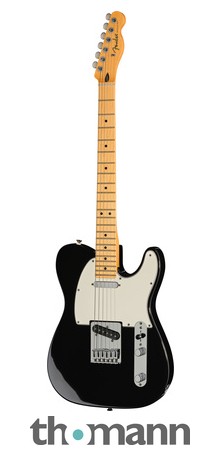
Low-output single coils behave the opposite way. You can run the gain much higher on the same pedal and still keep note definition, because the input stage never gets slammed. I've got a Tele with vintage-output pickups and an SG with hotter humbuckers, and I genuinely keep separate preset notes for my Tube Screamer (check price) depending which one is going on stage that night. Same pedal, different guitar, different starting point on the dial.
Fuzz is the one that really exposes it
Overdrives are forgiving by comparison. Fuzz circuits, especially the simpler Fuzz Face-style ones, are fussy about input impedance in a way that catches people out constantly. A germanium Fuzz Face was voiced in an era of single coils with modest output and particular impedance characteristics, and when you feed it a hot active humbucker or anything with unusual output impedance, the bias point shifts and you get that choked, gated sputter instead of the open bloom the circuit's capable of. It's the same mechanism behind why your guitar's volume knob cleans fuzz up so dramatically, you're changing the impedance the fuzz sees, not just the level.
Silicon fuzzes like the Dunlop Fuzz Face Mini (check price) are a bit more tolerant, and something like the Boss FZ-5 (check price) sidesteps a lot of this because it's buffered and digitally modelled rather than a bare transistor circuit reacting to whatever's upstream. If you've got hot pickups and you've tried three fuzzes and hated all of them, that's not necessarily bad taste in fuzz, it might just be a mismatch nobody mentioned to you.
Where a buffer actually helps (and where it doesn't)
This is where I go down a rabbit hole most people skip. A buffer at the very front of your chain standardises the impedance your pedals see regardless of which guitar is plugged in, which sounds like the perfect fix. And for most of your board, it is — your delays and reverbs, your Strymon TimeLine (check price), your Boss RV-6 (check price), all prefer a consistent, low-impedance signal and don't care much which pickup fed it.
But a true-bypass fuzz placed first in the chain, before any buffer, is deliberately seeing your raw pickup signal, unbuffered, exactly as the original circuit intended. Buffer in front of a vintage-style fuzz and you can lose some of that interactive, guitar-dependent character people actually buy these circuits for. I know plenty of players who'll die on this hill and plenty who can't hear the difference in a mix. I sit somewhere in the middle: I buffer everything except my fuzz, which goes first, raw, same as the chain discussed in where to put fuzz in your pedal chain.
Matching pickups to the pedals you actually own
If your board is built around low to medium gain, vintage voiced fuzz, and ambient modulation, lower output pickups generally play more nicely, they give the front end of your chain room to work rather than slamming it immediately. That's a big part of why Strat and Tele-style guitars pair so naturally with classic fuzz and overdrive circuits; the Fender Player II Stratocaster (check price) and the Squier Classic Vibe '50s Stratocaster (check price) both sit in that sweet spot without you doing anything clever.
If you're running higher-gain rigs built around modern humbuckers, something like an ESP LTD EC-1000 (check price) or a guitar off our best guitars for metal list, your drive pedals are doing less of the gain work and more of the shaping work, so look at pedals with input trim or gain controls built with headroom in mind rather than assuming the same OCD or Tube Screamer settings will translate.
The bit nobody checks: tone knob interaction
Here's a genuinely contrarian take I'll stand behind: I think most players chase pedal settings for weeks when the actual fix is thirty seconds with a screwdriver adjusting pickup height, or just accepting their pickup and pedal were never going to get along and swapping one. Rolling your guitar's tone knob down slightly before a drive pedal softens the high end the pedal would otherwise clip aggressively, effectively pre-shaping what the pedal has to work with. It's a free, reversible way to test whether your problem is pickup output rather than pedal choice, before you spend money solving the wrong problem.
A quick way to actually test this
Run the same drive or fuzz pedal with two different guitars, one hot humbucker, one vintage-output single coil, same settings, same amp. The difference you hear is the pickup, not you. Once that clicks, dialling in pedals for a specific guitar stops being guesswork and starts being a process you can repeat intentionally, which is most of what separates a board that behaves on stage from one that only ever sounded right in your bedroom with one particular guitar plugged in.
Common questions
- Will a buffer fix a fuzz pedal that sounds bad with my guitar?
- Sometimes it makes things worse, not better. Many classic fuzz circuits are designed to interact directly with your guitar's raw, unbuffered signal, and putting a buffer before them can flatten out exactly the touch-sensitivity and cleanup-via-volume-knob behaviour that makes them interesting. Buffer everything after the fuzz instead.
- Do higher output pickups always mean more gain from a drive pedal?
- Generally yes, because the pedal's input stage sees more voltage before you've touched the gain control. This often means usable tones sit earlier in the knob's range, and pushing the gain further just adds mush rather than more character.
- Is it worth changing pickups just to suit my pedalboard?
- If you've built your whole rig around vintage-voiced fuzz and low to medium gain pedals, moving to lower-output pickups can genuinely solve problems no amount of pedal-tweaking will fix. It's a bigger step than adjusting a knob, but it's also permanent and often cheaper than buying four more fuzz pedals hoping one clicks.
I'm Martin, and I have a problem (it's pedals). I play ambient and post-rock — big washes of reverb, delays into delays, the kind of pedalboard that needs its own roadie — so effects are where I live. I love going down the rabbit hole on a circuit: what's the buffer doing, how does it stack, what happens at the extremes of the knobs nobody dares turn? My reviews tend to wander, because that's how you actually find the magic in a box. I'll always show you the weird, useful corners.
Ambient/post-rock guitarist and lifelong pedal collector
More from Martin
 Why your picking hand decides whether your pedalboard sounds goodYour pedals react to how you pick, not just how you set the knobs. Here's how picking dynamics shape fuzz, delay and reverb response.
 Running an acoustic into ambient pedals without it falling apartWhy ambient pedal chains that sound gorgeous on electric often turn an acoustic-electric to mush, and the signal-chain fixes that actually work.
- Tap tempo technique: getting your delay actually in timeTap tempo looks simple until you're doing it live. Here's how to actually land your delay in time, from foot placement to subdivision traps.
- Preamp pedals on an acoustic-electric: when they help and when they don't
- Putting an overdrive before your ambient chain: why gain goes firstWhere you put your overdrive relative to delay and reverb changes everything. Here's why gain almost always wants to go first, and when it doesn't.
- Running an acoustic-electric into pedals: what actually survives the tripReverb and delay behave differently on an acoustic-electric than on your electric board. Here's what actually holds up, and what falls apart, piezo to pedal.