How a guitar amp's speaker affects your bass tone when you're DI-ing
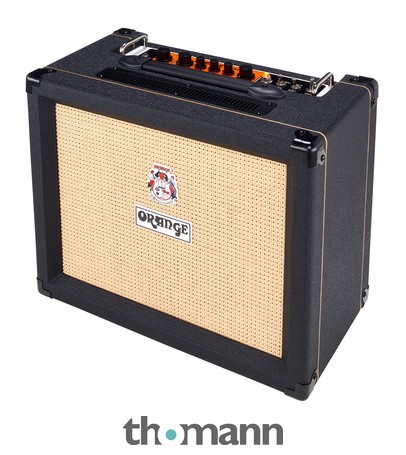
Three sessions in, and the guitarist at the studio off Swanston Street still hadn't figured out why the bass sounded thin through his Fender combo. It was a perfectly decent amp. The problem wasn't the amp's preamp, wasn't the input, wasn't even the bass. It was the speaker. A 12-inch guitar speaker running low-E fundamentals that it had absolutely no business trying to reproduce.
This comes up more than you'd think. Bass players borrow guitar amps at rehearsals, guitarists run bass DI through their modelling rigs, producers track bass through guitar cabinet sims and wonder why the pocket disappears in the mix. So let me break down what's actually happening inside that speaker — because once you understand it, a lot of things start to make sense.
Guitar speakers aren't designed for low fundamentals
A standard guitar speaker — say a Celestion Vintage 30, or the Eminence Legend that ships in a lot of American-voiced combos — is voiced to reproduce roughly 80 Hz up to around 5 kHz. That's the frequency range where electric guitar lives. It's deliberately rolled off in the sub-bass region. Manufacturers do this on purpose: too much low-end excursion and the cone physically can't keep up with the transients, the voice coil heats up, and eventually you've got a blown speaker.
The open low-E string on a standard-tuned bass guitar sits at around 41 Hz. Even the G string's fundamental is only about 98 Hz. So when you push bass signal through a guitar speaker, you're asking it to reproduce frequencies it was never designed to handle. What you get instead is the first few overtones — the harmonic content above the fundamental — and those can actually sound convincing in isolation. The problem is the fundamental itself is missing or severely attenuated. In a full mix, that's what creates the pocket. That's the frequency that moves air and sits under the kick drum. Lose it, and the bass sounds like it's there but not felt.
Why modelling amps handle this differently (and why it still matters)
Modelling amplifiers like the Boss Katana-50 MkII (check price) or the Positive Grid Spark 40 (check price) do their cabinet simulation digitally — the DSP is modelling the frequency response of a speaker cabinet without the physical speaker actually reproducing those frequencies. That means the recorded DI signal or headphone output can be surprisingly full and accurate, even at bass-register fundamentals. But the moment you push that signal out through the amp's onboard speaker, you're back in the same situation: a guitar-voiced driver rolling off everything below about 80 Hz.
So recording direct through a modelling amp can work. Playing live through its speaker generally won't — not with any satisfying low-end weight, anyway.
There's also a headroom issue. Guitar amplifiers are typically designed with guitar-level input signals in mind. Bass pickups — especially active basses — can hit harder at the input stage, and you'll clip the preamp in ways that sound unpleasant rather than musical. I've heard this described charitably as "vintage grind." It isn't. It's a preamp struggling.
Speaker cone size matters, but not in the way most people assume
The assumption is that a 4x12 guitar cabinet, because it moves more air, will handle bass better than a 1x12 combo. Partially true, but the bigger factor is speaker design, not cone count. A 4x12 loaded with Celestion G12T-75s will still have the same low-frequency rolloff characteristics as a single unit — you're just getting more of the same limited frequency response, not a wider one.
What actually extends low-frequency response is a speaker designed for it: longer voice coil travel, a heavier cone, and a cabinet tuned to support the bass frequencies (which is why bass cabs are physically bigger and usually ported differently). That's not what you're getting when you plug into a Vox AC15 (check price) or a Fender Blues Junior (check price), regardless of how many speakers it has.
I'll be honest — I think the "just plug bass into any guitar amp for that vintage thump" advice gets repeated a bit too casually. It can work in specific, lo-fi contexts. James Jamerson's recorded tone involved some pretty unorthodox signal paths. But for most modern bass applications, you're fighting the gear rather than working with it.
When guitar amps actually serve bass players well
There are genuine use cases. Running a bass DI out to front-of-house while using a small guitar combo as a stage monitor is one — you're not asking the guitar speaker to reproduce the full frequency range, just enough articulation to hear yourself on stage. Plenty of working players do this.
Recording a blend of DI signal and a guitar-amp mic is another. The guitar amp captures the upper harmonics and pick attack, and the DI preserves the fundamental. Combine them in post and you've got a textured, present bass tone. This is legitimately a studio technique, not just a workaround.
And if you're playing in a genre where that hollowed-out, mid-focused character is intentional — certain surf, garage, or lo-fi contexts — a guitar amp through a decent room mic can be exactly right. Context always matters.
What to look for if you need an amp that genuinely works for both
If you're buying a practice or home-studio amp and you genuinely want it to handle both guitar and bass passably, the modelling units with a proper extended-range speaker — or a direct-out option you'll actually use — are the more practical choice. Look at the published speaker frequency response in the specs. Some manufacturers include it; many don't. If the speaker is spec'd down to 60 Hz or below with decent sensitivity, it'll handle bass fundamentals. If the spec stops at 80 Hz or isn't listed at all, assume it's a guitar speaker.
For a deeper look at practice amp options across different budgets, our best practice amps guide covers a good range — and for players looking at something more serious on the valve side, the best tube amps under $1000 rundown is worth a read, even if you'll want to think carefully about speaker choice before committing.
The pocket is everything. And the pocket lives in the fundamental. Don't let a guitar speaker bury it.
Common questions
- Can I damage a guitar amp by plugging a bass into it?
- Yes, potentially. Bass signals — especially from active pickups — can overdrive a guitar amp's preamp unexpectedly. More significantly, the sustained low-frequency excursion can cause the speaker cone to physically over-extend, especially at higher volumes. It's unlikely to blow the speaker immediately at bedroom volumes, but it's a real risk at rehearsal or gig levels. If you're going to try it, keep the volume moderate and watch for any distortion that sounds uncontrolled rather than musical.
- Why does bass sound thin through a guitar amp even at high volume?
- Volume won't fix this. The issue is the speaker's frequency response — it's physically rolling off the low fundamentals that give bass its weight and body. Turning up just adds more of the mid-range and upper harmonic content the speaker can reproduce, which tends to sound louder but not fuller. The fundamental — the note itself, below around 80 Hz — is still being attenuated by the speaker's physical design.
- Do guitar amp modellers work better with bass than traditional amps?
- The modelling and cabinet simulation software inside units like the Boss Katana or Positive Grid Spark can produce a more accurate bass tone at the DI or headphone output, because the cab sim handles the frequency response digitally. But the onboard speaker is still a guitar speaker, with the same rolloff characteristics. Recording direct through a modeller can give you a useful bass tone; playing live through its speaker usually won't deliver the low-end weight you need.
Sheildon here. I'm a bass player, funk and soul mostly, so for me it always comes back to one thing: the pocket. I've spent years in session rooms learning that the best low-end isn't the loudest — it's the note that lands in exactly the right place and just sits there, fat and easy. I get geeky about pickups, string tension and how an amp reproduces the fundamental, but I never lose the groove. Give me something that makes me want to lock in with the kick drum and I'm a happy man.
Funk and soul session bassist; groove and low-end specialist
More from Sheildon
- How walking basslines train your ear — and what that means for your gearWalking basslines aren't just a jazz exercise. They sharpen your pitch awareness and sense of pocket in ways that directly shape the gear you reach for.
- Acoustic guitar tonewoods for the body: back and sides explainedBack and sides tonewoods shape an acoustic's character more than most players realise. Here's what each species actually does to your sound.
- Acoustic guitar neck profiles explained: how shape and depth affect feel and playabilityC, V, U — acoustic neck profiles change how your hand sits, how long you can play, and whether a guitar feels like yours. Here's what to know before you buy.
 Fuzz pedal circuit types explained: germanium, silicon and op-ampSheildon breaks down the three main fuzz circuit types — germanium, silicon and op-amp — so you can choose the right dirt for your tone.
- Muting technique on bass: how deadening strings shapes your tone and gearRight-hand and left-hand muting define the feel of a bass line more than almost any other technique. Here's how to use both — and what they reveal about your setup.
- Acoustic guitar nut and saddle materials: what they actually do to your toneBone, tusq, synthetic, brass — the nut and saddle on your acoustic do more work than most players realise. Here's what the material choices actually mean.