Muting technique on bass: how deadening strings shapes your tone and gear
Spend enough time in session rooms and you stop thinking about muting as a technique and start thinking of it as a voice. I've played dates where the producer never once mentioned EQ or pickup settings — but the second my palm mute shifted two millimetres toward the bridge, they were on the talkback saying yes, that's it. That's the thing about muting on bass: it's where the instrument actually starts speaking.
What muting actually does to the fundamental
A bass note has a fundamental and a stack of harmonics above it. When you let a note ring completely open, those harmonics are present in roughly equal measure — which can sound beautiful on a fretless ballad and absolutely swampy on a fast funk groove. Muting suppresses the upper harmonics and shortens the note's sustain, leaving you with more fundamental, more thump, less bloom.
That's not just an aesthetic choice. It's a physics conversation between your hands and your amp. A tight, muted note with a strong fundamental will sit in a mix differently from the same pitch played open — it takes up less spectral space in the mids and gives the kick drum more room to breathe. If you're regularly fighting the mix engineer, muting is usually the first conversation worth having.
Palm muting: placement changes everything
Rest the heel of your right hand (or left, if you're wired that way) lightly across the strings near the bridge saddles. Move it toward the neck and the muting gets heavier, darker, almost percussive. Move it back toward the saddles and it lightens up — you're barely touching the strings but that slight contact shortens decay just enough to keep things articulate.
Most players find a default position and stay there. That works. But the real technique is learning to shift mid-phrase. A verse line might want full palm mute for a punchy, short note; the chorus opens up as you lift away slightly. You're not playing different notes — you're playing a different character of note, and the amp will respond to it differently too.
Here's a thing I'll admit I got wrong for years: I used to press too hard. Palm muting isn't about pressure — it's about contact. Too much pressure and the strings lose intonation and feel stiff under the fingers. Light resting contact is all you need. Think of it as the strings leaning against your hand, not your hand bearing down on them.
Left-hand (fretting-hand) muting and what it tells you about your setup
This is where things get geeky. Fretting-hand muting — releasing finger pressure just enough to stop a note without fully lifting off — produces a shorter, drier sound than palm muting. It's fast, it's precise, and it's what gives a lot of funk and slap bass that tight, clipped feel without any actual dead notes creeping in.
But fretting-hand muting is extremely sensitive to action and relief. If your action is too high, releasing pressure fully enough to mute without accidentally fretting the note up or down requires more movement, and that eats speed. I've picked up student basses in workshops where the action was set so high that clean fretting-hand mutes were basically impossible — the player was working twice as hard for a result that was still muddy. A well-set-up instrument, with appropriate relief and action for the style of playing, makes the technique accessible rather than a struggle.
If you're noticing that your muted notes still ring on certain strings or positions, it's worth checking string height and neck relief before assuming your technique is the problem. Our guide on bass intonation covers some of the setup fundamentals that affect this, and the piece on right-hand tone production and gear gets into related territory from a slightly different angle.
How muting interacts with your amp and its settings
Here's the gear side of this. A heavily muted bass note is mostly fundamental — it's a fat, low-frequency thump with not much harmonic content above around 300 Hz. If your amp's bass EQ is already boosted, heavily muted playing can make the low end feel woolly or undefined. The attack disappears into a blob.
What actually works better with tight, muted playing is a relatively flat or even slightly scooped-bass EQ, with the mids sitting at a natural level. The muting itself is providing the warmth and shortness — you don't need the amp to add more thickness on top of that. Boosting the low-mids slightly (somewhere around 250–400 Hz, depending on the room) can help the muted notes project without getting muddy.
The string choice matters too. Flatwounds and half-rounds are already naturally damped — add heavy palm muting and you can lose definition completely in a live mix. Roundwounds with palm muting tend to sit better in the pocket because you're controlling the decay yourself rather than having the string do it for you. There's more on tension and string character in our bass string gauges guide if you want to work through that side of it.
Pickup height and the muted note
One thing that often gets overlooked: pickup height affects how a muted note reads. A pickup set too close to the strings will produce magnetic pull that slightly slows the string's vibration and can make muted notes feel spongy — the fundamental blooms a little when you want it to stop dead. Dropping the pickup a couple of millimetres (especially on the bass side) can make muted playing noticeably crisper without touching anything else. It's a subtle adjustment, but once you hear it you can't unhear it. The detail on this is covered well in our pickup height adjustment guide.
Making muting a deliberate choice, not a habit
The players I've watched who really understand muting — James Jamerson's recordings, Rocco Prestia's work with Tower of Power, the Motown session cats — they're not muting because they learned to or because someone told them to. They're making a rhythmic and tonal choice on every note. Some notes in a phrase ring. Some are clipped tight. The contrast is what gives a groove its personality.
Practise muting intentionally. Play a simple groove, fully open. Then the same groove, fully muted. Then mix them — open on the longer notes, muted on the ghost notes and pickups. Record yourself and listen back. You'll start hearing very quickly where the pocket tightens and where it loosens, and what your hands are actually doing in each moment.
The technique informs the gear, not the other way around. Figure out the muting sound you want in your playing, and the right amp settings, string choice and setup will become a lot more obvious — because you'll know exactly what you're asking the equipment to reproduce.
Common questions
- Does palm muting affect bass intonation?
- Light contact palm muting shouldn't affect intonation noticeably. Pressing too hard can slightly flatten the note by stopping the string from vibrating freely, so keep the contact gentle — the strings should lean against your hand, not be compressed by it.
- Should I use a different EQ setting for muted bass playing?
- Often yes. Heavy muting reduces harmonic content and leaves mostly fundamental, so if your bass EQ is already boosted you can end up with a woolly, undefined low end. Try a flatter EQ with a slight boost in the low-mids (around 250–400 Hz) and let the muting provide the warmth rather than asking the amp to do it.
- Are flatwound strings better for muted bass tones?
- Flatwounds are already naturally damped, so combining them with heavy palm muting can sometimes remove too much definition. Roundwounds with controlled muting tend to give you more flexibility — you can go tight and punchy or open and ringy depending on your right-hand position.
- How does pickup height affect muted notes on bass?
- Pickups set very close to the strings can create magnetic pull that slows the string's decay slightly, making muted notes feel spongy rather than tight. Lowering the pickup — particularly on the bass side — a millimetre or two often makes muted playing noticeably crisper.
Sheildon here. I'm a bass player, funk and soul mostly, so for me it always comes back to one thing: the pocket. I've spent years in session rooms learning that the best low-end isn't the loudest — it's the note that lands in exactly the right place and just sits there, fat and easy. I get geeky about pickups, string tension and how an amp reproduces the fundamental, but I never lose the groove. Give me something that makes me want to lock in with the kick drum and I'm a happy man.
Funk and soul session bassist; groove and low-end specialist
More from Sheildon
- How a guitar amp's speaker affects your bass tone when you're DI-ingRunning bass through a guitar amp? Here's what the speaker cabinet is actually doing to your low end — and how to work with it, not against it.
- How walking basslines train your ear — and what that means for your gearWalking basslines aren't just a jazz exercise. They sharpen your pitch awareness and sense of pocket in ways that directly shape the gear you reach for.
- Acoustic guitar tonewoods for the body: back and sides explainedBack and sides tonewoods shape an acoustic's character more than most players realise. Here's what each species actually does to your sound.
- Acoustic guitar neck profiles explained: how shape and depth affect feel and playabilityC, V, U — acoustic neck profiles change how your hand sits, how long you can play, and whether a guitar feels like yours. Here's what to know before you buy.
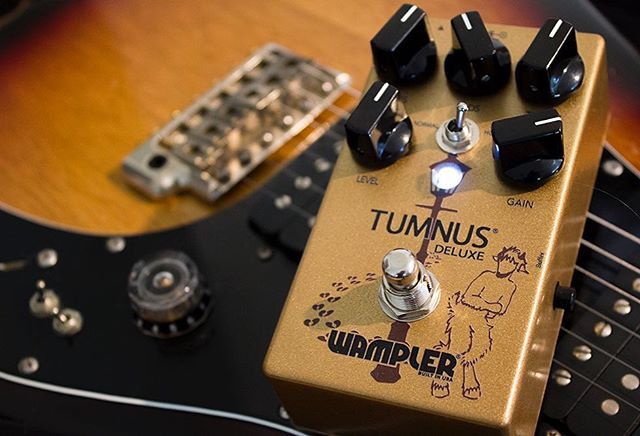 Fuzz pedal circuit types explained: germanium, silicon and op-ampSheildon breaks down the three main fuzz circuit types — germanium, silicon and op-amp — so you can choose the right dirt for your tone.
- Acoustic guitar nut and saddle materials: what they actually do to your toneBone, tusq, synthetic, brass — the nut and saddle on your acoustic do more work than most players realise. Here's what the material choices actually mean.