Gain staging for beginners: why the order of your knobs matters
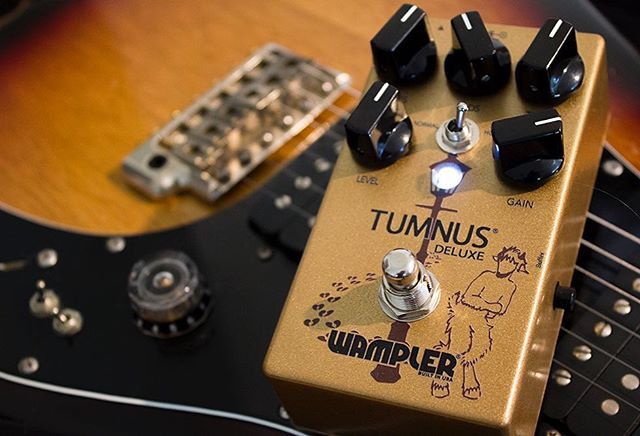
Had a student bring in a brand new overdrive pedal a few weeks back, dead chuffed with it, and it sounded awful through his amp. Thin, buzzy, nothing like the demo video he'd watched the night before. Same pedal, same guitar, roughly the same amp. The difference was gain staging — and nobody had ever explained to him what that actually meant, because it's one of those terms players throw around assuming everyone already gets it. Most beginners don't. I didn't either for a good couple of years.
So let's fix that. Gain staging just means: how much signal is hitting each stage of your chain, and in what order. Your guitar's output is a stage. Your overdrive pedal is a stage. Your amp's preamp is a stage. Each one either boosts, cuts, or clips the signal before passing it to the next, and the order you stack them in changes the result more than most people expect.
What "gain" actually means before the jargon takes over
Gain is just volume being pushed hard enough that something in the circuit can't handle it cleanly, so it distorts. That "something" might be a valve in your amp, a diode in a pedal, or a transistor in a fuzz. Doesn't matter which — the mechanism is the same idea: too much signal, not enough headroom, so the top and bottom of the waveform get squashed off. That squashing is what you hear as grit, crunch, or full distortion depending on how hard it's pushed.
The reason this matters for beginners specifically: a lot of new players think of gain as one knob on one pedal. It's not. It's a chain of decisions, and every stage before the amp's own gain stage changes what that amp has to work with. Feed it a thin, weak signal and even a great amp sounds thin. Feed it something already saturated and pushed hard, and the amp adds its own colour on top of that.
Why the same pedal sounds different depending on what's around it
This is the bit that trips people up. An overdrive pedal set into a clean amp channel behaves completely differently to that same pedal set into an amp that's already got some natural breakup happening. Into a clean channel, the pedal is doing all the clipping — you're hearing its diodes, its voicing, its character, more or less in isolation. Into a channel that's already pushed, the pedal is now shaping what hits the amp, and the amp's own tubes finish the job. You get a rounder, more three-dimensional sound because two different circuits are contributing texture instead of one.
Neither approach is wrong. But if you don't know which one you're doing, you'll spend money chasing a tone that was never about the pedal in the first place. I've had students swap through three overdrive pedals looking for "more amp-like" breakup when the actual fix was turning up the amp's gain and volume by a notch and backing the pedal off. Our overdrive and distortion pedal guide covers a few pedals that behave well in both roles, which is worth knowing before you buy.
Where your guitar's own output fits into all this
People forget the guitar is a gain stage too. A hot humbucker pushes more signal into the first pedal or the amp input than a low-output single coil does, which means the exact same overdrive pedal, same settings, will clip harder and sound noticeably more distorted with one guitar than another. It's why a setting that sounds perfect on your teacher's guitar can sound weedy on yours, or vice versa.
Your guitar's own volume knob is doing gain staging too, in real time. Roll it back a bit and you're not just getting quieter — you're feeding less signal into whatever clips next, so the pedal or amp cleans up. This is the entire basis of a technique some players build their whole clean-to-dirty sound around; if you want the mechanics of it, we've written about using the guitar's volume knob to clean up gain in more detail, though it applies just as much to overdrive as fuzz.
Stacking pedals: two gain stages, one signal chain
Once you start stacking two overdrive pedals, or an overdrive into a distortion, you're deliberately building a chain of gain stages and each one is shaping what the next one receives. The usual approach — lower-gain, lower-output pedal first, pushing into a higher-gain pedal second — works because the first pedal is acting like a boost and a tone-shaper for the second, not just adding its own distortion on top. Run it backwards and the second pedal often just drowns out anything interesting the first one was doing. I go through the mechanics of this properly in how to stack two overdrive pedals for better tone, but the short version for a beginner: start with both gain knobs low, bring the first pedal's level up until it's doing something audible to the second pedal's sound, then adjust from there. Don't just crank both to see what happens — you'll get mush and you won't understand why.
Why your amp's clean channel changes the whole equation
This is the one that catches beginners out most, in my experience. A pedal that sounds great through a bedroom practice amp on its clean channel can sound completely different through a valve combo with its volume up around where the power section starts to sag a bit. That's not a faulty pedal — it's the amp contributing its own gain stage on top, and the two are interacting. If you're shopping for your first proper amp, this is worth thinking about before you buy, not after. A practice amp like the ones covered in our practice amp roundup generally gives a more predictable, consistent platform for pedals because there's less amp-stage variability to account for. A tube amp with genuine natural breakup, on the other hand, changes character as you turn it up, which is glorious once you understand it and baffling if you don't.
A simple way to actually hear this yourself
Plug into your amp with everything clean and flat. Play a chord, note the volume and tone. Now add your overdrive pedal with the gain knob at zero and the level matched to unity — same loudness, pedal on or off. Slowly bring the gain up in small steps, and actually stop after each one and listen rather than just cranking to taste. You'll hear the point where the pedal starts doing real work versus where it's just adding volume. That's gain staging in action, and once you've heard it deliberately once, you start hearing it everywhere. It's a five-minute exercise. Most players never do it and just twist knobs until something sounds alright, which is fine, but you end up not knowing why it worked, which means you can't repeat it reliably on a different amp or a different gig.
None of this needs to be complicated, and I'd argue half the pedal-buying anxiety out there is really just gain-staging confusion wearing a gear disguise. Understand the order of operations and a $60 overdrive starts sounding a lot more expensive than it is.
— Rob, Beginner Gear & Teaching Editor
Common questions
- Should I set my amp's gain low and let the pedal do the work, or the other way round?
- There's no single right answer, but for beginners I usually suggest keeping the amp fairly clean to start and letting the pedal provide most of the distortion. It's more predictable and easier to learn from. Once you understand how your amp breaks up naturally, you can start blending the two.
- Why does my overdrive pedal sound great at home but thin at band volume?
- Often it's because your amp's power section is behaving differently at higher volume, contributing its own gain stage that wasn't there in the bedroom. Try turning the amp up more and the pedal's gain down, rather than compensating with more pedal gain.
- Does pedal order matter as much as gain staging?
- They're related but not identical. Order determines what each pedal 'sees'; gain staging determines how hard each stage is being pushed. Get the order sensible first, then dial in levels.
- Is a higher-gain pedal always going to sound heavier?
- Not necessarily. A lower-gain pedal pushed hard into an already-breaking-up amp can sound heavier and more musical than a high-gain pedal fighting a totally clean channel. It's about the whole chain, not one knob.
I'm Rob, and I've taught guitar for over fifteen years — which means I've watched hundreds of beginners buy the wrong thing because someone baffled them with jargon. So that's my job here: cut through it. I genuinely love good budget gear, the kind that punches way above its price and actually keeps a new player playing. I'll tell you in plain English what matters, what doesn't, and what's a waste of your first hundred quid. No snobbery, no gatekeeping — just honest help getting started right.
Guitar teacher (15+ yrs); beginner and budget-gear specialist
More from Rob
- Overdrive vs distortion: what the names actually meanOverdrive and distortion pedals aren't just marketing labels. Here's the plain-English difference and how to pick the right one for your amp.
 Your first delay and reverb pedal: settings that actually workA plain-English guide to your first delay and reverb pedal settings, so you get lush ambience instead of a muddy mess on stage or at home.
- Solid top vs laminate: what actually matters for a beginnerSolid top or laminate acoustic? Here's what genuinely changes for a beginner, and what's just marketing you can safely ignore.
 How to store an acoustic guitar when you're not playing itWhere and how you store your acoustic between sessions matters more than most beginners realise. Here's what actually protects it, in plain English.
- Metronome practice for beginners: why slow is the only speed that worksMost beginners use a metronome wrong. Here's the plain-English way to practise with one so your gear actually starts sounding like you.
- Cutaway or no cutaway: does it actually matter on an acoustic?A cutaway looks the part but does it change your tone or just your access to high frets? Here's the honest answer for beginners.