Gating fuzz with your guitar's volume knob: the cleanup trick explained
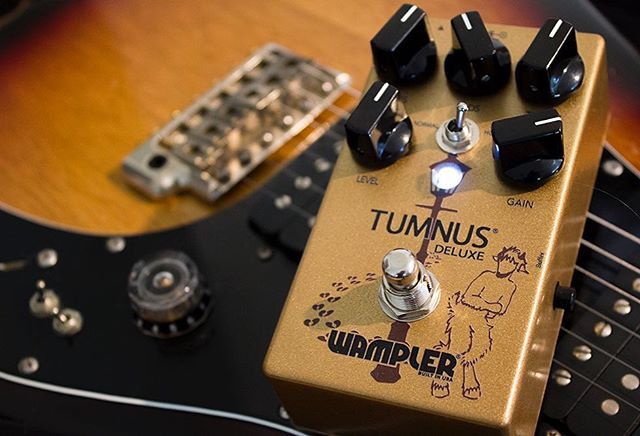
I spent an entire Tuesday evening a few months back doing nothing but rolling my Strat's volume knob back and forth into a germanium fuzz clone, listening to the exact point where it stopped sounding like a wasp in a tin can and started sounding like an actual chord. That's an hour and a half of my life I'm not getting back, but I learned something worth sharing: the cleanup trick is real, it's not a myth from an old forum thread, and most players who own a fuzz pedal have never actually explored it properly.
Here's the short version, for anyone who wants to skip the science. Turn your guitar's volume knob down to somewhere between 6 and 8, and a lot of vintage-style fuzz circuits will clean up into something closer to a bright, slightly furry overdrive. Roll it back to 10 and the same pedal turns into full harmonic collapse. Same pedal, same settings on the box, two completely different instruments depending on what your hand is doing. If you've never used this, it's worth an evening of your own.
Why fuzz cleanup with the volume knob actually works
The reason this works comes down to how old-school fuzz circuits are built. Classic silicon and germanium fuzz designs, the Fuzz Face descendants especially, aren't voltage-hungry, high-headroom circuits with a clean signal path and a gain stage bolted on. They're low-headroom, input-sensitive circuits that clip whatever hits them. Turn your guitar's volume down and you're not just making the note quieter, you're reducing the input voltage into the first transistor stage, and that changes how hard the circuit clips.
Big Muff style circuits behave differently again, because they've got more gain stages and a hard-clipping diode section that doesn't care as much what's coming in. That's part of why a Muff feels more "on or off" than a Fuzz Face style circuit does. If you want the full breakdown of why these circuit families respond so differently to the same input, our guide on silicon vs germanium vs Big Muff style fuzz covers the tradeoffs in more detail, and it's a good companion read to this one.
Germanium vs silicon: not the same cleanup curve
Germanium transistors are temperature-sensitive and generally lower-gain than silicon, so they tend to clean up more gradually and more musically as you roll back. You get a wide, usable sweet spot somewhere in the middle of the knob where the fuzz thins out into a vocal, slightly compressed overdrive rather than dropping out entirely.
Silicon fuzzes, by contrast, tend to have a narrower window. They stay saturated for longer as you roll off volume, then fall apart more abruptly into something thin and slightly broken-sounding right near the bottom. Neither is better, they're just different tools. The Dunlop Fuzz Face Mini Silicon (check price) is a good one to practise this on precisely because that cleanup point is narrower and more obvious once you find it, which makes it easier to learn the technique before trying it on something more forgiving.
Boss's FZ-5 (check price) is worth a mention here too, since it models several different fuzz circuit types digitally and lets you A/B how differently each one responds to the same rolled-back volume knob without swapping pedals. Handy for exactly this kind of rabbit-hole session.
Why Big Muff circuits don't cooperate the same way
I'll admit I got this wrong for years, assuming every fuzz pedal would clean up the same way if I just found the right knob position. Big Muff derived circuits, like the Electro-Harmonix Big Muff Pi (check price) or the Green Russian Big Muff (check price), are voiced with a lot more internal gain and a diode clipping stage that doesn't scale down gracefully with input level the way a two-transistor Fuzz Face circuit does. Roll the guitar volume back on a Muff and you'll get some cleanup, sure, but it's less dramatic and the tone tends to just get quieter and duller rather than opening up into something new.
This is a mildly contrarian view I'll stand by: if cleanup-via-volume-knob is the main trick you want from a fuzz, don't buy a Muff-style pedal expecting it to be your main tool for that. Buy a Fuzz Face style circuit instead and save the Muff for when you want it fully committed, wall-of-fuzz, no in-between.
Where this sits in your signal chain (and why it matters more than usual)
This technique interacts directly with pedal order, which is its own can of worms. If you've read our piece on where to put fuzz in your signal chain, you'll know fuzz is notoriously fussy about what comes before it. A buffered pedal or a buffered wah sitting in front of your fuzz will often kill this cleanup trick stone dead, because the buffer is doing its own impedance conversion before the guitar's volume-knob voltage ever reaches the fuzz's input stage. That's not a small detail, it's the whole trick.
My advice, and this is how I run my own board: fuzz goes first, straight off the guitar, true bypass pedals only in front of it if you must have anything there at all. No buffer, no wah, nothing eating the signal before it hits the fuzz's input transistor. That's the only way the volume-knob interaction stays intact and predictable.
A practical way to actually learn this
Set your fuzz for a fairly aggressive tone at full guitar volume, something you'd use for a lead line. Then, while holding a single note or a simple two-note interval, slowly roll the guitar volume back from 10 towards 0 and just listen. Most guitars and most fuzzes will show you a "sweet spot" somewhere in that 6-to-8 range where the fuzz character is still present but the note separation comes back and chords stop turning into mush.
Once you've found it, try playing an actual chord progression sitting right at that spot, then kick the volume back to 10 for the chorus or the lead break. It's a dynamic control most players leave completely unused, and it costs nothing, no extra pedal, no tap-dancing, just your picking hand doing double duty.
The tone control matters here too
Worth noting, briefly, that your guitar's tone knob does something related but different. Rolling off tone reduces high-end content going into the fuzz, which changes which harmonics get generated during clipping, whereas rolling off volume changes the clipping threshold itself. Combine both and you've effectively got two more gain-staging tools sitting right there on your guitar that most players never touch past the "up or down" setting. I'd genuinely rather have a guitar with well-matched pots and a fuzz pedal than a guitar with an extra onboard boost circuit, because the volume-and-tone interaction does more useful work than people give it credit for.
Common questions
- Does this trick work on every fuzz pedal?
- Not evenly. Fuzz Face style silicon and germanium circuits respond strongly because they're low-headroom and input-sensitive. Big Muff derived circuits respond less dramatically because of their extra gain stages and diode clipping section.
- Why doesn't the cleanup trick work when I add a wah or booster in front?
- Most modern wahs and boosters are buffered, meaning they convert the guitar's signal before it reaches the fuzz. That buffering changes the impedance relationship the fuzz relies on, which is often what kills the volume-knob cleanup effect.
- Is germanium or silicon better for this technique?
- Germanium tends to clean up more gradually with a wider usable sweet spot. Silicon stays saturated longer and falls apart more abruptly near the bottom of the knob. Neither is wrong, they just suit different playing styles.
- Do passive pickups make a difference to how this works?
- Yes. Higher output pickups feed more voltage into the fuzz even with the volume rolled back, so the cleanup point shifts. Guitars with lower-output single coils tend to clean up sooner and more noticeably than high-output humbuckers.
I'm Martin, and I have a problem (it's pedals). I play ambient and post-rock — big washes of reverb, delays into delays, the kind of pedalboard that needs its own roadie — so effects are where I live. I love going down the rabbit hole on a circuit: what's the buffer doing, how does it stack, what happens at the extremes of the knobs nobody dares turn? My reviews tend to wander, because that's how you actually find the magic in a box. I'll always show you the weird, useful corners.
Ambient/post-rock guitarist and lifelong pedal collector
More from Martin
 Why your picking hand decides whether your pedalboard sounds goodYour pedals react to how you pick, not just how you set the knobs. Here's how picking dynamics shape fuzz, delay and reverb response.
- Running an acoustic into ambient pedals without it falling apartWhy ambient pedal chains that sound gorgeous on electric often turn an acoustic-electric to mush, and the signal-chain fixes that actually work.
- Tap tempo technique: getting your delay actually in timeTap tempo looks simple until you're doing it live. Here's how to actually land your delay in time, from foot placement to subdivision traps.
- Preamp pedals on an acoustic-electric: when they help and when they don't
- Putting an overdrive before your ambient chain: why gain goes firstWhere you put your overdrive relative to delay and reverb changes everything. Here's why gain almost always wants to go first, and when it doesn't.
- Running an acoustic-electric into pedals: what actually survives the tripReverb and delay behave differently on an acoustic-electric than on your electric board. Here's what actually holds up, and what falls apart, piezo to pedal.