Bass string gauge and tension: why heavier isn't always fatter
Had a student — well, not a student, a bloke I was tracking with in a session room off Chapel Street a few months back — turn up with a fresh set of .050-.110s on a short scale bass and wonder why his fingers were shot after two takes. Wrong gauge for the instrument, wrong gauge for the part. Took ten minutes to sort. This happens more than you'd think, and it's the sort of thing nobody explains properly because most string gauge advice is written for guitarists and just gets copy-pasted down to bass with a shrug.
Gauge on bass isn't really about how heavy the string feels under your finger. That's the side effect. What you're actually adjusting is tension, and tension is what decides how much fundamental the string can push into your amp before it runs out of steam. Get that wrong and you can have the best pickups and the best amp in the room and still sound thin, or worse, sound like mud with no note underneath it.
What gauge actually changes
A standard four-string set sits around .045-.105. Go up to .050-.110 or beyond and you're adding tension, which gives you more low-end headroom and a slower, fatter decay — great for dropped tunings or a five-string B string that needs to stay tight and not flap. Go lighter, into .040-.100 or even .035-.095 territory, and the string moves more freely. Faster response, easier bends, less finger fatigue over a three-set night, but you trade away some of that low-end authority, especially on the E and A strings.
None of this is free. Heavier strings need more relief at the nut and more careful truss rod work or you'll get fret buzz on the wound strings that no amount of EQ fixes. If you haven't had a look at how the rod interacts with string pull, it's worth reading our piece on how truss rod adjustments actually affect your guitar's playability before you jump two gauges heavier and blame the amp.
Scale length changes the maths
Here's the bit people miss. A .105 E string on a 34" scale bass behaves completely differently to the same gauge on a 30" short scale. Shorter scale means less tension for the same gauge, so a lot of short-scale players actually want to go up half a gauge just to get back to the tension they're used to on a long-scale instrument. It's the same logic as the guitar-side explainer on scale length and how it shapes feel and tuning stability, just with lower stakes for tuning and higher stakes for how the note sits in a mix.
I play a lot of short-scale sessions because they're kinder on my hands after a long day, and I'll usually go up a gauge from what I'd run on my main long-scale to compensate. It's not a rule everyone follows and I know a few session players who'd disagree with me on this, but for pocket-first playing I want that string fighting back a bit under my finger, not flapping around.
Roundwound, flatwound and what tension does to each
Winding type and gauge aren't the same conversation but they interact constantly. Flatwounds already feel stiffer and darker than a roundwound of the same nominal gauge because of how the outer wrap sits on the core, so a lot of players go slightly lighter on flats to keep the feel manageable while still getting that dense, old-school low end. If you haven't already, it's worth reading the full breakdown on winding types — roundwound, flatwound and halfwound because the gauge number on the packet means something slightly different depending which winding you're buying.
Pickup height and technique both move with gauge
Change your gauge and your pickup height stops being correct. Heavier strings with more tension vibrate through a smaller arc, so you can often get away with running the pickup a touch closer without hitting fret buzz on hard hits. Lighter strings swing wider, especially under a slap technique, and need more clearance or you'll get ugly compression and buzz against the pole pieces. I've had this exact conversation with players who chased a "fatter" tone by going heavier on strings without touching pickup height afterward, and wondered why the amp just sounded boxier rather than bigger. Have a look at our guide on bass pickup height and how small adjustments shape your tone — it's the natural follow-on adjustment any time you change gauge.
Technique shifts too. Heavier gauge rewards a firmer, more deliberate finger attack — good for fingerstyle funk where you want the note to punch through a horn section without clicking. Lighter gauge suits fast passages and rapid position changes, walking lines that move a lot, that sort of thing, because the string gives back faster. Neither is objectively better. It genuinely comes down to what your right hand does and what the gig needs.
What I'd actually put on your bass
For most players on a standard long-scale four-string doing a mix of genres, .045-.105 roundwound is still the sensible default, and there's a reason it's the factory spec on nearly everything from a Yamaha to a Fender. If you're detuning or running a five-string B and it feels loose and undefined, go up rather than fight it with EQ — you can't EQ in tension that isn't there. If your hands are aching after long sets, don't assume you need a lighter guitar or a different amp; sometimes it's genuinely just the strings, and dropping half a gauge solves more problems than a new pedal or preamp tweak ever will.
The fundamental — the actual low note, not the harmonics riding on top of it — lives or dies on tension more than almost any other single factor in your rig. Get that right first. Everything else, the amp, the DI, the pickup height, is just shaping what's already there or isn't.
Common questions
- Do heavier bass strings always sound better?
- No. Heavier gauge gives you more low-end headroom and sustain but only helps if your scale length, truss rod setup and technique can support the extra tension. On a short scale or a lighter-touch player, heavier strings can just feel stiff without adding useful tone.
- What gauge should I use for drop tunings on bass?
- Going up half a gauge from standard, say into .050-.110 territory, generally keeps a dropped low string from feeling floppy and losing definition. It's the same principle guitarists use for drop tunings, just scaled for bass.
- Does string gauge affect pickup height settings?
- Yes. Heavier strings vibrate in a tighter arc so you can often run pickups slightly closer, while lighter strings swing wider, especially with slap technique, and need more clearance to avoid buzz and compression.
Sheildon here. I'm a bass player, funk and soul mostly, so for me it always comes back to one thing: the pocket. I've spent years in session rooms learning that the best low-end isn't the loudest — it's the note that lands in exactly the right place and just sits there, fat and easy. I get geeky about pickups, string tension and how an amp reproduces the fundamental, but I never lose the groove. Give me something that makes me want to lock in with the kick drum and I'm a happy man.
Funk and soul session bassist; groove and low-end specialist
More from Sheildon
- Bass through a guitar amp: why it never quite worksPlugging bass into a guitar amp seems harmless until the speaker starts farting out. Here's the actual physics of why it struggles, and what to do about it.
- Why a bass amp's wattage number lies to youWatts on a bass amp don't mean what they mean on a guitar amp. Here's why headroom, speaker size and valve vs solid-state design matter more than the number.
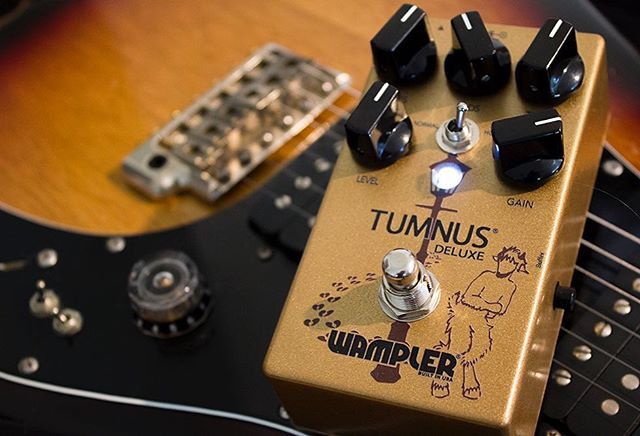 Bass fuzz without the mud: how to keep low end under gainMost fuzz pedals were voiced for guitar and strip your bass of fundamental. Here's how to pick, blend and EQ fuzz so the low end survives.
- Muting technique for bass: why your left hand controls the pocketGood bass tone starts with what you stop ringing, not what you play. Here's how left-hand muting shapes the pocket more than any pedal or EQ setting.
- How acoustic body shape changes the low end you actually hearA bass player's take on why dreadnoughts, jumbos and smaller-bodied acoustics throw the fundamental differently, and what that means when you're picking one.
- Bass string gauge and pickup output: matching the two properlySwapping to heavier bass strings without checking pickup output leaves you fighting your own tone. Here's how gauge, pole spacing and output actually interact.