Why your amp's effects loop matters more than you think
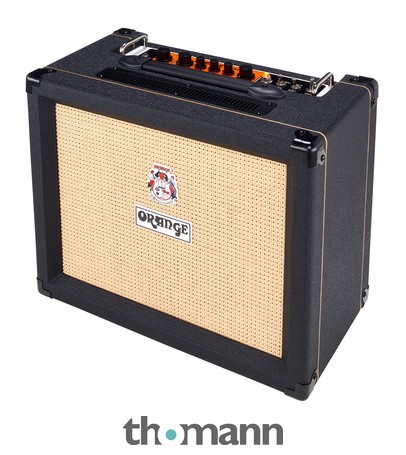
I spent about four years running everything straight into the front of my amp before I even properly understood what the effects loop on the back was for. Just a row of jacks I ignored. Then I plugged a delay into it one night at a rehearsal space off Stokes Croft, purely because I'd run out of room on the board and the cable was already there, and the difference in how the trails sat behind a dirty rhythm tone stopped me mid-song. That's the thing about the effects loop: nobody explains it properly, so most players either never use it or use it without knowing why it's working.
The short version is this. Your amp has two possible places to sit a pedal: in front, where your guitar signal hits the pedal before the preamp, or in the loop, which sits between the preamp and the power amp. Where you put time-based effects, in particular, changes their character completely, and it's got nothing to do with which pedals you own and everything to do with how your amp generates its dirt.
What the effects loop actually is
A valve amp's preamp section is where most of your gain and distortion character comes from. Signal comes in, gets shaped by the tone stack, gets pushed into breakup by the preamp valves, and then heads to the power amp stage to get amplified up to speaker level. The effects loop send taps the signal after the preamp (post-distortion) and the return injects it back in before the power amp.
Practically, this means anything in the loop is working with an already-distorted signal, and it's the last thing to happen before the power amp does its job. Anything in front of the amp is working with your clean guitar signal, before any of the amp's own gain gets added.
Not every amp has one. A lot of smaller combos, and plenty of great ones, skip it entirely because effects loops need extra circuitry and most bedroom or small-gig players never ask for it. If you're shopping and this matters to you, it's worth checking before you buy rather than after — the Marshall DSL40CR (check price) and Blackstar HT Club 40 MkII (check price) both have proper loops, whereas something like the Fender Blues Junior IV (check price) does not, by design, because it's built around a simpler front-of-amp philosophy.
Why delay and reverb behave differently in the loop
Here's the bit that actually matters for tone, not just wiring diagrams. If you run a delay pedal in front of a distorted amp, every repeat gets run back through that distortion too. The trails smear, get fuzzy at the edges, and on a doom-y or heavily saturated tone they can turn to mud fast, because the amp doesn't know the difference between your attack and the echo of it. It just distorts everything hitting the input.
Put that same delay in the loop and the repeats come after the distortion stage. They stay clean and defined even when your rhythm tone is filthy. This is why a lot of high-gain players who still want clear, articulate delay trails run their time-based effects in the loop and keep gain and dirt pedals up front. It's also why some ambient players deliberately do the opposite and want their delays smeared into the distortion, because that's the sound they're after. There's no universally correct answer here, which is honestly the most interesting part of the whole topic to me — it's a genuine creative fork, not just a technical rule to follow.
Reverb behaves the same way. A wash of reverb sitting in the loop stays glassy behind a crunchy rhythm part. The same reverb up front, ahead of distortion, gets chewed up and turns into a haze that fights the pick attack. If you've ever wondered why your ambient delay and reverb settings sound different plugged into a clean amp versus a dirty one, this is most of the answer — worth reading alongside our piece on ambient delay and reverb settings for high-gain playing if you're chasing that specific problem.
Series loops versus parallel loops
Most guitar amps use a series loop, meaning 100% of the signal goes through whatever's plugged into the loop. If you bypass the pedal or it fails, you lose signal entirely, which has caught out more than a few gigging players mid-set. A parallel loop blends a proportion of the wet, processed signal back with the dry original, controlled by a mix knob on the amp itself. Parallel loops are rarer on guitar amps, more common on amp-modelling and studio gear, and they're genuinely handy for subtle ambience because you're never fully committed to the effect.
Worth checking your amp's manual on this one rather than guessing, because running a buffered pedal or one with a low-level output into a loop expecting a hotter signal can cause volume drops or noise you'll spend ages troubleshooting elsewhere.
Loop levels: instrument versus line
This trips people up constantly. Effects loops run at a hotter signal level than the front input, closer to line level, because they're dealing with a post-preamp signal. Most modern pedals handle this fine, but older or more boutique units built for instrument-level input can distort or sound thin in a loop, particularly if the amp's send level is set high. Amps like the Orange Rocker 15 (check price) and Vox AC15C1 (check price) give you send and return level trims for exactly this reason — worth setting by ear rather than assuming unity gain is correct for your specific pedal.
Modelling amps sidestep the whole debate
If you're running something like a Positive Grid Spark 40 (check price) or a Boss Katana-50 MkII (check price), the amp models its own preamp and power amp stages digitally, and the effects loop question becomes largely academic because the amp's own onboard effects are already placed correctly by the signal chain design, pre- or post-distortion, without you touching a patch cable. That's a genuine advantage for beginners, and it's part of why I still recommend modelling amps to players who want to understand the difference between loop and front-of-amp placement without buying two extra cables to prove it to themselves. Our guide comparing combo, head-and-cab and modelling amps goes into this in more depth if you're still deciding what to buy.
Where I've landed after too many hours on this
For my own ambient and post-rock rig, delay and reverb almost always go in the loop when I'm running a valve head with real preamp gain, because I want the trails to stay defined no matter how filthy the rhythm tone gets underneath them. But I'll admit there are nights, particularly with fuzz, where I deliberately break that rule and run a reverb up front just to hear the wash get eaten alive. It's not correct by any technical measure. It just sounds like the right kind of wrong for the song.
If your amp has a loop and you've never used it, it costs one patch cable to find out what you've been missing. If it doesn't, that's not a flaw, just a different design decision, and there's nothing wrong with building your whole ambient chain in front of the amp instead.
— Martin, Pedals & Effects Editor
Common questions
- Can I use the effects loop for all my pedals?
- You can, but it's usually not the best approach. Gain and overdrive pedals are generally designed to hit the front of the amp and interact with the preamp valves, while time-based effects like delay and reverb often benefit from sitting in the loop, after the distortion stage.
- What happens if I plug into the loop on an amp that doesn't have one turned on or wired correctly?
- On a series loop, if nothing is plugged into the return, you'll typically still get signal through fine, but plugging into the send without a corresponding return connected can sometimes cut your signal entirely. Check your amp's manual, since wiring conventions vary between makes.
- Does the effects loop change my tone even with nothing plugged into it?
- On most well-designed amps, no, or the difference is negligible. Some older or budget designs can introduce a very slight tone or level change when the loop is active but empty, which is worth checking by ear if you're chasing every last bit of clarity.
- Is a parallel loop better than a series loop?
- Not better, just different. Parallel loops let you blend wet and dry signal via a mix control, which suits subtle ambience, while series loops commit fully to whatever's plugged in. Most guitar amps use series loops and that's fine for the vast majority of players.
I'm Martin, and I have a problem (it's pedals). I play ambient and post-rock — big washes of reverb, delays into delays, the kind of pedalboard that needs its own roadie — so effects are where I live. I love going down the rabbit hole on a circuit: what's the buffer doing, how does it stack, what happens at the extremes of the knobs nobody dares turn? My reviews tend to wander, because that's how you actually find the magic in a box. I'll always show you the weird, useful corners.
Ambient/post-rock guitarist and lifelong pedal collector
More from Martin
 Why pickup choice changes how your pedals behavePickup output and impedance shape how overdrive, fuzz and reverb pedals respond, often more than the pedal's own knobs.
- Why your picking hand decides whether your pedalboard sounds goodYour pedals react to how you pick, not just how you set the knobs. Here's how picking dynamics shape fuzz, delay and reverb response.
 Running an acoustic into ambient pedals without it falling apartWhy ambient pedal chains that sound gorgeous on electric often turn an acoustic-electric to mush, and the signal-chain fixes that actually work.
- Tap tempo technique: getting your delay actually in timeTap tempo looks simple until you're doing it live. Here's how to actually land your delay in time, from foot placement to subdivision traps.
- Preamp pedals on an acoustic-electric: when they help and when they don't
- Putting an overdrive before your ambient chain: why gain goes firstWhere you put your overdrive relative to delay and reverb changes everything. Here's why gain almost always wants to go first, and when it doesn't.