Reverb Types Explained: Spring, Hall, Plate and Beyond
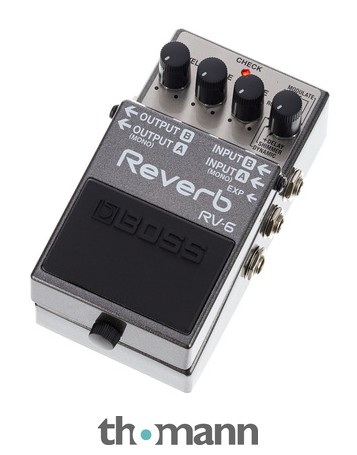
Open up almost any reverb pedal and you''re faced with a list of modes: spring, room, hall, plate, shimmer. They all add space, but they do it in very different ways. Here''s what each one actually is, and where it shines.
Spring
The classic guitar reverb, originally created by sending the signal through actual metal springs in an amp. It''s drippy, surfy and slightly metallic — the sound of surf rock, rockabilly and vintage Fender amps. If you want one quintessentially "guitar" reverb, this is it.
Room and hall
Room reverbs simulate a small, natural space — subtle, tight, great for adding realism without obvious effect. Hall reverbs are bigger and longer, simulating a concert hall, for lush, spacious tones on cleans and ballads. Most playing sits somewhere between these two.
Plate
Plate reverb came from studios vibrating a large metal plate. It''s smooth, dense and bright, and it''s a favourite on vocals and guitar leads because it sits beautifully without muddying the tone.
Shimmer and ambient
Shimmer adds a pitch-shifted octave to the reverb tail for a soaring, angelic wash, while ambient modes pile on modulation and long decays for cinematic soundscapes. These are special-occasion sounds — gorgeous, but easy to overdo.
Which do you need?
For most players, a pedal with spring, hall and plate covers everything — the Boss RV-6 (check price) has all of those and more. If you want ambient washes, look at a dedicated unit like the Walrus Audio Slö (check price). See our best reverb pedals guide for the full picks.
Common questions
- What reverb type is best for guitar?
- Spring is the classic guitar reverb (surfy and drippy), while hall and plate are great all-rounders for lush cleans and leads. A multi-mode pedal lets you switch between them.
- What is shimmer reverb?
- Shimmer adds a pitch-shifted (usually an octave up) layer to the reverb tail, creating a soaring, synth-like, angelic wash. It''s great for ambient and atmospheric playing but easy to overuse.
I'm Martin, and I have a problem (it's pedals). I play ambient and post-rock — big washes of reverb, delays into delays, the kind of pedalboard that needs its own roadie — so effects are where I live. I love going down the rabbit hole on a circuit: what's the buffer doing, how does it stack, what happens at the extremes of the knobs nobody dares turn? My reviews tend to wander, because that's how you actually find the magic in a box. I'll always show you the weird, useful corners.
Ambient/post-rock guitarist and lifelong pedal collector
More from Martin
 How truss rod adjustments actually affect your guitar's playabilityThe truss rod isn't just for fixing a bowed neck — it shapes feel, action and intonation across the whole fretboard. Here's what's actually happening when you turn it.
- How swell and volume-swell technique changes what you need from reverb and delayVolume swells aren't just a playing trick — they fundamentally change how reverb and delay pedals behave. Here's what to look for in your effects chain.
- Guitar string winding types explained: roundwound, flatwound and halfwoundRoundwound, flatwound, halfwound — string winding affects tone, feel and how your pedals respond. Martin explains what's actually going on.
 How fuzz pedals interact with your guitar's volume and tone controlsFuzz pedals respond to your guitar's controls in ways overdrive and distortion don't. Here's what's actually happening in the circuit, and how to use it.
- Acoustic guitar top woods explained: what spruce, cedar and mahogany actually doSpruce, cedar, mahogany — the soundboard wood shapes everything about how an acoustic guitar responds. Here's what each actually does to your tone.
- Fuzz into overdrive vs overdrive into fuzz: does the order actually matter?Stack a fuzz and an overdrive and the order matters enormously. Martin breaks down what each combination actually does to your tone.