Pickup output and string gauge for drop tunings: matching the two properly
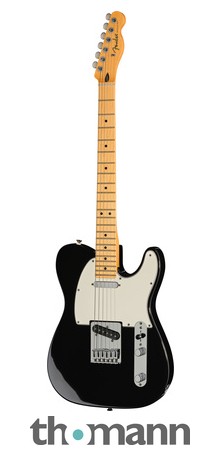
Had a lad after a gig in Wolverhampton last year hand me his seven-string, dropped to A, running .054 to .010 with a set of pickups that came stock in a guitar tuned to standard. Sounded like someone had thrown a wet blanket over his cab. Not a pickup problem. Not a string problem. A matching problem, and honestly it's one of the most common things I see when people email me their tone chains.
Everyone obsesses over pickup output when they drop tune. Bigger tuning drop, hotter pickup, right? That's the assumption. But it's only half the equation, and if you get the other half wrong you end up with exactly what that kid had — mud with no note definition, chugs that don't chug, they just sort of collapse.
Why pickup output and string gauge fight each other
A pickup reads string vibration as a magnetic signal. Heavier strings vibrate with more mass and less amplitude at the same pick attack, and they push more low-frequency energy into the coil. A hotter pickup — more winds, stronger magnet, or both — takes that already-thick signal and compresses it further before it even reaches your amp or profiler.
Stack those two together without thinking and you get a front end that's oversaturated before you've touched a gain knob. The pick attack disappears. Chord separation goes to mush. On a drop-tuned low string this shows up as a flabby, undefined thud instead of a tight chug — which, if you're chasing that djent thing, is the exact opposite of what you want.
I run a profiler now (been converted for a few years, no shame in it), and the input stage on a Kemper or a Neural device is just as sensitive to this as a real tube front end. Feed it too much low-end energy from an overly hot pickup and heavy strings together and the modelled preamp clips in a way that sounds boxy rather than aggressive. It's not forgiving of a messy input signal — if anything it's more honest about it than an amp with some natural sag.
What actually changes when you tune down
Dropping a string's pitch reduces tension. Less tension means more slack, more amplitude in the string's excursion, and — critically — the string sits closer to the pickup pole pieces on the downswing of its vibration. That's where a lot of the "why does this sound farty all of a sudden" problem comes from. It's not always output. Sometimes it's literally string-to-pole-piece clearance changing because the string is flapping around more than it used to.
Going up in gauge restores tension and tightens that excursion back up, which is why heavier strings are the standard fix for drop tunings. But if you also swap in a significantly hotter pickup at the same time, you're stacking two changes that both increase low-end density, and you can't always tell which one's the actual culprit when it goes wrong.
A sensible approach: change one thing at a time
My rule with students and with my own rigs: when you drop tune, sort your string gauge and your setup first. Get the tension and the pickup height dialed in before you even think about swapping pickups. A lot of "I need hotter pickups for drop tunings" problems are actually solved by raising the bridge pickup slightly and going up half a gauge on the low strings. I've written about bridge pickup height and how it feeds your amp's front end before — it's genuinely one of the cheapest fixes going and nobody does it.
If after that the pickup still feels underpowered — genuinely thin, not just "less compressed than I'm used to" — then look at output. But go up in smaller steps than you think. A moderate-output humbucker with a well-cut low string and decent gauge will often out-chug a genuinely hot pickup paired with strings that are too light for the tuning, because the moderate pickup keeps the pick attack intact for the amp or modeller to shape.
Gauge recommendations that actually hold up live
For drop C on a six-string I'm generally running a .052 or .054 low string minimum. Drop A on a seven, I want at least a .062-.064 on that low string, sometimes heavier depending on scale length. Guitars with a longer scale — 26.5" or the 27" baritone-scale stuff you see on a lot of the modern metal-focused builds — can get away with slightly lighter gauges for the same tuning because the extra scale length restores tension that a shorter-scale guitar loses. Worth knowing if you're guitar shopping specifically for low tunings; I'd point people toward something built for it rather than retrofitting a standard-scale guitar and fighting it forever. Our rundown of the best guitars for metal covers a few options built around exactly this.
Scale length matters more than most players give it credit for, and I'd argue it's underrated compared to how much time gets spent agonising over pickup choice. That's my one slightly contrarian bit here — everyone wants to talk pickups, almost nobody wants to talk scale length, and scale length is doing more work.
Where output actually does matter
None of this means output is irrelevant. If you're running a passive pickup into a high-gain amp front end (not a profiler, an actual valve preamp) a hotter pickup will push the front end harder and give you earlier breakup, which some players want for that immediate saturated feel. Active pickups behave differently again — they're less sensitive to string gauge changes because the onboard preamp normalises a lot of that variance, which is one reason so many drop-tuned metal players default to actives. Less fuss, more consistency, less need to fine-tune height and gauge together.
If you're running passives and want to add saturation without touching the pickup, an overdrive pedal in front of the amp does a similar job with more control. We've covered overdrive and distortion pedal options if that's the route — a mid-boosted overdrive ahead of a high-gain channel is often a better fix for "not enough push" than chasing a hotter pickup.
The short version
Match your string gauge to your tuning first. Get your pickup height set properly. Only then decide if you actually need more output, and if you do, go up gradually rather than jumping straight to the hottest pickup on the shelf. Do it in that order and the two stop fighting each other — which is the whole point.
Common questions
- Do I need a different pickup every time I change tuning?
- No. Most players can cover drop C through drop A with one well-chosen moderate-output humbucker if the string gauge and pickup height are set correctly. Pickup swaps are usually the last fix, not the first.
- Are active pickups better than passives for drop tunings?
- They're more forgiving, not necessarily better. The onboard preamp in an active pickup normalises output regardless of string gauge, which suits players who tune down often and don't want to keep adjusting height. Passives can sound just as tight, they just need a bit more setup attention.
- Will heavier strings hurt my clean tone if I mostly play high-gain?
- Not if the neck relief and action are set for the new tension. It's worth a proper setup rather than just dropping heavier strings on and hoping. A slightly under-relieved neck with heavy low strings can actually improve clean articulation, not hurt it.
- What's the single cheapest fix if my drop-tuned riffs sound muddy?
- Check pickup height before anything else. Lowering the bridge pickup slightly on the low-string side often tightens up a muddy low end faster and cheaper than any pickup swap.
I'm Daz and I play LOUD. Spent years on the road playing modern metal — drop tunings, seven and eight strings, the works — so high-gain tone is genuinely my whole life. Honestly, I came up worshipping tube heads and 4x12s, then digital modellers got good enough to change my mind completely, and now I run a profiler at every gig. I care about two things: does it djent, and does it hold together when you stack the gain? I'll measure the noise floor so you don't have to.
Touring metal guitarist; multi-scale and digital-modelling specialist
More from Daz
- Why fan-fret and multiscale necks actually matter for low tuningsMultiscale necks aren't a gimmick for drop-tuned players. Here's what fan frets actually fix, and when a straight scale is still the smarter buy.
 Why a metalhead should still own one acoustic guitarDaz explains why even a drop-tuned, high-gain player benefits from one decent acoustic, and what actually matters when picking one.
 Pickup output vs string gauge: the real relationship for high gainDaz breaks down how pickup output and string gauge actually interact on high-gain rigs, and why chasing bigger output isn't the fix for a flabby low string.
- Trails and freeze effects: building ambience that doesn't fight your riffTrails and freeze modes can build huge ambient textures on a high-gain rig without turning your chug into soup. Here's how I actually use them.
- Analog vs digital ambient tones on a high-gain rigAnalog or digital delay and reverb for a high-gain rig? Here's how each behaves under gain, and how to set them so the chug survives.
- Scale length and drop tunings: why it matters more than you thinkStruggling to keep drop tunings tight and in-tune? Scale length changes string tension more than gauge does. Here's what actually works.