Why your modelling amp sags different to a tube head, and how to fix it
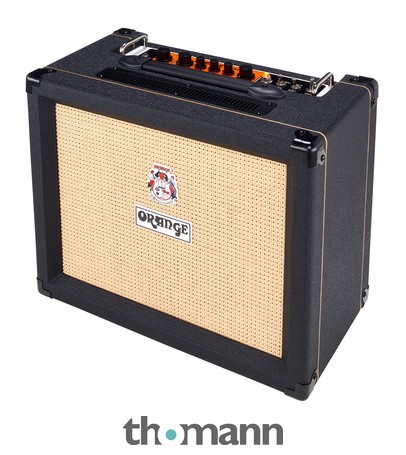
Had a bloke at a clinic last month plug his profiler into the PA, dial up what looked like an identical patch to my live tone, and ask why his palm mutes sounded "thin and clicky" compared to mine through a real cab. Same gain structure. Same EQ, near enough. The difference wasn't the distortion at all. It was power amp sag, and honestly, it's the bit modelling gear still gets wrong more often than the internet wants to admit.
I've run a profiler at every gig for a good few years now, so this isn't me having a go from the valve-purist camp. I sold my 4x12 stack. But I had to actually understand what sag is doing before my modelled tones stopped feeling like they were fighting me under palm mutes and chugs.
What power amp sag actually is
Sag is voltage drop. When you slam a chord into a tube power amp, especially an older or lower-wattage design running class AB, the power supply momentarily can't keep up with the current demand. Voltage to the tubes dips for a few milliseconds, the output compresses, and you get that soft, springy give under a heavy pick attack. It's not distortion in the harmonic sense. It's a dynamic response, and it happens at the power amp stage, downstream of all your gain and EQ.
This is genuinely why two amps with the same preamp voicing can feel completely different under your hand. A tired power supply with a big smoothing cap and a rectifier tube (as opposed to solid-state rectification) will sag more and slower. That's the "spongy" feel guys chase in vintage-style heads. It's also why a lot of high-gain heads deliberately use solid-state rectifiers and stiff power supplies, because for tight, fast rhythm playing, sag is often the enemy, not the goal.
Why modellers handle this differently
Digital modellers and profilers capture the sound of an amp at a moment (or a set of moments, in profiling terms) but the sag behaviour is a dynamic circuit response that has to be separately modelled or approximated. The good units now do this. Capture-based profiling picks up quite a lot of the amp's dynamic character. But it's not the same physical mechanism as an actual power supply genuinely running out of headroom in real time.
What you often get instead is EQ and compression algorithms trying to fake the effect of sag, rather than an actual voltage drop happening. For most rhythm playing this is close enough that nobody in the room notices. Where it falls apart is exactly the situation my clinic guy hit: fast palm-muted eighth notes on a low string, where the attack transient needs that power-amp give to feel like it's breathing rather than clicking.
Where this actually matters for your tone
I'll be straight with you: for most players this is a non-issue. If you're doing open chords, leads, ambient stuff, sag behaviour barely registers. Where it matters is specifically low-tuned, palm-muted, high-gain rhythm playing, the exact thing I do for a living. Djent-style patterns live and die on how the attack transient feels under your pick hand, and if your rig responds wrong there, you either dig in harder (fatigue, inconsistency) or you back off and lose punch.
My honestly-not-hot-take opinion: I think a lot of players blame their EQ or their gain staging for a tone that "isn't heavy enough," when the actual issue is the power amp response feeling wrong under their specific attack. You can EQ a modelled tone all day and it'll still feel off if the sag character doesn't suit how hard you pick.
How to actually fix it on a modeller
Most decent modelling platforms give you some control over this, even if it's buried. Look for parameters named things like "sag," "bias," "power supply," "compression," or "dynamics" inside the amp block, not the global EQ. Turning sag up generally softens the attack and adds that springy compression; turning it down gives you a tighter, more immediate transient, which is usually what you want for fast, low-string chugging.
A few practical things I do when a patch feels wrong under palm mutes:
First, I check the power amp/sag parameter before I touch gain or EQ at all, because it's usually the actual culprit. Second, I match the amp model's era and rectifier type to what I'm chasing; an amp modelled on a solid-state-rectified high-gain head will naturally feel tighter than one modelled on an old rectifier-tube design, regardless of what I do with the knobs. Third, I test with actual palm-muted eighth notes at gig volume, not just chords through headphones at home, because sag perception changes with SPL and how the cab (real or modelled) moves air.
If you're shopping for a modeller partly on this basis, it's worth comparing how different units in the same price bracket handle dynamic response, not just how many amp models they list. We've covered some of the practical differences in combo, head and cab, or modelling amp: which type actually suits you, which is a decent starting point if you're still deciding which camp to sit in.
Does this mean valve still wins?
Not in my view, and I'd know, given I've made my living on a profiler for years now. What it means is that sag is a real, physical, measurable thing, and pretending your modeller reproduces it identically to a genuine power supply under load is a bit of a furphy. The best units get close enough for gigging and recording at a professional level. But if you're chasing a specific attack feel for drop-tuned rhythm work, understand what you're actually adjusting, because it's not gain and it's not EQ. It's further downstream than that.
If you're building a rig around this and picking your first proper high-gain platform, it's also worth reading up on cab and speaker behaviour, since impedance and speaker choice interact with perceived tightness too, covered in our piece on speaker impedance and ohm matching. And if you're still choosing the guitar side of the equation for low tunings, our best guitars for metal guide covers scale length and pickup choices that affect how much sag-chasing you'll even need to do.
Common questions
- Can I add sag to a solid-state or modelling amp that doesn't have the parameter?
- Not directly if the parameter isn't exposed. Some players fake a softer attack with a touch of compression or an EQ dip in the low-mid attack transient, but it's an approximation, not the real mechanism. If sag feel matters a lot to you, prioritise a modeller that explicitly exposes power amp/bias controls in the amp block.
- Does more sag always mean a better metal tone?
- No, actually the opposite for a lot of modern high-gain styles. Tighter, faster rhythm playing usually wants less sag so the attack stays punchy and defined under palm mutes. Heavier sag suits looser, vintage-voiced playing more than tight djent-style picking.
- Is sag the same thing as compression from a pedal?
- Related in effect but different in cause. Pedal compression works on the signal level electronically. Power amp sag is a voltage-supply limitation reacting to current demand in real time, which is why it interacts with pick attack and playing dynamics in a more organic, less predictable way.
I'm Daz and I play LOUD. Spent years on the road playing modern metal — drop tunings, seven and eight strings, the works — so high-gain tone is genuinely my whole life. Honestly, I came up worshipping tube heads and 4x12s, then digital modellers got good enough to change my mind completely, and now I run a profiler at every gig. I care about two things: does it djent, and does it hold together when you stack the gain? I'll measure the noise floor so you don't have to.
Touring metal guitarist; multi-scale and digital-modelling specialist
More from Daz
 Why fan-fret and multiscale necks actually matter for low tuningsMultiscale necks aren't a gimmick for drop-tuned players. Here's what fan frets actually fix, and when a straight scale is still the smarter buy.
- Why a metalhead should still own one acoustic guitarDaz explains why even a drop-tuned, high-gain player benefits from one decent acoustic, and what actually matters when picking one.
 Pickup output vs string gauge: the real relationship for high gainDaz breaks down how pickup output and string gauge actually interact on high-gain rigs, and why chasing bigger output isn't the fix for a flabby low string.
- Trails and freeze effects: building ambience that doesn't fight your riffTrails and freeze modes can build huge ambient textures on a high-gain rig without turning your chug into soup. Here's how I actually use them.
- Analog vs digital ambient tones on a high-gain rigAnalog or digital delay and reverb for a high-gain rig? Here's how each behaves under gain, and how to set them so the chug survives.
- Scale length and drop tunings: why it matters more than you thinkStruggling to keep drop tunings tight and in-tune? Scale length changes string tension more than gauge does. Here's what actually works.