Combo, head and cab, or modelling amp: which type actually suits you?
I had a student turn up to his lesson last month with a 4x12 cab he'd bought secondhand off Gumtree. Lovely looking thing. Problem was, he lived in a townhouse in Fortitude Valley with a landlord who'd already sent one noise complaint email, and he didn't own a head to plug it into yet. He'd bought the flashy half of a rig with none of the practical half. That's the conversation I have more than any other: people picking amp type based on what looks right in a photo, not what fits their actual playing life.
So let's sort out the three real categories — combo, head-and-cab, and modelling — without the forum snobbery that usually clouds this decision.
Combo amps: the sensible default, and I mean that as a compliment
A combo is an amp and speaker built into one box. That's it. No mystery. The advantage is obvious once you've had to move gear more than twice: one box, one trip from the car, done. For most players — bedroom, small gigs, jam nights — a combo is genuinely the right call, not just the beginner's consolation prize.
Where people go wrong is buying a combo that's too big because "more headroom is better." For home use and small venues, something in the 15-40 watt range with a single 10" or 12" speaker covers almost everyone. I point students toward our guide to the best practice amps for exactly this reason — most of what's on that list is a combo, because combos are what actually get used.
Valve combos like the Fender Blues Junior IV (check price) or the Vox AC15C1 (check price) give you real amp breakup at gig volume without needing a separate cab. Solid-state and digital combos like the Boss Katana-50 MkII (check price) or Blackstar ID:Core 20 V4 (check price) give you a huge range of tones at a fraction of the weight and price. Both are legitimate paths — more on that distinction below.
Head and cab: more flexible, more admin
Splitting the amplifier (head) from the speaker (cab) buys you a few real things: you can swap cabs to change your sound without touching your amp, you can upgrade one half without replacing the other, and if you're gigging loud rock or metal, a 4x12 genuinely moves more air in a room than a combo's single speaker can.
But — and I say this to every student who's eyeing a half-stack because it looks like their guitar hero's rig — a head and cab is two boxes, more cabling, more things that can go wrong, and usually more volume than you can actually use in a normal gig or rehearsal room without everyone hating you. It also means learning about tube amp options and cab pairing at the same time, which is a lot to take on when you're still working out what tone you even want.
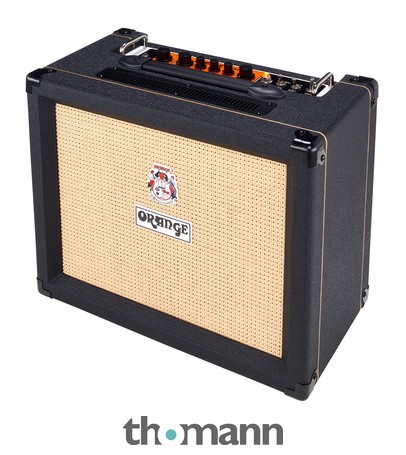
If you're playing high-gain styles and genuinely need the headroom and low-end punch of a bigger cab, a head like a Marshall DSL40CR (check price) or Blackstar HT Club 40 MkII (check price) paired with a matching cab makes sense. For most gigging pub-band and covers players though, a combo like the Orange Rocker 15 (check price) or Peavey Classic 30 (check price) will do the job with far less hassle, and you can always add an extension cab later if you actually need it. I'd argue most bedroom players who buy a half-stack never grow into it — it just sits there at "3" on the volume dial forever.
Modelling amps: the bit that's changed the most in ten years
Right, this is where I get students asking the most confused questions, because the modelling category has moved fast and the old stereotypes about it being "thin" or "fake-sounding" are increasingly out of date.
A modelling amp uses digital processing to emulate the behaviour of different amp circuits, speaker cabs and effects, rather than generating its tone from an actual valve circuit. The upside is enormous flexibility in one box — clean Fender-style tones, British breakup, high-gain, built-in delay and reverb, often USB recording — for not much money and not much weight. The Yamaha THR10II (check price) and Positive Grid Spark 40 (check price) are both genuinely good at this, and the Fender Mustang LT25 (check price) is a solid low-cost entry into it too.
Here's my honest take: for a beginner working out what styles and tones they even like, a modelling amp is often the smarter buy than a single-voiced valve combo. You're not locked into one flavour of clean or crunch while you're still figuring out if you're a blues player, a metal player, or something else entirely. That flexibility has real teaching value — I've had students discover they actually love a British-crunch voicing they'd never have tried if they'd bought a one-trick valve amp first.
Valve, solid-state, or digital: the wattage myth
Quick detour because it trips everyone up. Watts are not volume in any simple sense — a 15-watt valve amp can comfortably out-shout a 50-watt solid-state amp at the same setting, because valve amps get louder as they distort and solid-state amps mostly don't. If you want the full breakdown I've written it up properly, so have a read of how amp wattage actually works before you assume bigger numbers mean a better amp for your situation. For home practice, 15-20 valve watts or 20-40 solid-state/digital watts is plenty for the vast majority of people, gigging included, provided the venue has a PA to mic through.
So which one do you actually buy?
If you're not sure yet what tones you like, or you're playing mostly at home and occasionally at open mics: get a combo, probably a modelling one, because the flexibility teaches you what you actually want before you commit hundreds more dollars to a narrower valve tone. If you already know your style — say you're set on classic blues-rock breakup — a valve combo like the Blues Junior or Rocker 15 will reward you with feel that modelling amps still don't fully replicate at low volumes. And a head and cab set-up should really be reserved for people who already gig loud enough, and often enough, that they've felt the actual limitation of a combo in a real room. Not before.
My honest opinion, after years of watching gear pile up unused in students' garages: buy for the gig you're actually playing this year, not the one you're imagining in five years. You can always upgrade. You can't un-spend the money.
FAQ
Common questions
- Is a modelling amp good enough for gigging, or do I need a valve amp eventually?
- Plenty of gigging players now use modelling amps exclusively, especially through a PA where the amp's own speaker matters less. If you're gigging small rooms without a PA, a valve combo's natural breakup at volume is still harder to replicate, but for most covers and function gigs a good modelling amp holds up fine.
- Do I need a head and cab if I play metal?
- Not necessarily. Plenty of modern metal players gig and record with a combo or even a modelling amp into a PA or interface. A half-stack matters more for stage volume and low-end push in a loud live band than it does for tone itself.
- What wattage combo amp should a beginner actually buy?
- For home use, 15-20 watts if it's valve, or 20-40 watts if it's solid-state or digital. That covers bedroom practice right through to small open-mic gigs without needing anything bigger.
- Can I add a cab to a combo amp later if I need more volume?
- Some combos have an external speaker output for exactly this, effectively turning them into a head. Check the back panel spec before buying if you think you might want that option down the track.
I'm Rob, and I've taught guitar for over fifteen years — which means I've watched hundreds of beginners buy the wrong thing because someone baffled them with jargon. So that's my job here: cut through it. I genuinely love good budget gear, the kind that punches way above its price and actually keeps a new player playing. I'll tell you in plain English what matters, what doesn't, and what's a waste of your first hundred quid. No snobbery, no gatekeeping — just honest help getting started right.
Guitar teacher (15+ yrs); beginner and budget-gear specialist
More from Rob
- A basic setup checklist every beginner guitarist should knowA plain-English checklist for spotting when your guitar needs a setup, plus what you can check yourself before paying a tech.
- How often should you actually restring your guitar?No, it's not every three months by law. Here's how to actually tell when your strings are done, based on playing habits, not the calendar.
 What does 'true bypass' actually mean on a pedal?True bypass is one of the most-argued terms in pedal-land. Here's what it actually means, why it matters (and when it really doesn't).
- Electric guitar action explained: what it is and why beginners should careHigh action makes learning guitar harder than it needs to be. Here's what action actually is, how to spot a bad setup, and what to do about it.
- How alternate picking technique affects the guitar you needYour picking technique shapes your tone before any amp or pedal gets involved. Here's what that means for choosing your first or next guitar.
- Guitar capo explained: what it does, how to use it, and which type to buyA capo is one of the cheapest, most useful bits of kit a beginner can own. Here's exactly what it does to your guitar and how to use it properly.