How string-skipping technique changes what you need from a high-gain rig
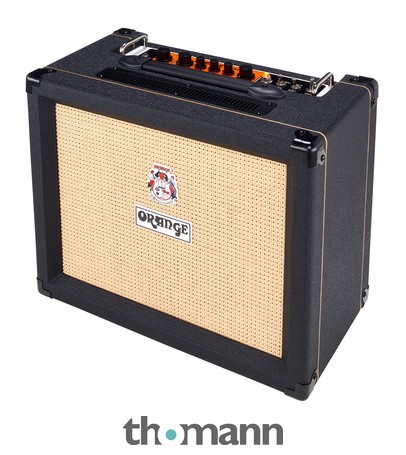
String-skipping separates a dialled-in high-gain rig from one that's just loud. I found that out the hard way — third night of a run at the O2 Academy Brixton support slot, skipping from the low B to the G on a riff I'd played a thousand times, and the pick attack turned to mush mid-set. Wrong guitar, wrong gain level, wrong everything. Took me two more tours to actually understand why.
What string-skipping actually demands from your picking hand
Before we talk gear, be honest about the technique itself. String-skipping means your pick is crossing one or more strings it doesn't play, and that gap requires a bigger, faster arc in your picking motion. That arc changes the attack angle, which changes how hard the string gets hit, which changes the transient spike going into your pickups.
With adjacent-string picking you develop a fairly consistent stroke. String-skipping introduces variance. Some hits land dead-centre, some clip the string with more of the pick tip. Honestly, that inconsistency isn't a technique flaw — it's just physics. The problem is that a badly configured rig will amplify that inconsistency and turn it into sloppy, uneven output where some notes bark and others disappear.
The short version: string-skipping demands a rig with better-controlled dynamics than alternate picking on adjacent strings does.
Why high gain is the enemy of string clarity
High-gain stages compress and saturate. That's what makes them feel good on a palm-muted chug. But that same compression smears transients, which is exactly what string-skipping relies on for clarity — each note needs a clean attack spike so the listener (and you) can distinguish where one note ends and another begins across a string gap.
Stack too much pre-amp gain and the transient spike gets swallowed before the power stage even sees it. The notes blend into a fizzy wash. You'll notice this most on a skip from a wound string to an unwound one — the G string in particular has a naturally different attack character, and too much gain homogenises it into the same compressed mush as the B or E above it.
I've watched players solve this by backing off pre-amp gain more than feels comfortable and pushing the power stage or a clean boost instead. Less pre-amp saturation, more dynamic headroom. It goes against every metal instinct you have, but it works. If you're using an amp sim, that means keeping your gain knob lower than you think and using the output or cab level to compensate for perceived volume drop. Check out our article on how to dial in high-gain amp-sim tones at home — that piece covers gain staging in more detail than I can fit here.
The guitar itself matters more than people admit
String-to-string balance is everything. A guitar with uneven pickup height, or pickups that favour the low strings heavily, will give you inconsistent output across a skip. The low strings already have more fundamental energy. If your pickups are set to compensate for that on a straight riff, they may not compensate well when you're suddenly jumping to a high string with a different stroke angle.
Active pickups handle this better than passives in most cases. The buffer stage in an active system smooths out some of the variance and keeps output consistent regardless of attack angle. That's not the only reason to run actives for metal, but for string-skipping specifically it's a genuine technical advantage. I wrote about this properly in our active vs passive pickups for metal piece — worth reading before you decide.
Action plays into this too. Higher action gives strings more room to vibrate before they hit the frets, which means more note sustain and less unwanted buzz when your pick lands at an unusual angle. Most modern metal setups run fairly low action, which is fine for shred on adjacent strings, but string-skipping at speed can cause fret buzz on an awkwardly angled pick stroke. A small action raise — we're talking fractions of a millimetre — can clean up the technique considerably. Our guide on the best guitars for metal has notes on which factory setups give you that headroom out of the box.
Noise gates and string-skipping: a specific problem
Most high-gain players run a noise gate. Makes total sense — silence the hum between notes, tighten up the attack. But string-skipping creates a timing problem with aggressive gate settings.
The gap between a skipped note and its target involves a brief moment where neither string is sounding — just your pick in transit. An aggressive gate will interpret that gap as silence and close. Then when you hit the target string, there's a tiny lag before the gate opens again, and you lose the front of the note. At slow tempos it's subtle. At 180 BPM across a seven-string, it turns your riff into a chopped-up mess.
The fix is simple once you know it: slow your gate's release. Let it breathe. You don't need to gate as tightly as you do on pure palm-mute riffing. I covered gate placement in depth in the noise gates in your amp-sim chain article, but the release control specifically is the one to experiment with here.
EQ choices that help clarity across string skips
Upper-midrange presence — roughly 2 kHz to 4 kHz — is where string attack lives. Most beginner high-gain tones scoop that range in favour of a V-shape EQ that emphasises bass and treble. Sounds massive in isolation. Falls apart under string-skipping because you've removed the frequency range that carries the transient definition of each individual note.
Add some presence back in that upper-mid zone. It might feel harsh at first compared to the scooped tone you're used to. Stick with it. Live and in a mix, that presence is what makes each skipped note land with its own identity rather than blurring into the ones around it.
High-end fizz, on the other hand, doesn't help — it adds perceived harshness without adding clarity. There's a difference between useful presence and fizz, and it's genuinely worth spending time on a parametric EQ sweeping that area until you hear where the clarity lives versus where the scrape lives. The two are not the same frequency.
Why your technique is the real diagnostic tool
Here's the thing: if you can't hear individual notes cleanly when you string-skip slowly at low volume, the problem is probably technique, not gear. But if the technique is solid and things still blur at gig levels, work through the gain staging first, then EQ, then gate settings, then pickup balance. In that order. Most players jump to gear before they've actually isolated which part of the signal chain is failing them.
String-skipping forced me to understand my rig better than any other technique I've practised. Every weakness in your chain shows up. Which, honestly, makes it one of the most useful things you can inflict on your setup.
Common questions
- Does string-skipping technique require a different guitar setup than regular metal playing?
- Not a completely different setup, but a small action raise can help — fractionally higher action gives strings more room to vibrate cleanly when your pick lands at an unusual angle during a wide skip. Also check pickup height for string-to-string balance, since uneven output across strings is more noticeable when you're jumping across gaps.
- Why do my skipped notes disappear when I run a tight noise gate?
- An aggressive gate closes during the brief silence between a skipped string and its target. The gate interprets your pick's transit time as silence and shuts down, then clips the front of your next note when it reopens. Slow down your gate's release control — you don't need it as tight as you would for pure palm-muting.
- Should I use active or passive pickups for string-skipping in metal?
- Active pickups have a buffered output stage that helps even out the pick-attack inconsistencies that come with string-skipping's varied stroke angles. That consistent output makes it easier to keep clarity across strings. Passives can work well too, but they'll show up any unevenness in your technique or pickup height more readily.
I'm Daz and I play LOUD. Spent years on the road playing modern metal — drop tunings, seven and eight strings, the works — so high-gain tone is genuinely my whole life. Honestly, I came up worshipping tube heads and 4x12s, then digital modellers got good enough to change my mind completely, and now I run a profiler at every gig. I care about two things: does it djent, and does it hold together when you stack the gain? I'll measure the noise floor so you don't have to.
Touring metal guitarist; multi-scale and digital-modelling specialist
More from Daz
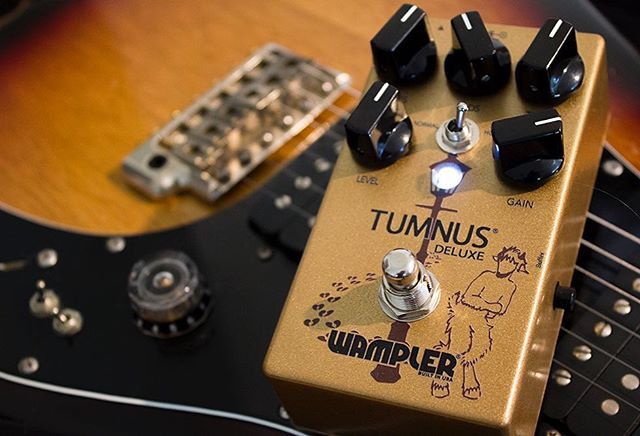 Stacking overdrives before high gain: a practical guideWhy putting an overdrive in front of an already-distorted high-gain amp or modeller tightens the chug instead of just adding mush.
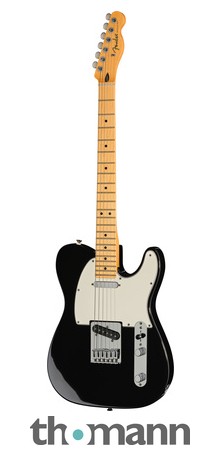 Why fan-fret and multiscale necks actually matter for low tuningsMultiscale necks aren't a gimmick for drop-tuned players. Here's what fan frets actually fix, and when a straight scale is still the smarter buy.
- Why a metalhead should still own one acoustic guitarDaz explains why even a drop-tuned, high-gain player benefits from one decent acoustic, and what actually matters when picking one.
- Pickup output vs string gauge: the real relationship for high gainDaz breaks down how pickup output and string gauge actually interact on high-gain rigs, and why chasing bigger output isn't the fix for a flabby low string.
- Trails and freeze effects: building ambience that doesn't fight your riffTrails and freeze modes can build huge ambient textures on a high-gain rig without turning your chug into soup. Here's how I actually use them.
- Analog vs digital ambient tones on a high-gain rigAnalog or digital delay and reverb for a high-gain rig? Here's how each behaves under gain, and how to set them so the chug survives.