Fuzz pedals for fingerstyle and acoustic-electric players: an odd match that works
A student of mine brought a Yamaha FS800 into a lesson last month, ran it through a cheap fuzz he'd found at a market stall on Wall Street here in Asheville, and asked me if he was breaking some unwritten rule. He wasn't. He was just early to a conversation most acoustic players never have, because fuzz and steel-string acoustics get filed under "don't mix" before anyone actually tries it.
I build and repair acoustics out the back of my house, and I've spent a fair few evenings with a soundhole pickup, a piezo under the saddle, and a stompbox that has no business being anywhere near a folk tune. Some of it was awful. Some of it wasn't. The difference came down to which fuzz, how it was fed, and how much I trusted my picking hand to do the actual shaping.
Why fuzz behaves so differently on acoustic-electric
Electric guitar pickups are low output, wound coils reacting to a magnetic field, and fuzz circuits were largely designed around that impedance and that harmonic content. A piezo pickup under a saddle puts out a different signal entirely — more high-end spike, less natural compression, and a transient snap that a fuzz circuit reads as an assault rather than a note. Feed a piezo straight into a silicon fuzz and you often get a brittle, farty mess that has nothing to do with the warm, singing thing you were hoping for.
Soundhole magnetic pickups, the kind that sit under the strings like a mini humbucker, behave much closer to an electric signal. If you're going to experiment, that's where I'd start. It's not a hard rule, more a strong tendency, and it's the first thing worth knowing before you blame the pedal.
Germanium, silicon and Muff style: picking your starting point
Germanium fuzzes, the old Fuzz Face lineage, are temperamental and touch-sensitive in a way that actually suits fingerstyle playing. They clean up when you back off your picking attack and roll down the volume knob, which means you can go from a near-clean arpeggio to a thick, singing lead tone without touching the pedal. The Dunlop Fuzz Face Mini Silicon (check price) isn't germanium, it's the more stable silicon variant, but it still tracks touch dynamics reasonably well and won't drift with temperature the way an old-school germanium circuit can.
Silicon fuzzes generally hit harder and compress more, which flattens a lot of the dynamic range that fingerstyle relies on. That's not automatically bad, it's just a different job. If you want sustain for a slide melody over a droning open tuning, silicon can be lovely. If you want the fuzz to breathe with your right hand the way a good overdrive does, germanium-style circuits tend to reward that more.
Big Muff style fuzzes are their own category, scooped mids, a wall of sustain, more aligned with electric rock rhythm work. I've tried the Electro-Harmonix Big Muff Pi (check price) on a soundhole-pickup dreadnought and it turned a simple chord progression into something closer to a shoegaze pad. Genuinely interesting for a studio texture, genuinely wrong for a folk gig. The Green Russian Big Muff (check price) is a bit tighter in the low end, which I actually preferred for this purpose, less flub under a piezo signal.
The volume knob trick still applies, maybe more so
Electric players know the trick of rolling back the guitar's volume knob to clean up a fuzz. On an acoustic-electric with an onboard preamp, you often don't have a simple passive volume pot doing that job, you've got a buffered or active circuit that behaves differently. Some preamps clean up beautifully when you back off; others just get quieter and stay fuzzy. Test yours before you build a live arrangement around the technique, because the failure mode is embarrassing in front of an audience, not just disappointing at home.
Where a passive volume control is present, and a few higher-end acoustic-electrics do still offer one, the interaction is genuinely musical. Full volume, full fuzz, for a chorus. Rolled back to seven, it edges toward a warm overdrive. Rolled back further, it's nearly clean with just a bit of grind on the transient. That range is worth chasing if your instrument allows it, and I'd point anyone curious about the general mechanics of that cleanup behaviour toward our piece on fuzz and your guitar's volume knob style techniques, most of which transfers directly.
Where fuzz actually earns its place in a fingerstyle set
I wouldn't run fuzz through an entire acoustic set, and if a fellow folk player told me they did, I'd gently suggest they're chasing a novelty rather than a tone. But as a single-song colour, a moment where a droning DADGAD piece opens up into something with more harmonic weight, it's genuinely effective. I've used it on one tune in my own live set for going on three years now, a low-tuned instrumental piece where the fuzz comes in only on the final repeated phrase, and it still gets people asking what happened to the guitar.
The Boss FZ-5 (check price) is worth a mention here because it's digital and models several fuzz circuits, which means you can audition germanium-style, silicon-style and Muff-style voicings without buying three pedals to find out which one tolerates a piezo signal. Not the most romantic solution, but a practical one if you're testing the waters.
Pedal order and the rest of your chain
If you're running fuzz on an acoustic-electric, put it early, before any EQ or reverb, same convention as electric rigs. A fuzz fed a signal that's already been scooped or compressed by an acoustic preamp pedal tends to sound thin and clacky. Feed it the rawest signal you can, let the fuzz do its distortion work, then shape afterward with EQ if your acoustic tone is too harsh on top, which it often is once fuzz adds harmonics a piezo pickup already emphasises.
A reverb after the fuzz, something like the TC Electronic Hall of Fame 2 (check price), smooths a lot of the edge without softening the effect itself. I find a short room or plate setting works better than a big hall here, the fuzz already adds enough size to the sound and a cavernous reverb just muddies the picking detail that made you want to keep it fingerstyle in the first place.
An honest opinion on when to skip it
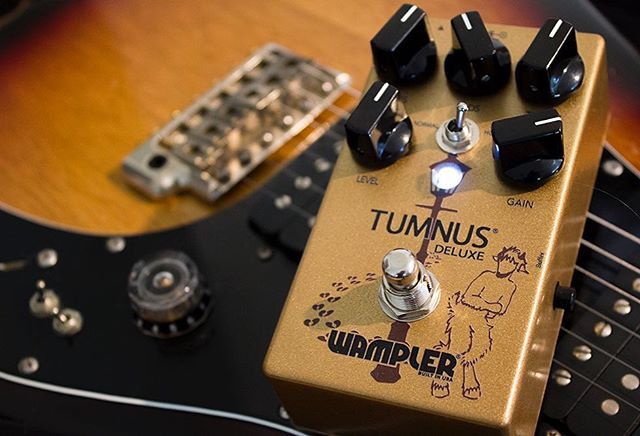
If your only acoustic pickup is an under-saddle piezo with no blend or preamp shaping, I'd genuinely skip fuzz altogether and look at a gentle overdrive instead, something like the Wampler Tumnus (check price), which is far more forgiving of that spiky piezo signal and gives you texture without the brittleness. Fuzz on acoustic is a genuine, useful trick, but it wants the right pickup underneath it, and pretending otherwise just wastes a good pedal on the wrong guitar. For general shopping across styles, our best fuzz pedals guide covers the electric-focused mainstream, most of which will still need the caveats above before you point them at a soundhole.
Try it on one song before you build a set around it. Let your right hand do most of the work it always does, and treat the fuzz as a colour, not a personality transplant for the guitar.
FAQ
Common questions
- Will fuzz damage my acoustic-electric's preamp?
- No. A fuzz pedal is just an effects box in the signal chain after the pickup; it can't damage the guitar's electronics. Worst case is an ugly tone, not a broken preamp.
- Do I need a special pickup to make fuzz work on acoustic?
- Not strictly, but soundhole magnetic pickups tend to respond far more predictably to fuzz circuits than under-saddle piezo pickups, which can sound brittle or thin when fuzzed.
- Is germanium or silicon fuzz better for fingerstyle playing?
- Germanium-style circuits generally track picking dynamics and volume-knob cleanup more naturally, which suits fingerstyle's wide dynamic range better than the more compressed, aggressive feel of many silicon fuzzes.
- Where should I put the fuzz if I'm also using an acoustic preamp pedal?
- Put the fuzz before any tone-shaping or EQ pedal so it receives the rawest possible signal. Reverb or delay should generally come after the fuzz in the chain.
Hey, I'm Doug. I've played the folk circuit for the better part of my life, mostly fingerstyle, and somewhere along the way I started building and repairing acoustics in a little workshop out back. Spend enough time with a sound that comes from wood, air and your bare fingers and you start to hear instruments the way you hear a forest in the morning — alive and full of small details. I'll tell you how a guitar feels under the fingers and how it ages, not just how it photographs.
Folk-circuit fingerstyle player; acoustic builder and repairer
More from Doug
 Ambient delay and reverb settings that actually suit a solo acousticA fingerstyle player's real-world approach to delay and reverb settings on acoustic guitar, without washing out the wood and string detail that made you plug in.
- How often you really need a professional guitar setupDoug breaks down how often an acoustic actually needs a professional setup, and the signs your guitar is asking for one sooner.
 Acoustic pickup types explained: undersaddle, soundhole and body sensorsUndersaddle, soundhole, and body-sensor pickups all colour an acoustic differently. Here's what each one actually does to your tone, from a builder's bench.
- Right hand travel: why less motion means more controlBig right-hand motion feels expressive but costs you accuracy. Here's why trimming travel in your picking or plucking hand changes your tone and timing.
- Micing an acoustic at home: a simple two-mic approach that worksA workshop-tested two-mic setup for recording acoustic guitar at home, without a treated room or expensive gear.
- Recording an acoustic-electric direct: getting a sound that doesn't sound "DI"Piezo pickups sound thin and quacky straight into a DI. Here's how I get a full, room-like acoustic tone without a microphone.