Analog vs Digital Delay: Which Should You Buy?
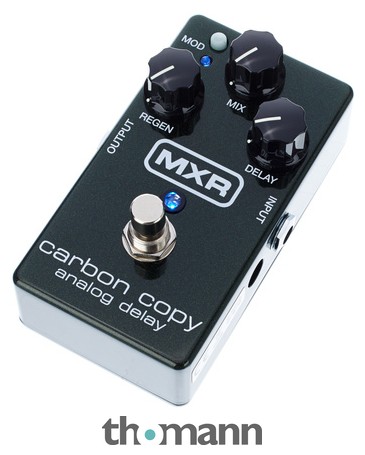
Of all the questions I get about delay, this is the big one: analog or digital? Both make echoes, but they do it differently, and the difference shapes your whole sound. Here''s how to choose.
Analog delay: warm, dark and organic
Analog delays use bucket-brigade chips to pass your signal along in tiny steps. Each repeat is slightly darker and softer than the last, which gives a warm, natural decay that sits politely behind your dry tone and never gets in the way. The trade-off is shorter maximum delay times and less pristine repeats — but that imperfection is exactly the charm. The MXR Carbon Copy (check price) is the modern benchmark, and the Deluxe Memory Man (check price) adds lush modulation on top.
Digital delay: clean, precise and versatile
Digital delays sample your signal and play it back exactly, so the repeats are clear and faithful even after many cycles. They also offer far more: long delay times, multiple modes, presets, tap tempo and looping. If you want one pedal to cover everything, digital wins — the Boss DD-8 (check price) is the all-rounder, and the Strymon TimeLine (check price) is the studio-grade benchmark.
Which should you buy?
If you want warm, vintage echo that blends into the background, go analog. If you want versatility, precision and features, go digital. Many players eventually own one of each. For the full picture, see our best delay pedals guide.
Common questions
- Is analog delay better than digital?
- Neither is better — they sound different. Analog is warm and dark with natural decay; digital is clean, precise and far more versatile. Choose based on the sound and features you want.
- Can a digital delay sound analog?
- Yes — most modern digital delays include excellent analog and tape emulations, so you can get warm repeats plus all the digital features. A dedicated analog pedal still has its own feel that many players prefer.
I'm Martin, and I have a problem (it's pedals). I play ambient and post-rock — big washes of reverb, delays into delays, the kind of pedalboard that needs its own roadie — so effects are where I live. I love going down the rabbit hole on a circuit: what's the buffer doing, how does it stack, what happens at the extremes of the knobs nobody dares turn? My reviews tend to wander, because that's how you actually find the magic in a box. I'll always show you the weird, useful corners.
Ambient/post-rock guitarist and lifelong pedal collector
More from Martin
 Why string height at the pickup wrecks your pedal chainPickup height isn't just a tone knob under the hood. It changes output, dynamics and how your whole pedalboard reacts, especially fuzz and compression.
 Why pickup choice changes how your pedals behavePickup output and impedance shape how overdrive, fuzz and reverb pedals respond, often more than the pedal's own knobs.
- Why your picking hand decides whether your pedalboard sounds goodYour pedals react to how you pick, not just how you set the knobs. Here's how picking dynamics shape fuzz, delay and reverb response.
 Running an acoustic into ambient pedals without it falling apartWhy ambient pedal chains that sound gorgeous on electric often turn an acoustic-electric to mush, and the signal-chain fixes that actually work.
- Tap tempo technique: getting your delay actually in timeTap tempo looks simple until you're doing it live. Here's how to actually land your delay in time, from foot placement to subdivision traps.
- Preamp pedals on an acoustic-electric: when they help and when they don't