How looping practice changes what you want from your effects pedals
I didn't buy my first looper to practice. I bought it because I wanted to layer drones under long reverb tails and make my living room sound like a cathedral. Which it does, occasionally. But somewhere in between the ambient experiments, I stumbled into something genuinely useful: looping is one of the most brutal, clarifying feedback mechanisms a guitarist can subject themselves to.
It will find your flaws. Specifically, it will find your effects flaws. And once it does, you cannot un-hear them.
What a looper actually exposes
When you loop a phrase and then play over it, you're listening to yourself from the outside. Not in the self-congratulatory way of recording a demo — the loop just sits there, cycling, indifferent. Every time the phrase comes around, you hear the same things: the note that didn't quite sustain, the reverb tail that got too washy, the delay repeat that clashed with the chord you came in on.
Most guitarists set their reverb once, forget about it, and play. Looping demolishes that habit immediately. After a few sessions with a looper, I started noticing that my reverb settings — which sounded enormous and beautiful when I was noodling alone — turned into a swamp the moment I added a second layer. The decay was too long. The mix was too wet. The space was eating the notes.
I'd been running a fairly long plate reverb for years at that point, happy as anything. The looper told me the truth.
How your ears recalibrate over weeks of looping
This is the part that takes a while, but it's worth sticking with. After maybe three or four weeks of daily looping — even just twenty minutes, noodling over backing layers — your sense of what "enough" reverb and delay means shifts substantially. You get better at hearing how a sound will sit in a context before you commit it to a loop.
That's a real skill, and it transfers. When I started applying that recalibrated ear to my signal chain more generally, I found myself pulling back decay times, reducing wet/dry mix ratios, and generally trusting the dry guitar more than I ever had. The gaps in the reverb started sounding intentional rather than empty.
It also made me much more particular about the character of my reverb rather than just the amount. Shimmer verbs, for instance — they're gorgeous in isolation, dreadful in a loop because the harmonics build up and everything gets vague. A clean spring or hall that knows when to shut up turns out to be far more useful. If you're hunting for reverbs that behave well in dense, layered contexts, our roundup of the best reverb pedals covers a good range of character types, not just raw spec.
The delay timing problem — and why it matters more than you think
Delay into a looper is where things get properly interesting, and honestly, a little humbling. The first time I ran a delay pedal into a looper without tap-temping the delay to the loop tempo, I created an absolute mess. The repeats were fighting the rhythm I'd laid down. Not in a creative, Frippertronics way. In a "this sounds like two songs at once" way.
What looping practice forces you to do is actually commit to tempo-synced delay, or learn to use delay in a way that's deliberately arhythmic and low-mix so it doesn't clash. Both are valid approaches, but you have to choose. You can't just set a slapback, forget about it, and hope for the best.
I spent a couple of months doing exactly this kind of practice in my flat near St Nicholas Market in Bristol — yes, just me, a looper, a notebook, and far too many cups of tea. What I came out of it with was a much clearer sense of which delay pedals had tap tempo I could actually use accurately under pressure, and which didn't. Our guide to the best delay pedals goes into tempo-sync features if you're shopping specifically for looping-compatible gear.
Gain staging and dynamics: the looper doesn't lie
Here's one almost nobody talks about. When you loop a clean rhythm layer and then kick on an overdrive to solo over it, the volume relationship between the two becomes extremely obvious. If your overdrive doesn't have a meaningful output level control, or if you haven't set it to sit correctly above your clean signal, you'll hear immediately that the solo is either getting buried or blowing the loop out of the water.
Looping pushed me to actually dial in unity gain and staged boost properly, rather than just guessing. I'd been sloppy about it for years. The loop called me on it every time.
The same applies to fuzz and distortion. Heavy, low-mid-saturated dirt that sounds enormous on its own can turn to mud the instant it's layered over a clean loop. What you want — and what the looper teaches you to find — is dirt that has clarity at the top end and doesn't chew up the frequency space the loop already occupies. Our best overdrive and distortion pedals guide covers this kind of frequency character in more detail.
Pedal order and the looper's position in the chain
Where you put the looper matters enormously, and most people don't think about it until they've made the mistake once or twice. Looper at the end of the chain means you capture everything — the reverb, the delay, all of it. Looper before the reverb and delay means the loop itself gets treated by those pedals in real time as it plays back, which creates a much more organic, breathing feel. The loops decay naturally and don't sound glued.
I prefer looper pre-reverb, almost always. It means I can change the reverb character between layers, which is useful for building a texture that evolves. But that's a personal preference, not a rule. The point is: this decision only becomes obvious after you've played with both configurations and listened carefully. Which is, again, a thing that practice forces.
I will say — and this is slightly unfashionable — that I think people buy complicated multi-function loopers before they've earned the complexity. Start with something simple. A basic looper with a single footswitch teaches you far more than a looper with eleven modes, because you have to commit. No undo, no overdub layers until you've nailed the base. There's a reason the most useful practice tool I own costs less than most pedals on my board.
What looping practice actually changes about your gear decisions
After a sustained period of looping practice — months, not days — you will almost certainly find yourself wanting different things from your pedals than you did before. Specifically: more control over decay and mix, more transparency in your overdrives, delay pedals with proper tap tempo, and reverbs with a shorter, more defined tail than you probably thought you needed.
You might also find your pedalboard shrinks slightly. Redundant effects that sounded different in isolation turn out to sound identical once they're competing for space in a loop. That's clarifying in the best possible way.
Anyway. If you haven't tried building a practice routine around a looper, give it a month. Your pedal settings will look very different afterward. Mine did.
— Martin, Pedals & Effects Editor
Common questions
- Where should I put a looper pedal in my signal chain?
- It depends on what you want. Looper at the very end of the chain captures your full processed sound — reverb, delay and all. Looper before your reverb and delay means the loop plays back dry and gets treated by those effects in real time, which tends to sound more organic and lets you change reverb settings between layers. Most ambient and post-rock players prefer the latter position, but there's no single right answer.
- Does looping practice actually improve your playing, or is it just a fun toy?
- Both, honestly — but the practice value is real. Because a loop plays back exactly what you recorded, you hear your own rhythm, dynamics and effects choices from an outside perspective. Over weeks of regular use, most players find their sense of timing tightens, their effects settings become more considered, and their ability to hear how a sound will sit in a mix improves noticeably. It's one of the more honest feedback tools available to a solo practitioner.
- Why does my reverb sound muddy when I loop over it?
- Usually it's a combination of decay time being too long and wet/dry mix being too high. In isolation, big reverb sounds enormous. Once you loop a rhythm part and play over it, those long tails start occupying space that your new notes need. Try pulling the decay back significantly and dropping the mix below 30% — you'll often find the reverb still contributes atmosphere without clouding the layers. Reverb types also matter: shimmer and modulated verbs tend to build up harmonically and cause more mud than a clean hall or plate.
I'm Martin, and I have a problem (it's pedals). I play ambient and post-rock — big washes of reverb, delays into delays, the kind of pedalboard that needs its own roadie — so effects are where I live. I love going down the rabbit hole on a circuit: what's the buffer doing, how does it stack, what happens at the extremes of the knobs nobody dares turn? My reviews tend to wander, because that's how you actually find the magic in a box. I'll always show you the weird, useful corners.
Ambient/post-rock guitarist and lifelong pedal collector
More from Martin
- How swell and volume-swell technique changes what you need from reverb and delayVolume swells aren't just a playing trick — they fundamentally change how reverb and delay pedals behave. Here's what to look for in your effects chain.
- Guitar string winding types explained: roundwound, flatwound and halfwoundRoundwound, flatwound, halfwound — string winding affects tone, feel and how your pedals respond. Martin explains what's actually going on.
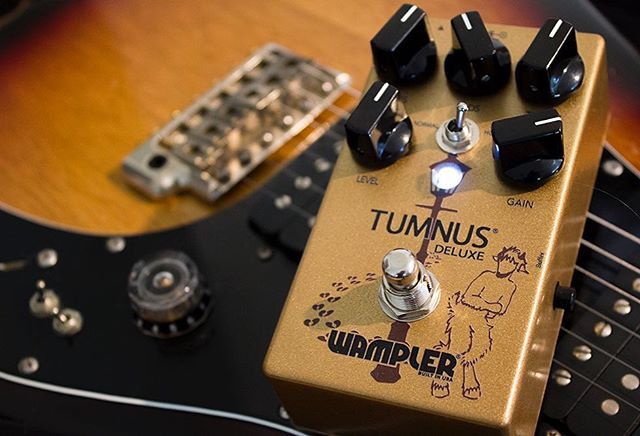 How fuzz pedals interact with your guitar's volume and tone controlsFuzz pedals respond to your guitar's controls in ways overdrive and distortion don't. Here's what's actually happening in the circuit, and how to use it.
- Acoustic guitar top woods explained: what spruce, cedar and mahogany actually doSpruce, cedar, mahogany — the soundboard wood shapes everything about how an acoustic guitar responds. Here's what each actually does to your tone.
- Fuzz into overdrive vs overdrive into fuzz: does the order actually matter?Stack a fuzz and an overdrive and the order matters enormously. Martin breaks down what each combination actually does to your tone.
- How clipping works in overdrive and distortion pedalsHard clipping, soft clipping, asymmetric clipping — what's actually happening inside your dirt pedal, and why it changes how your tone feels.