How clipping works in overdrive and distortion pedals
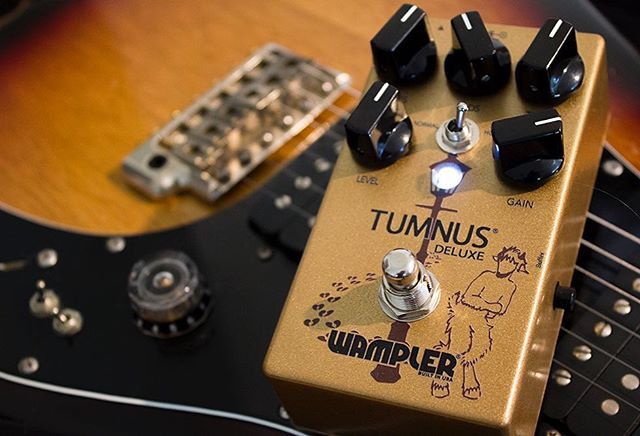
Pull the lid off almost any overdrive or distortion pedal and you'll find something deceptively simple at the heart of it: a clipping stage. Two or three components, doing something violent to your guitar signal. Everything else — the tone stack, the output buffer, the fancy relay-switching — is decoration. The clipping is the personality.
I've spent a lot of late nights poking around circuits with a multimeter and a probe, mostly because I can't leave things alone. And the single question I get asked most often, whether it's at a gig or in the comments on a previous piece, is some version of: "why do some overdrives feel smooth and others feel spiky?" The answer is almost always clipping topology. So let's go through it properly.
What clipping actually means
Your guitar outputs an AC waveform — a smooth, roughly sinusoidal signal that rises and falls as the string vibrates. Amplify that signal and eventually you run out of headroom: the circuit can't reproduce the peaks of the wave any more, so it cuts them off. That's clipping. The top and bottom of the sine wave get flattened, and what was a smooth curve becomes something closer to a square wave.
Square waves are rich in odd-order harmonics. That's where the harmonic content of distortion comes from. The harder and more abruptly the wave gets clipped, the more aggressive and harmonically dense the result. The softer and more gradually it's clipped, the warmer and more compressed the feel.
Hard clipping vs soft clipping
Hard clipping happens when the signal is clipped against a fixed voltage rail — typically by running diodes to ground, or simply by smashing the signal into the supply voltage ceiling of an op-amp. The transition from "wave" to "flat" is abrupt. The Boss DS-1 (check price) and the ProCo RAT 2 (check price) both use hard clipping configurations, which is a big part of why they have that compressed, aggressive character. Turn the gain up on a RAT and the waveform is nearly a square wave. There's a reason it cuts through a dense mix.
Soft clipping uses diodes in the feedback loop of an op-amp rather than to ground. The diodes start to conduct gradually as the signal exceeds a certain threshold, which means the transition into clipping is progressive rather than sudden. The result feels more dynamic — it responds to pick attack more, compresses less brutally, and generally sounds more "amp-like." The Ibanez TS9 Tube Screamer is the canonical example. That warm, mid-pushed character everyone associates with it comes directly from the soft-clipping stage using a pair of 1N914 silicon diodes in the feedback loop of the JRC4558 op-amp.
Neither is better. Hard clipping sustains longer, sits in a mix more easily, handles high-gain without getting flabby. Soft clipping feels more responsive under the fingers. Different tools.
Asymmetric clipping and why it matters for feel
Most people understand hard vs soft. Fewer people think about asymmetric clipping, and it's actually fascinating once you start hearing it.
Symmetric clipping clips the positive and negative half-cycles of the waveform equally. Asymmetric clipping clips them differently — one side harder than the other. You can achieve this by pairing different diodes: a silicon diode on one side and a germanium diode on the other, for instance, or different numbers of diodes. The voltage drop across a silicon diode is around 0.6–0.7V; germanium runs closer to 0.3V. Pair one of each and the waveform gets carved unevenly.
Why does that matter? Symmetric clipping produces primarily odd-order harmonics (3rd, 5th, 7th). Asymmetric clipping introduces even-order harmonics as well. Even-order harmonics — particularly the 2nd and 4th — are what we associate with valve amp character. They're the "warmth." So asymmetric clipping is one way a solid-state pedal can produce something that genuinely feels more valve-like under the fingers. The Fulltone OCD (check price) uses asymmetric clipping in its HP mode, which is part of what gives it that slightly odd, almost germanium-ish bloom at lower gain settings.
Where the clipping lives in the circuit
One thing that often gets overlooked: the clipping stage's position relative to the tone stack changes the character significantly. Some pedals (the TS9 being the classic) clip first, then run through a passive tone filter. Others run the tone stack before the clipping stage, which means different frequencies are getting distorted at different intensities. And some — particularly higher-gain distortion pedals — run multiple gain and clipping stages in series, each one doing a bit more damage to the signal than the last.
That multi-stage architecture is why a full-blown distortion pedal at moderate gain settings often sounds and feels nothing like an overdrive at the same apparent volume. The signal has been through more processing, more filtering, more saturation. It's been through the wringer. I'd argue this is actually the most underappreciated difference between the two categories — not the total amount of gain on tap, but the architecture. You can find a deeper breakdown of where the categories blur in our piece on the best overdrive and distortion pedals, if you want somewhere to go next.
Clipping and your amp's clean headroom
This is the practical bit, because understanding clipping topology only matters if you can hear the difference through your rig.
Soft-clipping overdrives — your Tube Screamers, your Klons, your Wampler Tumnus types — are generally designed to work with an amp that's already contributing some harmonic complexity. They push the front end of a valve amp into further saturation rather than doing all the work themselves. Put one into a very clean, high-headroom solid-state amp and it can sound thin. The pedal is designed to finish a sentence the amp starts.
Hard-clipping distortions are more self-contained. They do the heavy lifting in the pedal, and the amp is mostly just a power stage and speaker. Which is why so much 80s and 90s metal was recorded through a DS-1 or a RAT into a near-clean amp — you had total control over the distortion character without the amp's preamp tubes adding their own agenda.
If you're running a valve amp and want to understand how it interacts with dirt pedals at the front end, our piece on the best tube amps under $1000 has notes on clean headroom for each model. That context matters more than most people realise when you're choosing between a soft-clipper and a hard one.
The diode swap rabbit hole
Right. I have to mention this, because it's genuinely interesting and I've lost entire weekends to it.
Many simple clipping stages use through-hole diodes that are trivially easy to swap out. The TS9, the DS-1, the Boss SD-1 (check price) — all of them. Different diodes clip at different thresholds and with different characters. LEDs clip at a higher voltage than silicon diodes, which means they clip later and less aggressively, producing a cleaner, more open sound with more perceived headroom. Schottky diodes have a very low forward voltage, so they clip early and soft. Germanium diodes are somewhere between silicon and Schottky.
I've modded probably thirty pedals over the years, mostly as a way of understanding what I'm actually hearing. My current favourite is an old DS-1 with LEDs in the clipping stage — it becomes a completely different pedal, almost more of a hard-edged overdrive than a distortion, and it stacks beautifully in front of reverb without turning into a wall of fizz. Which, given my board, matters quite a bit.
You don't need to mod anything to benefit from understanding this, though. Even just knowing whether a pedal uses hard or soft clipping, and whether it's symmetric or asymmetric, tells you a huge amount about how it'll behave before you've heard a single note through it.
— Martin, Pedals & Effects EditorCommon questions
- What's the difference between hard and soft clipping in a pedal?
- Hard clipping cuts the waveform abruptly against a fixed voltage rail, producing a compressed, aggressive character with strong odd-order harmonics. Soft clipping clips gradually through diodes in an op-amp's feedback loop, giving a more dynamic, responsive feel that reacts to pick attack. Distortion pedals typically use hard clipping; overdrives more often use soft clipping.
- Why do some overdrives feel warmer than distortion pedals even at similar gain levels?
- A lot of it comes down to clipping architecture. Soft-clipping overdrives introduce more even-order harmonics (particularly 2nd and 4th), which are what we associate with valve amp warmth. Hard-clipping distortions produce more odd-order harmonics, which sound harsher and more compressed. Asymmetric clipping — where each half of the waveform clips differently — is another way pedal designers introduce that warmer, valve-like quality.
- Can I change the clipping character of a pedal without buying a new one?
- In many cases, yes. Pedals with through-hole diodes in the clipping stage — the Boss DS-1, the Ibanez TS9, the Boss SD-1 and others — are relatively easy to modify by swapping the diodes. LEDs clip later and more openly; Schottky diodes clip earlier and softer; germanium diodes sit between silicon and Schottky in character. That said, always check a reliable mod resource before touching anything, and know that modding typically voids any warranty.
- Does the clipping type matter less if I'm running into a high-gain amp channel?
- Yes, significantly. When you're stacking a dirt pedal into an already saturated amp channel, the amp's preamp is doing its own clipping on top of whatever the pedal did. At that point, the pedal's clipping topology has less influence on the final character — you're more likely to just be adding gain and compression. In that context, a simple boost or a low-gain overdrive with a tight low-end response will often do more useful work than a heavy distortion pedal.
I'm Martin, and I have a problem (it's pedals). I play ambient and post-rock — big washes of reverb, delays into delays, the kind of pedalboard that needs its own roadie — so effects are where I live. I love going down the rabbit hole on a circuit: what's the buffer doing, how does it stack, what happens at the extremes of the knobs nobody dares turn? My reviews tend to wander, because that's how you actually find the magic in a box. I'll always show you the weird, useful corners.
Ambient/post-rock guitarist and lifelong pedal collector
More from Martin
 How swell and volume-swell technique changes what you need from reverb and delayVolume swells aren't just a playing trick — they fundamentally change how reverb and delay pedals behave. Here's what to look for in your effects chain.
- Guitar string winding types explained: roundwound, flatwound and halfwoundRoundwound, flatwound, halfwound — string winding affects tone, feel and how your pedals respond. Martin explains what's actually going on.
- How fuzz pedals interact with your guitar's volume and tone controlsFuzz pedals respond to your guitar's controls in ways overdrive and distortion don't. Here's what's actually happening in the circuit, and how to use it.
- Acoustic guitar top woods explained: what spruce, cedar and mahogany actually doSpruce, cedar, mahogany — the soundboard wood shapes everything about how an acoustic guitar responds. Here's what each actually does to your tone.
- Fuzz into overdrive vs overdrive into fuzz: does the order actually matter?Stack a fuzz and an overdrive and the order matters enormously. Martin breaks down what each combination actually does to your tone.
- How looping practice changes what you want from your effects pedalsRegular looper use rewires how you hear your own playing — and quietly exposes every weakness in your effects chain. Here's what it taught me.