Fuzz into overdrive vs overdrive into fuzz: does the order actually matter?
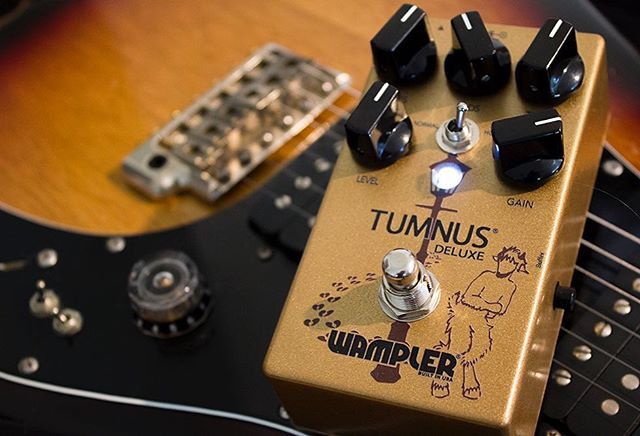
Two pedals. Same two pedals. One cable swap. And suddenly you've got a completely different instrument under your fingers. I've spent more time than I'd like to admit on the floor of my spare room in Bristol, swapping leads between a fuzz and an overdrive, just to confirm what I already knew and then be surprised anyway.
This combination — fuzz and overdrive together — is one of those stacking questions that comes up constantly, and the short version is: yes, the order matters enormously, and no, there isn't a universally correct answer. But there is a logic to it, and once you hear it you can't unhear it.
What each pedal is actually doing in the chain
Before we get into the ordering business, it helps to remember what these two pedal types are doing differently. An overdrive — something like the Ibanez TS9 (check price) or a Boss SD-1 (check price) — is, at its heart, a soft clipper. It compresses and rounds off the signal asymmetrically, pushing harmonics in a way that's meant to feel amp-like. It responds to your input level. Play softly, you get less distortion; dig in, you get more.
A fuzz is a different beast altogether. Whether it's a silicon circuit like the Dunlop Fuzz Face Mini (check price), or a Big Muff-style op-amp affair like the EHX Big Muff Pi (check price), the signal is being hard-clipped and often squared off aggressively. The fuzz doesn't really care about subtle input dynamics in the same way. It's converting your guitar signal into something approaching a square wave, or at least a very mangled version of itself.
So when you stack them, the question is: which pedal receives a clean signal from your guitar, and which pedal is processing something that's already been chewed up?
Overdrive first, fuzz second
Running overdrive into fuzz — guitar into OD, then into fuzz — is the wilder configuration. The fuzz is receiving a signal that's already had its harmonics pushed and its transients softened. What comes out the other end is dense, often huge, and not always controllable. On a Big Muff this combination can produce a wall of sustain that just refuses to decay. On a Fuzz Face-style circuit it gets chaotic pretty fast, because those circuits are sensitive to input impedance and a buffered overdrive pedal in front can fundamentally change how the fuzz reacts.
This is where it gets interesting for me. I run a Z.Vex Fuzz Factory (check price) occasionally (yes, I know), and putting almost anything buffered before it does strange things. The Fuzz Factory is already at the extreme end of interactive and input-sensitive fuzz behaviour. Drive something hot into it and you're either getting a screaming gated blurt or a kind of velcro-textured chaos that's either brilliant or unusable depending on the song. Worth exploring. Probably not your first option.
For more stable fuzzes — the Green Russian Big Muff, for instance, which is a fairly forgiving circuit — overdrive into fuzz can actually thicken up the low-mid frequencies in a useful way. The overdrive's mid push gets folded into the fuzz's sustain and you end up with a sound that's fatter than either pedal alone.
Fuzz first, overdrive second
This is the more predictable and, honestly, more musical combination for most situations. The fuzz handles the initial character of the sound — the wooliness, the compression, the harmonic texture — and then the overdrive acts almost like an EQ and gain-shaping tool on top of it.
A Tube Screamer after a Big Muff, for example, tightens the low end and brings some mid-range presence forward. This is a genuinely useful trick. The Big Muff on its own can be a bit scooped and flubby; the TS9 after it adds definition without stripping the fuzz of its character. A lot of players use exactly this combination for lead tones where they need the fuzz sustain but also want to cut through a band.
Fuzz first also tends to be more stable when you're using a True Bypass fuzz — and many classic fuzz circuits are — because the overdrive's input buffer then sits downstream and doesn't interact with the fuzz's impedance sensitivity. You get the fuzz behaving the way it was designed to, and then the overdrive doing its thing to a stable, fuzz-processed signal.
The buffer problem with vintage-style fuzzes
This is the thing that trips people up most. Germanium Fuzz Face-style circuits — and quite a few silicon ones — were designed to be fed directly from the guitar's pickups, without any buffered pedal in front. The pickup's output impedance is part of the circuit. Put a buffered pedal before one of these fuzzes and the tone often goes thin, harsh, and wrong. The fuzz loses its bloom and warmth.
So if your overdrive is buffered (Boss pedals, for instance, are all buffered bypass), putting it before a germanium fuzz will likely cause you problems. You've got a few options: put the fuzz first anyway (making the question somewhat moot), use a True Bypass overdrive, or run a dedicated buffer with adjustable output impedance before the fuzz — which is a rabbit hole I've certainly been down at 11pm on a Tuesday.
This is also why pedalboard order advice that doesn't account for True Bypass vs buffered bypass is only half the story. The electrical behaviour matters as much as the signal flow logic. You can find a decent overview of that in our piece on the best fuzz pedals, which touches on circuit types and what to look for.
When to use both at once vs just one
Worth saying plainly: for most rhythm playing, running two clipping/distortion pedals simultaneously is going to create more mud than magic. Stacking works best for lead tones, or in a band context where you need to fill space. At home, with headphones, two heavy pedals simultaneously often just sounds like noise. I'd argue more players should get to know each pedal individually, in depth, before reaching for the stack — and that includes me, if I'm being honest about my early years.
For anyone building out their first dirt setup, our overdrive and distortion buyer's guide is a sensible place to start before adding fuzz into the equation.
Practical starting points
If I were setting up a board today with both types and wanted a reliable starting point: fuzz first, overdrive second, fuzz at moderate settings so it's not completely obliterating the dynamics, overdrive at low gain to add body and presence. That gives you a sound you can work with, and you can push from there.
Then — once you know how that sounds — try it the other way. Swap the leads. See what happens. The creative configurations often live in that second pass, the one where something goes slightly wrong and you think, oh, actually that's interesting.
Pedal order is one of those areas where the rules exist to be understood and then bent. Understanding why overdrive into fuzz gets unruly with a buffered circuit means you can decide to do it anyway, on purpose, for the chaos. That's a better place to be than just wondering why it sounds weird.
Common questions
- Does it matter whether I use True Bypass or buffered overdrive when stacking with fuzz?
- Yes, significantly. Vintage-style germanium fuzz pedals and many Fuzz Face-style circuits are sensitive to what's in front of them. A buffered pedal (like most Boss pedals) feeding directly into one of these fuzzes can make the tone go thin and harsh. If you're running an overdrive before a Fuzz Face-style circuit, True Bypass or a dedicated buffer with adjustable impedance will usually give you better results.
- Which order gives a bigger, fatter tone — fuzz into overdrive, or overdrive into fuzz?
- Overdrive into fuzz tends to produce a denser, more saturated sound because the fuzz is receiving a signal that's already been harmonically enriched. On Big Muff-style circuits this can create a very wide, sustained wall of tone. Fuzz into overdrive is generally tighter and more controlled, with the overdrive helping define the mid-range on top of the fuzz character.
- Can I run three pedals — fuzz, overdrive, and distortion — all at once?
- You can, but it's rarely musical in practice. Three clipping stages simultaneously tend to collapse into a wash of indistinct saturation. Most players use combinations of two dirt pedals for specific lead tones rather than all three at once. Getting to know each pedal individually first is genuinely worth the time.
I'm Martin, and I have a problem (it's pedals). I play ambient and post-rock — big washes of reverb, delays into delays, the kind of pedalboard that needs its own roadie — so effects are where I live. I love going down the rabbit hole on a circuit: what's the buffer doing, how does it stack, what happens at the extremes of the knobs nobody dares turn? My reviews tend to wander, because that's how you actually find the magic in a box. I'll always show you the weird, useful corners.
Ambient/post-rock guitarist and lifelong pedal collector
More from Martin
 How swell and volume-swell technique changes what you need from reverb and delayVolume swells aren't just a playing trick — they fundamentally change how reverb and delay pedals behave. Here's what to look for in your effects chain.
- Guitar string winding types explained: roundwound, flatwound and halfwoundRoundwound, flatwound, halfwound — string winding affects tone, feel and how your pedals respond. Martin explains what's actually going on.
- How fuzz pedals interact with your guitar's volume and tone controlsFuzz pedals respond to your guitar's controls in ways overdrive and distortion don't. Here's what's actually happening in the circuit, and how to use it.
- Acoustic guitar top woods explained: what spruce, cedar and mahogany actually doSpruce, cedar, mahogany — the soundboard wood shapes everything about how an acoustic guitar responds. Here's what each actually does to your tone.
- How looping practice changes what you want from your effects pedalsRegular looper use rewires how you hear your own playing — and quietly exposes every weakness in your effects chain. Here's what it taught me.
- How clipping works in overdrive and distortion pedalsHard clipping, soft clipping, asymmetric clipping — what's actually happening inside your dirt pedal, and why it changes how your tone feels.