How fuzz pedals interact with your guitar's volume and tone controls
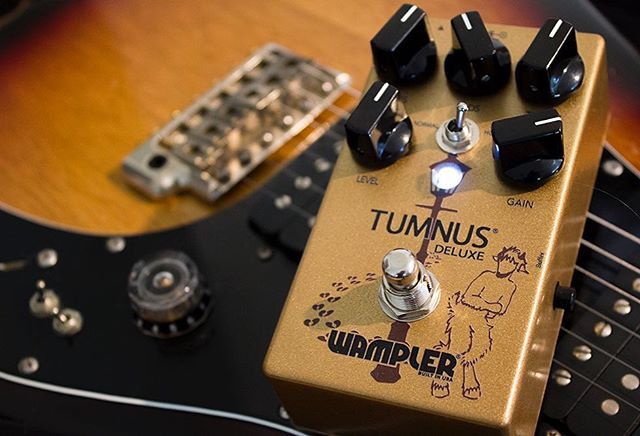
Three weeks ago I was messing about at a rehearsal space on Richmond Road in Bristol — small room, low ceiling, the kind of place where you can actually hear what your pedals are doing — and I watched someone roll back their guitar's volume knob to clean up their fuzz. Their fuzz got louder. They looked at the knob like it had personally wronged them.
That moment is why this article exists. Fuzz pedals do not behave like other dirt. They are, at their core, rude circuits. And your guitar's volume and tone controls don't just adjust level and brightness through a fuzz — they fundamentally reshape the character of the effect. Once you understand why, you get access to a whole extra dimension of sounds without buying a single additional box.
Why fuzz pedals care so much about impedance
Most overdrive and distortion pedals have a buffer or a high-impedance input stage that essentially decouples them from the guitar. Roll your volume pot down, the signal drops, the pedal responds by producing less distortion. Clean-up. Simple.
Old germanium fuzz circuits — the Fuzz Face topology being the classic example — don't do that. They present a very low input impedance, often somewhere around 10kΩ or less. Your guitar's pickups and the pot values in your volume and tone controls form a filter network with that input. Change the pot position, and you're genuinely changing the frequency content hitting the transistors before any clipping happens. The pedal is inside your guitar's passive circuit, essentially. It's a strange and wonderful situation.
Silicon fuzz circuits are less extreme — they typically have a higher input impedance — but many still exhibit this interactive behaviour to some degree, because they were designed to work with a guitar plugged straight in, no buffer in the way.
The volume knob as a fuzz intensity control
On a germanium Fuzz Face-style circuit, rolling the guitar volume back doesn't just reduce gain the way you might expect. Because the pot's position is filtering the signal before it reaches the transistors, what you actually get is a change in the harmonic character of the fuzz — less sustain, fewer upper-order harmonics, a fuzz that starts to sound more like a slightly dirty, crunchy overdrive. At around 7 or 8 on most guitars you hit a sweet spot where the fuzz opens up into something almost amp-like rather than full-on woolly. Below that it cleans up further. At 10 you get the full, saturated fuzz.
So in practice: one fuzz pedal, guitar volume at 10 for the big washes during the chorus, roll back to 6 or 7 for the verse where you want grit without chaos. That's a genuinely usable dynamic range that has nothing to do with your amp's volume or your picking attack. I've had gigs where the fuzz knob on the pedal itself never moved once all night — the guitar volume did all the work.
Worth reading alongside this: our article on fuzz pedal circuit types explained, which covers why germanium and silicon transistors produce such different saturation characters. The impedance sensitivity varies significantly between them.
The tone knob does something more interesting than you'd think
Most guitarists treat the tone knob as a crude treble-cut and leave it at 10 (or remove it entirely, which, fine, I get it). Through a fuzz, though, rolling the tone back affects not just the frequency balance but the feel of the saturation. High-frequency content reaching a fuzz transistor before clipping produces a particular kind of harsh, spitty edge. Filter some of that out with your tone control and the fuzz cleans up in a different way to the volume knob — it becomes warmer, more sustained, the clipping edges are softer. It shifts from a Hendrix-style rasp toward something more like a Big Muff (check price) sustain.
Combine partial tone rollback with partial volume rollback and you've got a completely different third texture. And again, this is foot-accessible if you set the knob position and then use your guitar controls live. Some players wire a push-pull pot to do this instantly. I'll admit I went down a two-hour rabbit hole on that once and forgot entirely that I was supposed to be rehearsing.
The buffer problem — and why pedal order matters here
If you put a buffered pedal before your fuzz — a Boss tuner, a Tube Screamer (check price) in bypass, anything with an active buffer on the true-bypass switch — you've essentially changed the impedance relationship. The fuzz now sees a low-impedance source rather than your guitar's pickups directly. The result: the interactive cleanup trick doesn't work properly anymore. The fuzz goes from a complex, responsive circuit to something that just sits at one level of saturation. Cleaner, more predictable, but you've lost the touch-sensitivity.
This is the core reason fuzz-first is the traditional advice. Not because of noise, not because of signal level — because placing the fuzz directly after the guitar preserves the impedance relationship that makes it behave like a fuzz rather than a generic distortion box.
If you need a tuner before the fuzz, look for one with a high-impedance input or a specific "fuzz-friendly" mode. Some modern fuzz pedals also include an internal input buffer that you can engage when using them later in the chain, which sidesteps the problem neatly.
More on why this matters for your broader board: our piece on fuzz into overdrive vs overdrive into fuzz covers the stacking implications in detail.
What this means for different fuzz types
Not all fuzz circuits are equally sensitive to your controls. A quick breakdown:
- Germanium Fuzz Face clones — most interactive. Volume rollback cleanup is dramatic and musical. Worth spending real time here.
- Silicon Fuzz Face clones (like the Dunlop Fuzz Face Mini Silicon (check price)) — still interactive, but less so. The cleanup is a bit more abrupt, the character shifts are less gradual.
- Big Muff variants — relatively immune to volume rollback cleanup because of the clipping stage topology. You'll lose some saturation, but the character doesn't transform the same way.
- Gated/velcro fuzzes (the Z.Vex Fuzz Factory being the obvious example) — extremely sensitive to guitar volume in a different way. Certain volume positions will gate, stutter or completely die. In a controlled context this is a feature, not a bug.
I'd argue that most people buy a second fuzz when they should just be exploring what their existing one does at different pot positions. That's not a popular opinion among people who sell pedals, but there it is.
Using this in practice — starting points
Set your fuzz at what sounds right with the guitar's volume fully up. That's your base. Then slowly roll the volume back and note the point where the character changes most noticeably — for Fuzz Face types it's usually around 6-7 on a standard 500k pot setup. Mark that mentally, or physically mark your guitar knob. Now you've got a foot-free texture shift available at any moment.
For the tone control: start at 7 rather than 10. You might prefer the character. You might not. But try it before you assume full brightness is always correct.
And if you haven't heard the fuzz with the volume at 3 — just quietly picking through it while the amp is up — do that now. Some of the most beautiful, broken sounds are sitting right there, being ignored.
For more on building a pedal chain around a fuzz, our fuzz pedal buyer's guide covers the current field in decent depth, including which circuits are most interactive if this kind of control-play appeals to you.
— Martin, Pedals & Effects Editor
Common questions
- Why does rolling back my guitar volume make my fuzz louder sometimes?
- Certain fuzz circuits — particularly germanium Fuzz Face types — are extremely sensitive to the impedance presented by your guitar's volume pot. At certain positions, the pot's resistance changes the frequency content hitting the transistors, which can affect perceived loudness and saturation in unexpected ways. It's the circuit responding to the filter network your pot creates, not a simple volume reduction.
- Do I need to put the fuzz first in my signal chain?
- For vintage-style germanium and silicon Fuzz Face circuits, yes — placing the fuzz directly after your guitar (with no buffered pedals before it) preserves the impedance relationship that gives these pedals their interactive, cleanup behaviour. Buffered pedals before the fuzz change the source impedance and the fuzz loses much of that responsiveness. Big Muff-style fuzzes are less sensitive to this and can sit later in the chain more comfortably.
- Will my guitar's pot values affect how the fuzz interacts with my controls?
- Yes, significantly. A guitar with 500k pots will interact differently with a Fuzz Face circuit than one with 250k pots. Higher pot values pass more high frequencies through to the fuzz, which generally produces a brighter, more aggressive fuzz character. Lower values roll off treble before the signal hits the pedal. If you're finding your fuzz too bright or too dark, the pot values in your guitar are part of that equation.
I'm Martin, and I have a problem (it's pedals). I play ambient and post-rock — big washes of reverb, delays into delays, the kind of pedalboard that needs its own roadie — so effects are where I live. I love going down the rabbit hole on a circuit: what's the buffer doing, how does it stack, what happens at the extremes of the knobs nobody dares turn? My reviews tend to wander, because that's how you actually find the magic in a box. I'll always show you the weird, useful corners.
Ambient/post-rock guitarist and lifelong pedal collector
More from Martin
 How swell and volume-swell technique changes what you need from reverb and delayVolume swells aren't just a playing trick — they fundamentally change how reverb and delay pedals behave. Here's what to look for in your effects chain.
- Guitar string winding types explained: roundwound, flatwound and halfwoundRoundwound, flatwound, halfwound — string winding affects tone, feel and how your pedals respond. Martin explains what's actually going on.
- Acoustic guitar top woods explained: what spruce, cedar and mahogany actually doSpruce, cedar, mahogany — the soundboard wood shapes everything about how an acoustic guitar responds. Here's what each actually does to your tone.
- Fuzz into overdrive vs overdrive into fuzz: does the order actually matter?Stack a fuzz and an overdrive and the order matters enormously. Martin breaks down what each combination actually does to your tone.
- How looping practice changes what you want from your effects pedalsRegular looper use rewires how you hear your own playing — and quietly exposes every weakness in your effects chain. Here's what it taught me.
- How clipping works in overdrive and distortion pedalsHard clipping, soft clipping, asymmetric clipping — what's actually happening inside your dirt pedal, and why it changes how your tone feels.