How overdrive pedals interact with your guitar's volume knob
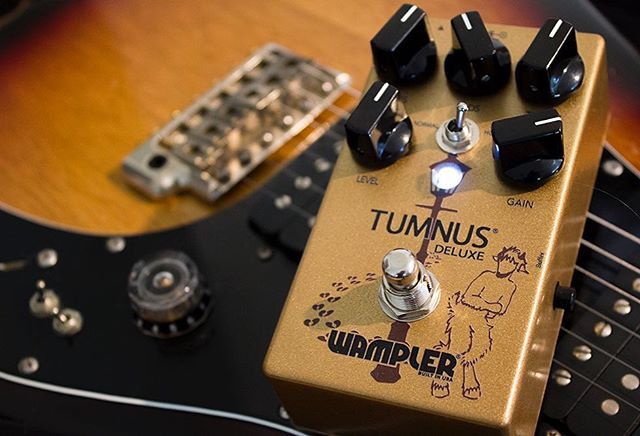
Most guitarists reach for the volume knob to go from loud to quiet, then stop there. That's a shame, because between zero and ten on that knob — especially with a good overdrive in front of you — there's a complete tonal palette that a lot of players never actually explore.
I came to this late, if I'm honest. Conservatory training doesn't exactly prepare you for the interaction between a cheap potentiometer and a germanium clipping stage. My first serious encounter with it was during a session at a studio on West 28th Street in Manhattan, watching a rhythm guitarist roll back to about seven on a Les Paul and suddenly find a midrange bloom that made everything sit perfectly in the mix. He hadn't touched the pedal. The pedal hadn't changed. The guitar's volume control had done all the work.
Why the volume knob matters more with overdrive than without it
When you play clean — no pedal, amp running flat — rolling your volume back just makes things quieter. A little tone shift, perhaps, from the way the potentiometer interacts with your pickup's inductance, but broadly: less signal, less volume.
Put an overdrive pedal in the chain and the relationship changes entirely. An overdrive responds to the level of the signal hitting it. Roll your guitar back to six or seven, and you're sending less voltage into the pedal's input stage. The pedal clips less aggressively. Harmonics soften. The breakup becomes more restrained — less compression, more note definition. Keep picking hard and you can still push it into dirt; ease off and it opens up to something close to clean. The playing dynamic is still there. You've just widened the window it operates in.
This is quite different from turning the drive knob down on the pedal itself. The drive control shapes how the circuit clips internally. The guitar volume shapes how hard you're hitting that circuit in the first place. They sound different because they are different.
Low-output and high-output pickups respond very differently
A guitar with vintage-spec single-coil pickups — something in the 6k–7k ohm range — starts the interaction from a lower baseline. Roll back to seven and you're asking a modest signal to become even more modest. With a pedal like the Ibanez TS9 (check price), which is voiced to boost mids and compress gently, this combination can be beautiful: light, singing, touch-sensitive. Roll to ten and it sings more. Roll to six and it breathes. There's genuine dynamic range across the dial.
Higher-output humbuckers are a different story. A full-on bridge humbucker can push an overdrive into fairly compressed saturation even at eight on the volume. Which isn't always wrong — sometimes that's exactly the density you want. But it does mean you need to roll back further to access the cleaner registers, and the taper of your volume pot starts to matter. Audio-taper pots feel more even through the rotation. Linear-taper pots, which appear in some guitars from the factory, tend to stay full-on until about four, then drop off sharply — not ideal for this kind of work.
Worth checking what your guitar actually has. It's not glamorous information but it's genuinely useful.
The tone knob is part of this too
I should mention the tone control, because guitarists often ignore it entirely once they find a sound they like. But the tone knob and the volume knob interact in ways that affect how your overdrive reads the signal.
Rolling your tone back removes high-frequency content before it reaches the pedal. Some overdrives — the Fulltone OCD (check price) is a good example — are quite responsive to treble content in the input signal. Feed them a warmer signal and the character shifts; you get a rounder, less aggressive break-up. Add treble back and it gets more present and defined. This isn't always desirable — sometimes you want the pedal to respond purely to your playing and let the amp handle the EQ. But if you're getting brittleness at the top end, the tone pot is worth considering before you start adjusting the pedal.
Practical approaches worth trying
Set your overdrive for a rhythm sound you like at full guitar volume. Now just back the volume to about seven without touching anything else. That's often a very usable clean-up: still warm, still with a bit of body, but without the full saturation. From there you can play into the dynamics — dig in for grit, ease off for clarity — without ever bending down to the floor.
Some players set their amp for a slightly pushed clean tone and use the guitar volume to move between clean, edge-of-breakup, and light overdrive with a single pedal always on. If your amp responds to input level — and most valve amps do, as we've covered in our roundup of tube amps under $1000 — the guitar volume becomes even more expressive, because you're shaping both the pedal and the amp's input stage simultaneously.
I'd argue this approach gives you more musical flexibility than stacking a second pedal for a minor level change. That's not a knock on stacking — it has its place — but there's a tidiness to doing more with less that appeals to me.
Why some pedals respond better than others
Not every overdrive is equally responsive to input level. Pedals built around hard-clipping diodes — think along the lines of the Boss DS-1 (check price) — tend to have a more compressed, consistent character across a range of input levels. The clipping is abrupt rather than gradual. Rolling your guitar back makes things quieter, but doesn't produce the same textural shift you'd get from a soft-clipping design.
Soft-clipping circuits, including most Tube Screamer variants and a number of transparent overdrive designs, are where volume-knob interaction really shines. The clipping onset is gentler, the transition from clean to driven is more gradual, and those are exactly the conditions where your guitar's output level makes the most difference. If you're exploring this territory, those are the pedals to start with. Our overdrive and distortion buying guide has a decent breakdown of which circuits fall where.
There's no single right way to use any of this. But if you've been treating your guitar volume as a binary — full on, or off — you're leaving a substantial amount of expressiveness on the table. The knob is there. The pedal is already responding to it. The only thing required is to start actually listening to what happens when you move it.
— Marc, Jazz & Clean-Tone Contributor
Common questions
- Does rolling back my guitar volume actually clean up an overdrive pedal?
- Yes, with most soft-clipping overdrive designs. Reducing the signal level hitting the pedal means the circuit clips less aggressively, which produces a cleaner, more open tone. The effect is most pronounced with transparent and Tube Screamer-style overdrives rather than hard-clipping distortions.
- What's the difference between turning down my guitar volume and turning down the drive knob on the pedal?
- They produce different results. The drive knob adjusts how much gain is happening inside the pedal's circuit. Your guitar volume controls how hard the signal hits that circuit from the front. Rolling your volume back preserves more of the pedal's tonal character while reducing the clipping intensity; turning the drive knob changes the circuit's behaviour altogether.
- Does my volume pot type (audio vs linear taper) affect how this works?
- It does. Audio-taper (also called logarithmic) pots feel more evenly distributed across the rotation, which makes subtle volume adjustments easier. Linear-taper pots tend to stay near-maximum for most of the dial, then drop off sharply at the lower end. For using the volume knob expressively with an overdrive, an audio-taper pot is generally preferable.
- Will my tone knob affect how an overdrive pedal responds?
- Yes. Rolling the tone knob back removes high-frequency content before it reaches the pedal. Many overdrives respond to treble in the input signal, so a warmer signal can produce a rounder, less aggressive breakup. This can be useful if you're getting brittleness or harshness from the pedal.
I'm Marc. My background is jazz — conservatory training, years of session work, and a long-standing love affair with hollowbody archtops and a clean, articulate tone. I think about gear the way I think about voicings: every component shifts the colour of the whole. I'm drawn to instruments that reward a light touch and reveal what your hands are actually doing. You won't find hyperbole in my reviews; you'll find careful listening, and an honest account of how a guitar or amp behaves when you ask something musical of it.
Conservatory-trained jazz guitarist and session musician
More from Marc
 How nut slot depth affects your guitar's tone, tuning and playabilityNut slot depth is one of the least discussed setup variables — and one of the most consequential. Here's what it actually does to your tone, intonation and feel.
- Delay feedback and decay: what those two knobs actually do to your toneFeedback and decay are the most misunderstood controls on any delay pedal. Marc breaks down what they actually do — and how to use them musically.
- Amp wattage explained: what it actually means for your tone and volumeWattage isn't just a volume number — it shapes how an amp breaks up, breathes, and responds. Marc explains what the specs actually mean.
- How fuzz pedals behave with humbuckers vs single-coilsHumbuckers and single-coils don't just sound different through a fuzz — they change how the circuit behaves entirely. Here's what's actually happening.
- How to set delay and reverb so they work together, not against each otherRunning delay and reverb on the same signal can blur into mush fast. Here's how to set each so they complement each other and keep your tone clear.
- How right-hand tone production shapes your gear choicesYour picking hand does more than keep time. Here's how subtle changes in right-hand technique directly inform which guitars, amps and pedals will actually work for you.