Amp wattage explained: what it actually means for your tone and volume
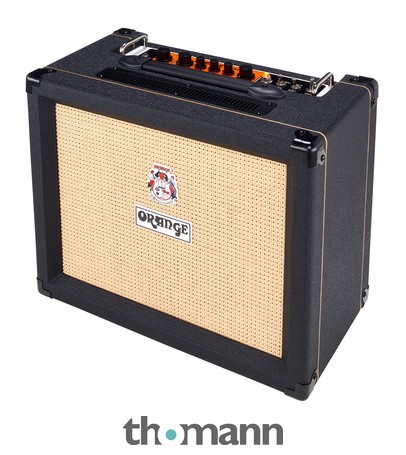
Guitarists ask about wattage constantly, and they almost always misread what the number means. It's a power rating, not a volume dial. A 15-watt valve amp sitting in a quiet rehearsal room can be genuinely painful at full tilt; a 100-watt solid-state combo at two-thirds might feel almost polite. The wattage figure tells you something, but not what most people expect it to tell them.
The logarithmic reality nobody mentions
Sound pressure doesn't scale the way the numbers suggest. To double your perceived volume, you need roughly ten times the wattage. So a 50-watt amp is not twice as loud as a 25-watt amp — it's perceptibly louder, yes, but only by a margin. The step from 5 watts to 50 watts is enormous; the step from 50 to 100 is barely a nudge in a live room. The decibel scale is logarithmic, and once you internalise that, the whole conversation about wattage shifts.
What the wattage actually governs is headroom: how much clean signal the amp can push before the power stage starts to saturate. High-headroom amps stay clean at volumes that would drive a lower-wattage amp into breakup. Whether that's good or bad depends entirely on what you're after.
Why low-wattage valve amps are attractive for clean tone
I'll be honest — I came to this question backwards. Most of my working life I played through larger amps: a twin-reverb-style 85-watt combo, occasionally a 30-watt head through a single 12. Plenty of headroom, a very open sound. Then a session at a small studio on West 30th Street introduced me to a 5-watt valve combo turned up to around seven, and the way the amp breathed around the notes changed my thinking considerably.
Low-wattage valve amps — anything from 1 to 15 watts, roughly — reach their natural compression and harmonic saturation at volumes you can actually use in a home or small-studio context. The power tubes are working hard. That slight rounding at the pick attack, the way sustained notes swell a little and then decay gracefully, isn't something you add with a pedal. It's the amp doing what it was built to do at the right operating point. For anyone who wants a touch of organic give without heavy distortion, a 5 or 10-watt valve amp turned up is often more useful than a 40-watt amp kept at low volume.
The Orange Rocker 15 (check price) is a decent illustration of this principle — it has a switchable wattage function precisely because players want access to that power-stage character at manageable volumes.
High headroom and the case for bigger amps
There is a real counterargument, and it deserves space. A clean, articulate tone — the kind that works for jazz, fingerstyle, or any situation where note clarity matters above all — often benefits from amp headroom that a low-wattage valve amp simply can't provide. A Fender-style circuit running 40 or more watts through a large speaker stays dynamically open: every nuance of the pick comes through, nothing gets rounded or compressed in the power stage unless you push it hard.
The Vox AC15C1 (check price) sits in an interesting middle ground here. Fifteen watts of class A output, and it starts to give by the time the volume reaches halfway. Players who want that Vox chime with sparkle intact often find they need to manage that breakup carefully — attenuator, or a bigger room. For strictly clean work, something closer to 30 watts often makes more sense.
High-headroom amps also tend to have a particular character to their transients. The attack is sharper, the note boundaries more defined. In a jazz context, where you want the front edge of a chord to land precisely, that can be an asset. It's a different conversation from wanting warmth.
Modelling amps and the wattage question
Modelling changes the equation in ways that aren't always clearly explained. The wattage in a modelling amp refers to the output amplifier stage — the class D or class AB circuit that drives the speaker — and it has no necessary relationship with what the modelled tone sounds like. A 20-watt modelling amp can faithfully reproduce the character of a cranked 100-watt plexi sim, because the saturation and compression are happening in the DSP, not in the power stage.
This is genuinely useful. The Blackstar ID:Core 20 V4 (check price) and the Yamaha THR10II (check price) are both relatively low-wattage units that can model a range of amp voices convincingly, including high-gain tones that would require a much larger valve amp to achieve through natural means. For home use, for practice, or for recording direct, this is a rational approach.
Where I'd push back on modelling is the dynamic response. The way a real output transformer interacts with a speaker, the magnetic coupling, the reactive load — these aren't perfectly captured in a digital model yet. Good modellers are very close, and for many purposes close is enough. But for the work I do, where a player's touch is the primary expressive variable, the difference is audible. I notice it in how the amp responds to a lighter attack on a chord voicing. That said, I recognise that's a specific concern, and for a huge range of players the modelling approach is perfectly sound.
If you're weighing up the options, our best practice amps guide covers both valve and modelling in practical terms.
Matching wattage to your actual context
The right wattage depends on where you're playing, not on what sounds impressive in a spec sheet. A few practical observations:
- Home practice at reasonable hours: 1–15 watts is plenty, valve or solid-state. Anything more and you'll never get the amp into an interesting part of its range.
- Small venue gigging without PA support: 15–30 watts from a valve amp is usually sufficient, particularly with an efficient speaker. Loud stages are the exception.
- Gigging with PA reinforcement: your amp is essentially a monitor and a mic'd source. Wattage matters less than tone and reliability. Many players use 15-watt heads in this context and manage perfectly well.
- Studio recording: a small amp turned up in an iso cabinet, or a good modelling unit, will often outperform a large amp in a compromised tracking room.
Players chasing valve tone at manageable volumes should look at our best tube amps under $1000 guide, which covers a range of wattages across different use cases.
One thing I'd reconsider
The guitar industry has, for years, pushed the idea that more watts means more amp. It's a status framing, and it's led to a lot of players owning 50 and 100-watt combos they can never turn past two without alarming their neighbours. In my view, that's the wrong end of the problem. A 15-watt valve amp running at a sensible volume, in front of a well-chosen speaker, will reward your playing in ways a big amp at low volume simply won't. The number on the back panel is the last thing I'd use to judge a guitar amp.
Understand what headroom means for your style, match the wattage to the room you actually play in, and the spec becomes what it should be: useful context, not the whole story.
— Marc, Jazz & Clean-Tone Contributor
Common questions
- Does more watts always mean louder?
- Not proportionally. Because of how decibels work, doubling the wattage produces only a modest increase in perceived volume — roughly 3 dB, which most ears register as marginally louder. To hear a dramatic volume jump, you'd need to multiply the wattage by ten. Speaker efficiency and cabinet size often have a larger practical effect on volume than wattage does.
- Is a 5-watt valve amp loud enough to gig with?
- In many situations, yes — particularly with PA support. A 5-watt valve amp through an efficient 12-inch speaker is surprisingly loud in open air, and can hold its own on a small stage. Without PA support on a louder stage, you may find the headroom limiting, but for most pub and small-venue work with mic support it's a realistic option.
- Why do modelling amps list wattage differently from valve amps?
- In a valve amp, the wattage reflects the power output stage — the tubes driving the speaker — and directly influences how and when the amp breaks up. In a modelling amp, the wattage is just the output amplifier that drives the speaker; the tonal character and saturation come from the digital processing, which is independent of that rating. So a 20-watt modelling amp can model a cranked 100-watt tone because the gain and compression happen before the output stage.
I'm Marc. My background is jazz — conservatory training, years of session work, and a long-standing love affair with hollowbody archtops and a clean, articulate tone. I think about gear the way I think about voicings: every component shifts the colour of the whole. I'm drawn to instruments that reward a light touch and reveal what your hands are actually doing. You won't find hyperbole in my reviews; you'll find careful listening, and an honest account of how a guitar or amp behaves when you ask something musical of it.
Conservatory-trained jazz guitarist and session musician
More from Marc
- How nut slot depth affects your guitar's tone, tuning and playabilityNut slot depth is one of the least discussed setup variables — and one of the most consequential. Here's what it actually does to your tone, intonation and feel.
 Delay feedback and decay: what those two knobs actually do to your toneFeedback and decay are the most misunderstood controls on any delay pedal. Marc breaks down what they actually do — and how to use them musically.
- How overdrive pedals interact with your guitar's volume knobYour guitar's volume knob isn't just an on/off switch. Marc explains how it reshapes overdrive response, cleans up dirt, and gives you a dynamic range most players leave on the table.
- How fuzz pedals behave with humbuckers vs single-coilsHumbuckers and single-coils don't just sound different through a fuzz — they change how the circuit behaves entirely. Here's what's actually happening.
- How to set delay and reverb so they work together, not against each otherRunning delay and reverb on the same signal can blur into mush fast. Here's how to set each so they complement each other and keep your tone clear.
- How right-hand tone production shapes your gear choicesYour picking hand does more than keep time. Here's how subtle changes in right-hand technique directly inform which guitars, amps and pedals will actually work for you.