Overdrive and distortion pedals on bass: what actually works
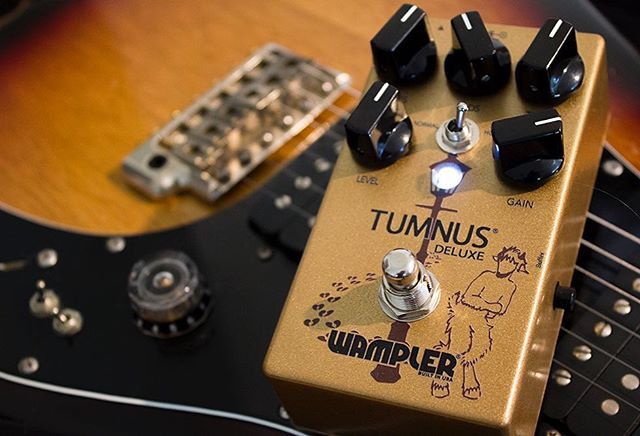
Every few months I'll hear a guitarist say their favourite overdrive pedal works great on bass. Sometimes they're right. More often they've never actually listened from the other side of the room, where all the low-end has gone missing and the bass sounds like a guitar with a bad day. There's a real technique to running dirt on bass, and it starts with understanding why most pedals weren't built with us in mind.
Why bass and overdrive don't always play nice
Most overdrive and distortion circuits are voiced for guitar frequencies. They're cutting content below around 80–100 Hz, because for a guitar that's fine — there's nothing useful down there. For bass, that's where your fundamental lives. The note that locks with the kick drum, the note the whole band is standing on. Clip that, and you've still got grit and texture, but the groove evaporates. You're left with something that sounds busy without sounding heavy.
The other issue is headroom. Bass signals hit a pedal's input stage harder than a guitar signal does, especially if you're playing passive with hot pickups. Pedals that clip gracefully with a guitar can turn harsh and fizzy with bass because you're pushing them further into saturation than they were designed for.
None of that means dirt is off-limits. It means you need to be deliberate.
The low-end preservation trick: parallel blending
The single most useful thing I ever did for my dirty bass tone was start blending the clean signal back in underneath the dirt. Some pedals have a built-in blend knob — the MXR M80 Bass D.I., the Darkglass Alpha Omega, various others. But you can also run a parallel effects loop or a simple A/B-Y box and blend the two paths manually.
What you're doing is keeping your clean low-end intact underneath the grind. The distortion handles the upper harmonics and the midrange texture. Your clean signal handles the fundamental. It's not a compromise — it's actually closer to how a lot of great recorded bass tones work. Engineers used to bus a clean DI signal and a driven re-amped signal to separate tracks and blend them in the mix. You can do the same thing live with a pedal and a small mixer.
I spent a session at Sing Sing Studios in Melbourne years ago watching an engineer do exactly this, blending a clean Ampeg DI against a driven guitar amp signal at about 70/30. The result was huge. Learned more in that one afternoon than I had in the previous year of tweaking pedals at home.
Which pedal types actually translate to bass
Not all dirt is equal when you're dealing with low frequencies. Here's roughly how each type sits.
Overdrive is generally the most bass-friendly, because it clips gently and retains more of the original signal's character. A Tube Screamer-style circuit, like the Ibanez TS9 (check price), cuts low-end by design — that mid-hump is baked into the circuit. Used with a clean blend it can work beautifully for cutting through a dense mix. On its own it'll thin you out fast.
Distortion gets more aggressive. The ProCo RAT 2 (check price) is genuinely one of the more bass-capable distortions going around, partly because of its filter control, which lets you roll off the harsh top-end content rather than the low-end. Wind the filter up (clockwise) and you're cutting treble, not bass. That's the opposite of most guitar distortions, and it makes the RAT usable in ways that a DS-1 often isn't.
Fuzz is polarising on bass. Big Muff-style circuits — octave-heavy, woolly, thick — can be glorious. The Electro-Harmonix Big Muff Pi (check price) has been a bass staple since at least the mid-70s. But silicon fuzz in particular can turn chaotic and hard to control at low frequencies. It's worth experimenting, but the blend trick becomes almost mandatory.
Gain staging matters more than you think
I'll be honest: I got this wrong for years. I was running my bass output too hot into pedals and wondering why everything turned to mush after two or three notes. The problem was gain staging — too much signal at the input, clipping unpredictably before the pedal even had a chance to do its thing.
Try rolling your bass's volume back to about 75% before it hits the pedal. Dial in the gain on the pedal itself. You often get a cleaner, more controllable drive this way, with better dynamic response. You play harder, it grits up more. You ease off, it cleans up. That's what you want — something that breathes with your playing rather than just sitting at maximum saturation all the time.
If you want to go deeper on how stacking multiple drive pedals affects this kind of headroom, the guide on stacking overdrive pedals covers the mechanics well, mostly from a guitar angle but the principles carry straight over.
Dirt as a texture tool, not just a volume tool
One thing I see bass players do that I'd push back on: using distortion to get louder in the mix. It does that, sort of — the added harmonic content gives the impression of more presence. But if the low-end isn't sitting right, more distortion just makes the problem louder rather than solving it.
Think of overdrive as a textural layer. A bit of grit in a verse that opens up to a fuzz-assisted chorus. Breakup on a high-register riff while the low notes stay relatively clean. Even just a touch of drive to give an otherwise polite P-bass tone some edge in a loud live mix. Used that way, it becomes a deliberate part of your sound rather than something you're fighting with all night.
The best overdrive and distortion pedals guide covers a lot of options worth looking at — just remember when you're reading it that your bass has different needs than a guitar, and the low-end preservation question is the one to keep asking.
One specific thing to try tonight
If you've got a dirt pedal already and you've never been happy with how it sounds on bass, do this before you buy anything new. Set the drive low — lower than you think you need. Set the tone somewhere in the middle. Play your normal lines and listen specifically to whether the note still locks with where the kick drum would be. Not whether it sounds cool soloed. Whether the fundamental is there.
If it is, you're in good shape. If it isn't, the blend approach is your next move. A cheap A/B-Y box and a small mixer can solve a problem that a hundred dollars of new pedal won't fix. The pocket's the thing. The dirt just has to serve it.
— Sheildon, Bass & Low-End Editor
Common questions
- Can I use a guitar overdrive pedal on bass?
- Yes, but many guitar overdrive circuits cut low frequencies by design, which can hollow out your bass tone. Using a clean blend — either built into the pedal or via a parallel loop — lets you keep the low-end intact underneath the grit. Some guitar overdrives, like the RAT 2, work better on bass than others because of how their tone controls are voiced.
- What does a blend knob on a bass overdrive pedal actually do?
- It mixes your clean, unaffected bass signal back in with the distorted signal. The overdriven path adds harmonic texture and grind; the clean path preserves the fundamental low frequencies that give you punch and pocket in the mix. Most dedicated bass drive pedals include a blend control for exactly this reason.
- Why does my bass distortion sound muddy?
- Usually one of two things: too much gain pushing the pedal into uncontrolled saturation, or too much low-end input signal before the clipping stage. Try rolling your bass's output volume back slightly before hitting the pedal, reduce the gain setting, and check whether the pedal has a tone control you can use to tighten up the low-mids.
- Is fuzz or overdrive better for bass?
- It depends on the sound you're after. Overdrive tends to be more transparent and low-end-friendly in general. Fuzz can produce huge, thick tones — Big Muff-style circuits in particular have a long history on bass — but fuzz can also get woolly and hard to control at low frequencies. Either way, a clean blend usually helps.
Sheildon here. I'm a bass player, funk and soul mostly, so for me it always comes back to one thing: the pocket. I've spent years in session rooms learning that the best low-end isn't the loudest — it's the note that lands in exactly the right place and just sits there, fat and easy. I get geeky about pickups, string tension and how an amp reproduces the fundamental, but I never lose the groove. Give me something that makes me want to lock in with the kick drum and I'm a happy man.
Funk and soul session bassist; groove and low-end specialist
More from Sheildon
- Delay and reverb on bass: why less is usually moreAmbient bass tones can work live and in the studio, but only if delay and reverb are set up to protect the low end. Here's how I do it.
 Bass pickup height: how small adjustments shape your tone and dynamicsPickup height is the most overlooked setup variable on a bass. Sheildon breaks down what moving them up or down actually does to your tone, output and feel.
- How a guitar amp's speaker affects your bass tone when you're DI-ingRunning bass through a guitar amp? Here's what the speaker cabinet is actually doing to your low end — and how to work with it, not against it.
- How walking basslines train your ear — and what that means for your gearWalking basslines aren't just a jazz exercise. They sharpen your pitch awareness and sense of pocket in ways that directly shape the gear you reach for.
- Acoustic guitar tonewoods for the body: back and sides explainedBack and sides tonewoods shape an acoustic's character more than most players realise. Here's what each species actually does to your sound.
- Acoustic guitar neck profiles explained: how shape and depth affect feel and playabilityC, V, U — acoustic neck profiles change how your hand sits, how long you can play, and whether a guitar feels like yours. Here's what to know before you buy.