How to stack two overdrive pedals for better tone
Right then. Stacking two overdrive pedals is one of those things that looks simple on paper, sounds chaotic in practice, and then — once it clicks — becomes something you can't imagine playing without. I've been doing it for the better part of two decades, and I still occasionally get it wrong when I'm rushing a soundcheck.
So here's what I've learned, mostly through trial, error, and one very unpleasant gig at a pub in Salford where my stacked drives turned into a wall of fizz by the second song.
Why stacking works in the first place
A single overdrive pedal shapes your signal: it clips some of the waveform, adds harmonic content, and pushes the amp harder or softer depending on where you set the output. What it can't easily do is give you a completely different character at the flick of a switch — say, a warm, thick rhythm crunch versus a more compressed, forward lead sound.
That's where the second pedal comes in. You're not just adding more distortion. You're using one pedal to condition the signal before it hits the other. The two stages interact in ways neither pedal does on its own.
Think of it like a two-stage preamp inside an amp — each gain stage shapes what the next one receives. When you use a low-gain overdrive into a slightly hotter one, the first pedal tightens the low end and adds a subtle harmonic bloom. The second pedal then clips a signal that's already been shaped, which sounds very different from feeding it a clean guitar signal directly.
The two main stacking approaches
There are really two ways people do this, and they produce noticeably different results.
Low-gain into medium-gain: The first pedal runs with the gain low and the output high — almost like a clean boost with a slight edge to it. The second pedal does the heavier lifting. This is the classic Tube Screamer-into-something approach: the TS sits first, mid-humped and tight, and feeds into a dirtier drive. The result is thicker, more compressed, and more harmonically complex than running the second drive alone. This is the stack that gets you into that singing, sustaining lead territory without drowning in fizz.
Both drives at moderate gain: Run both at roughly equal gain levels and you get a denser, more layered texture. More complex, sometimes in a good way, sometimes in a muddy way — depends heavily on the pedals and the amp. This approach needs more careful EQ management.
My honest preference is the first approach. Almost always. Running a low-gain drive into a medium-gain drive gives you more control over the character of the final sound than simply cranking both up, and it tends to clean up better when you roll the guitar volume back.
Which pedal goes first
Order matters, a lot. The first pedal in the chain sets the tonal character that the second pedal amplifies and clips. Put your darker, tighter, lower-output drive first. Put your brighter or more open drive second.
A classic pairing: Ibanez Tube Screamer TS9 (check price) first (low gain, output up), then a Boss SD-1 (check price) or a Fulltone OCD (check price) second at moderate gain. The TS9 tightens the bottom and adds a warm, mid-forward quality. The OCD or SD-1 then clips that shaped signal and pushes it into the amp with more authority than either pedal manages alone.
Reversing the order — brighter drive first, tighter drive second — tends to emphasise the top end in an unflattering way. Not always, but often enough that it's where I'd start when something sounds scratchy or harsh.
What the amp is doing (and why it matters more than people think)
Here's the part people skip over: the amp is the third element in this stack, and arguably the most important. A stacked overdrive rig sounds completely different through a valve amp on the edge of breakup versus through a solid-state amp running clean.
On a valve amp — something like a Vox AC15 (check price) pushed a little, or a Fender Blues Junior (check price) with the volume up past noon — the pedal stack isn't working alone. The amp's own harmonic response, its natural sag, and its power section compression all contribute. The pedals are coaxing the amp, not replacing it. That interaction is where the magic lives.
On a clean, solid-state amp, you're relying entirely on the pedals for character. That's not necessarily a problem, but you need to be more deliberate about your EQ settings and gain staging. The stack needs to be more complete on its own terms.
This is actually the reason a good stacked-drive setup can sound quite average in a bedroom at low volume and completely alive on a stage — the amp's behaviour at volume is part of the tone. Worth keeping in mind when you're dialling things in. I've spent many evenings puzzled by a rig that sounded flat at home and transformed itself completely at a gig.
Gain staging: where most people go wrong
Too much gain is the most common mistake. Both drives on seven or eight, wondering why it sounds like a dying lawnmower. The clipping gets ragged, the mids get congested, and you lose all the articulation and dynamics that make an overdriven guitar interesting.
Start with both drives lower than you think you need. First drive: gain around 9 o'clock, output at noon or a little above. Second drive: gain at 10–11 o'clock, output matched to your bypass level or slightly above. Play through it. Chances are it already sounds decent. Then nudge the gain on the second pedal up until you find the sweet spot — which is usually well before "as much as possible."
I'd also say: check how the stack responds to picking dynamics. If aggressive picking doesn't produce noticeably more attack and bloom, you probably have too much gain. A good stacked setup should still breathe. That's half the point.
For more on choosing individual pedals to build a stack from, the best overdrive and distortion pedals guide is a solid starting point — it covers the character differences between the main contenders better than I'm going to manage in a sidebar.
A few combinations worth trying
The Tube Screamer-style drive into a RAT-style drive is probably the most widely used combination in blues-rock for good reason. The TS tightens and mids-up; the ProCo RAT 2 (check price) adds a grittier, more aggressive clip that still retains body. Together they cover a lot of ground from warm crunch to lead sustain, and the RAT's Filter control lets you manage the brightness of the combined signal.
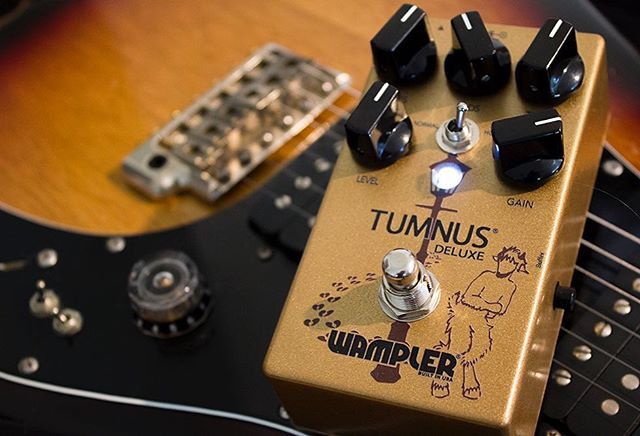
The Wampler Tumnus into a higher-gain drive is another strong option — the Tumnus is an excellent transparent low-gain stage, and it doesn't colour things as dramatically as a TS, which lets the character of the second drive come through more clearly.
What I'd avoid, at least to start: two fuzzes stacked, two RAT-style drives stacked, or anything with a lot of bass response into another drive with a lot of bass response. Low end compounds badly. You'll end up with a boomy, indistinct mess that gets worse as the volume goes up.
Stacking overdrives is fundamentally about gain staging and tonal shaping — once you understand that each pedal is conditioning the signal for what follows it, the logic of what to put where becomes much clearer. Get that right and two modest pedals can sound considerably better than one expensive one on its own.
— Jez, Amps & Valve Tone Editor
Common questions
- Do I need a valve amp to get good results from stacked overdrives?
- Not strictly, no — you can stack overdrives into a solid-state or modelling amp and get good results. But a valve amp on the edge of natural breakup adds its own harmonic response and compression to the equation, which tends to make stacked drives sound more alive and three-dimensional. If you're using a solid-state amp, keep your gain staging conservative and make sure your EQ is well-balanced, because the amp won't smooth out roughness the way a pushed valve amp sometimes does.
- Does it matter what order the two overdrives go in?
- Yes, significantly. Generally you want your darker, tighter, lower-output drive first and your more open or slightly brighter drive second. The first pedal conditions the signal — shapes it tonally and tightens the bottom end — and the second pedal clips that shaped signal. Reversing the order usually emphasises harshness and high-end fizz, though it's worth experimenting because some combinations work better reversed than expected.
- Should both drives be on at the same time?
- Often yes — that's the whole point. The first drive runs constantly as a foundation tone, and the second kicks in when you need more sustain, compression, or level for a lead. Some players also use both drives on separately to get three distinct sounds: clean, drive one alone, drive two alone, and both together. That gives you a lot of range without adding more pedals.
Right then — I'm Jez, and I've spent the best part of 25 years chasing the same thing: a cranked British valve amp on the edge of breakup. Cut my teeth in smoky blues clubs around the North West, then spent a decade on the bench fixing other people's amps, which taught me more about tone than any pedal ever did. I'm a sucker for an EL34 power section and a bit of natural sag. I'll always tell you straight whether an amp's worth the money or whether you're paying for a badge.
Gigging blues-rock guitarist (25+ yrs) and former valve-amp tech
More from Jez
 How potentiometer taper affects your guitar's volume and tone controlsAudio vs linear taper pots: why your volume knob might jump from dead to full in two turns, and what swapping them actually does to your guitar's feel and tone.
- How to use fuzz as a lead tone: dialling in sustain without losing definitionFuzz pedals aren't just for rhythm mayhem. Jez explains how to shape a fuzz lead tone that sings without turning to mush.
- How your amp's clean channel affects your overdrive pedal toneYour overdrive pedal doesn't work in isolation — the amp behind it shapes everything. Jez explains what the clean channel actually does to your dirt tone.
- How to use a speaker cabinet IR to make your DI tone sound like a real ampImpulse responses turn a flat DI signal into something that breathes like a real cabinet. Jez explains what IRs actually do, how to load them, and why most people get them wrong.
- Why your electric guitar goes out of tune when you bend stringsBends going sharp and not returning to pitch? Jez explains the real causes — nut slots, string trees, saddle friction — and how to sort them.
- Guitar pickup magnets explained: alnico vs ceramic and what they do to your toneAlnico or ceramic — the magnet inside your pickup shapes your tone more than most players realise. Jez breaks down what the science actually means for real playing.